
Commercial strategy creates value only when it is consistently delivered where consumers make purchasing decisions. Commercial execution helps organizations translate strategy into measurable in-store results by improving retail execution, sales force effectiveness, and outlet-level decision making that supports profitable growth.
Why commercial execution matters
A strong commercial strategy is only as effective as its execution. Organizations invest significant time and resources into defining growth priorities, pricing, promotions, customer strategies, and route-to-market models. The real test comes when those decisions are carried into stores, outlets, and customer locations.
This has become more challenging as retail environments continue to evolve. Consumer expectations are changing, retailers are becoming more sophisticated, and businesses have access to far more data than ever before. At the same time, organizations are expected to deliver consistent execution across thousands of outlets, each serving different shoppers, missions, and occasions.
Many companies still rely on broad execution standards that treat similar stores in the same way. That approach often overlooks meaningful differences between individual outlets. Two stores located on the same street may serve different customer needs, require different assortments, and benefit from different merchandising priorities. Applying identical execution standards to both ultimately limits commercial performance.
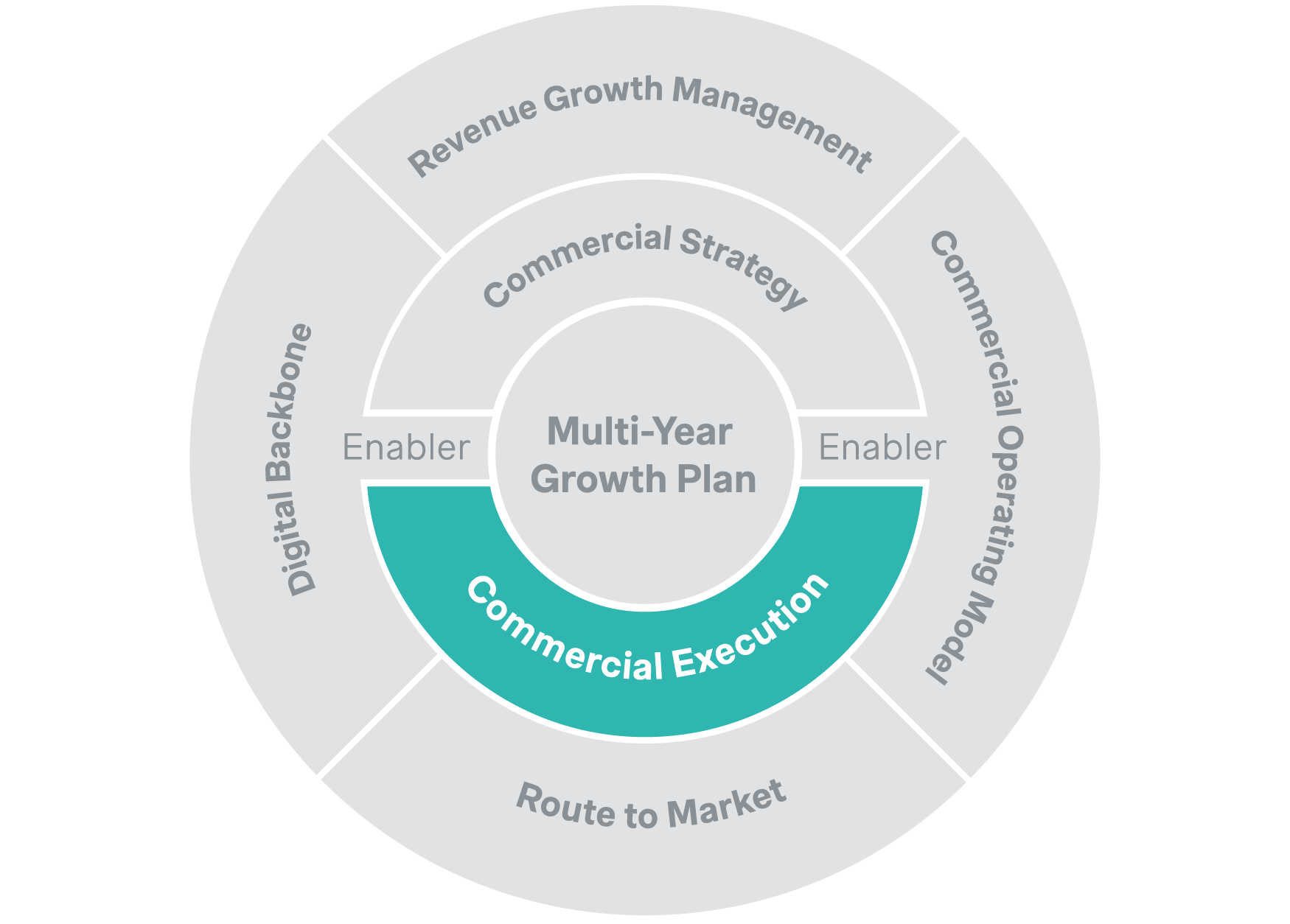
As the fifth pillar of the End-to-End Commercial Excellence framework, commercial execution focuses on the final stage of commercial excellence. It ensures that strategic decisions are translated into consistent execution, stronger customer experiences, and improved business performance where purchasing decisions are made.
The 7 levers of End-to-End Commercial Excellence
Source: Simon Kucher
Building commercial execution that delivers results
Effective commercial execution creates clear standards for success while giving organizations the flexibility to adapt execution to individual outlets. Four connected capabilities help improve execution quality and commercial performance:
Every outlet should have a clear vision of what success looks like.
The picture of success provides a practical framework for consistent retail execution. It defines the execution standards that matter most for each type of outlet, helping organizations tailor merchandising, product presentation, and promotional activity to the specific needs of different shoppers and store environments rather than relying on a one-size-fits-all approach.
With clearly defined expectations, field teams can execute more consistently while organizations gain a stronger foundation for measuring performance.
Not every outlet requires the same level of investment.
Commercial execution helps organizations identify where field resources will have the greatest commercial impact by segmenting stores according to their opportunity, shopper profile, and strategic importance. This allows businesses to align execution effort with commercial value instead of distributing resources evenly across the network.
A more targeted approach improves both customer coverage and return on investment.
Field teams play a central role in bringing commercial strategy to life.
Sales representatives need to visit the right stores, focus on the highest-value activities, and follow routines that support commercial priorities. Route planning, visit frequency, incentive structures, and sales routines all influence how effectively field resources are deployed.
By redesigning these elements together, organizations can increase productivity while improving execution quality across the market.
Execution should be monitored continuously rather than assessed only after results appear.
Organizations often invest heavily in promotions, displays, and retailer agreements without knowing whether they have been implemented as intended. Better visibility into execution helps identify gaps earlier and supports faster corrective action.
With richer data and advanced analytics, businesses can monitor execution at the outlet level, refine priorities over time, and improve consistency across thousands of locations.
The Simon-Kucher advantage
Strong commercial execution goes far beyond improving field productivity. It creates an execution model that reflects how customers shop, how retailers operate, and where commercial opportunities exist.
At Simon-Kucher, we begin by defining what success should look like for different outlet types through a tailored picture of success framework. We then redesign execution around those priorities by segmenting stores, optimizing sales force deployment, improving sales routines, and refining visit frequency to match commercial opportunity.
Our approach combines commercial expertise, proven methodologies, and data-driven analysis to help organizations move beyond standardized execution. As more detailed customer and outlet data becomes available, we help businesses make increasingly precise decisions about where to invest, how to execute, and how to improve performance across every store.
Ready to strengthen your commercial execution?
Commercial execution helps organizations turn commercial strategy into consistent in-store performance. Discover how a more precise execution model can improve retail execution, strengthen sales force effectiveness, and deliver profitable growth across every outlet.
If you're interested in further discussion, reach out to us today: Contact us