
Our latest global study shows that direct-to-consumer (D2C) channels are no longer niche. Instead, they’re becoming key part of how consumers buy and experience technology.
The evolving role of D2C in consumer electronics
Consumer expectations in the home and consumer electronics sector are evolving quickly. As products become smarter, more connected, and more integral to everyday life, the way people choose where and how to buy them is changing too. Increasingly, consumers are looking for more than just a transaction. They want guidance, confidence, convenience, and experiences that reflect their needs and aspirations.
This shift has opened the door for brands to play a more direct role in shaping the purchase journey. From personalized content to seamless digital experiences, manufacturers now have more opportunities than ever to engage consumers before, during, and after the point of sale.
As a result, more and more brands are investing in D2C, and consumers are responding. Still, key questions remain:
• What truly motivates consumers to buy directly from brands?
• Which experiences matter most in driving loyalty?
• And how can brands turn functional purchases into emotional ones?
This is what our latest global study set out to find. Conducted among nearly 4,000 consumers and covering over 12,000 relevant purchases made in the past 12 months, our findings reveal that direct-to-consumer channels have become a key part of how consumers buy and experience technology.
What market share does D2C have today?
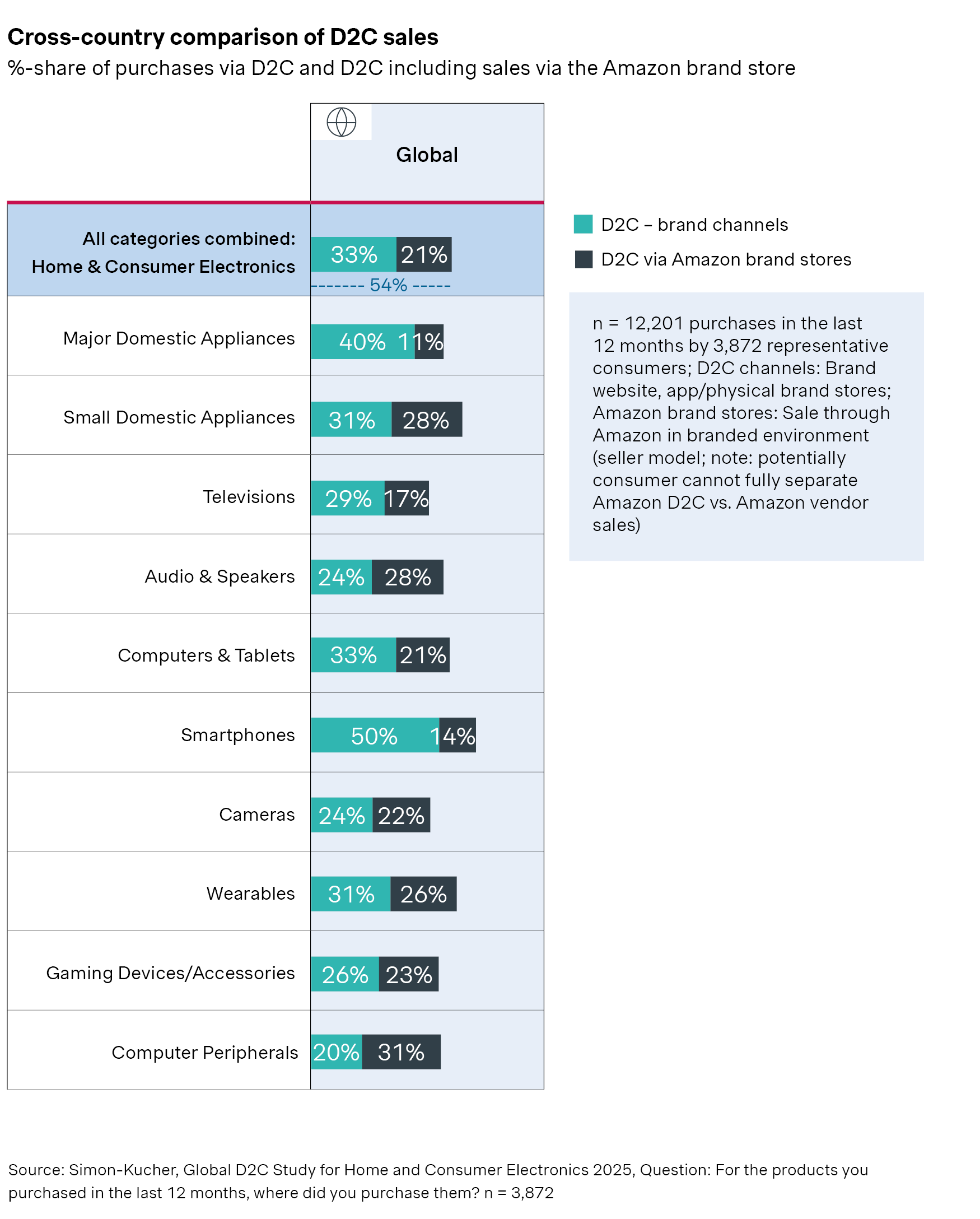
Just a few years ago, buying electronics directly from a brand’s website was something of a novelty. Today, it’s mainstream. Our study reveals that one in three purchases (33%) in the home and consumer electronics sector now happens directly through brand-owned channels. Add in Amazon brand stores, which account for another 21%, and suddenly over half of all purchases (52–57%) take place in environments where brands control the experience end-to-end.
But the picture isn’t uniform. Smartphones, a high-involvement, high-frequency product, are now bought directly every second time, reflecting consumers’ comfort and confidence in brand-owned channels. In contrast, lower-involvement products such as computer peripherals (20%), and more experience-driven categories like cameras (24%) and audio & speakers (24%), remain largely in the hands of traditional retailers.
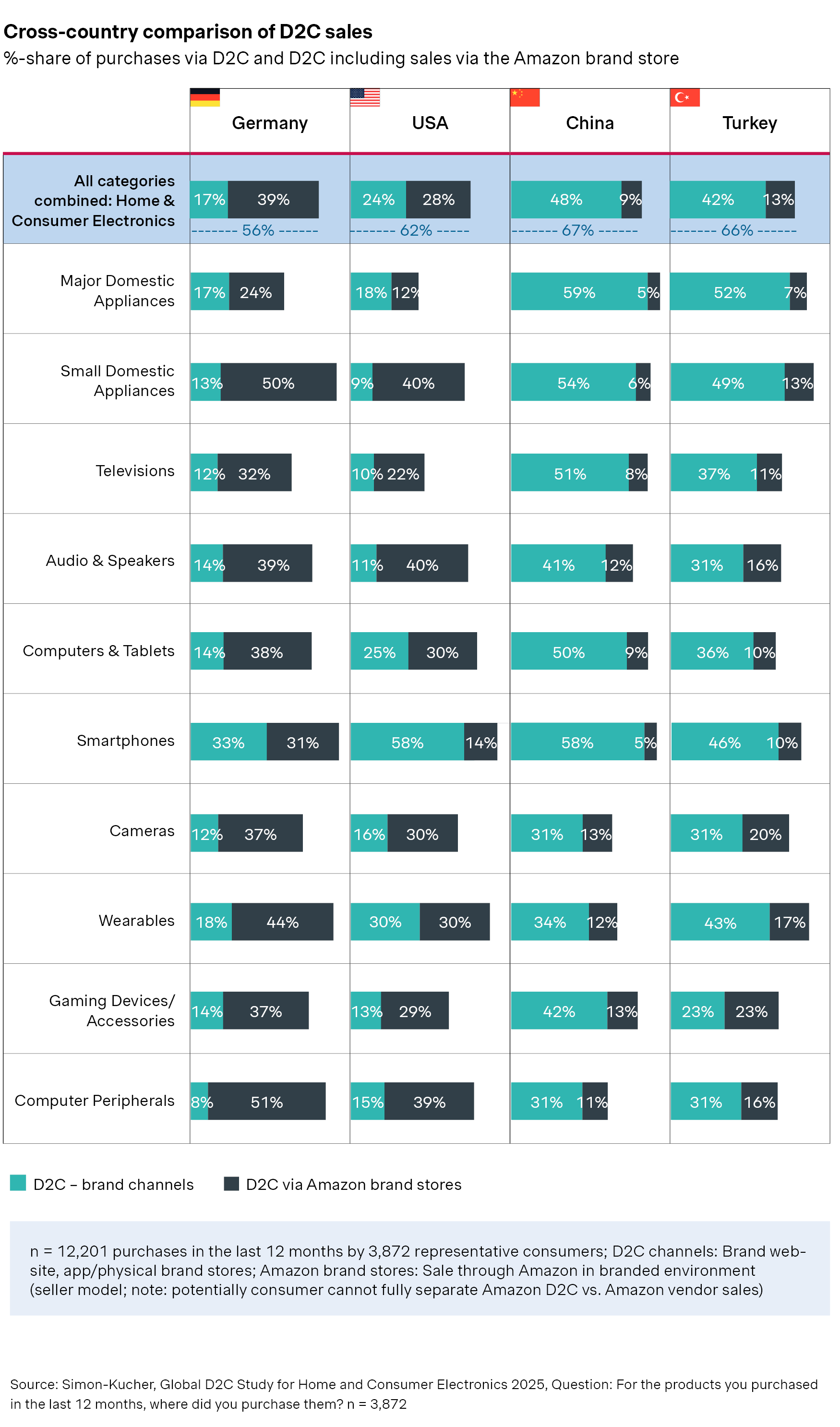
Geography tells another story. China leads the way, with nearly half of all purchases (48%) already made through brand-owned D2C channels, compared with just 17% in Germany and 24% in the US. Yet when Amazon is included in the mix, the playing field evens out: each of these markets reaches a similar D2C share of around 52–57%, underscoring the platform’s global influence in shaping brand-controlled experiences.
Why do consumers buy directly from the manufacturer?
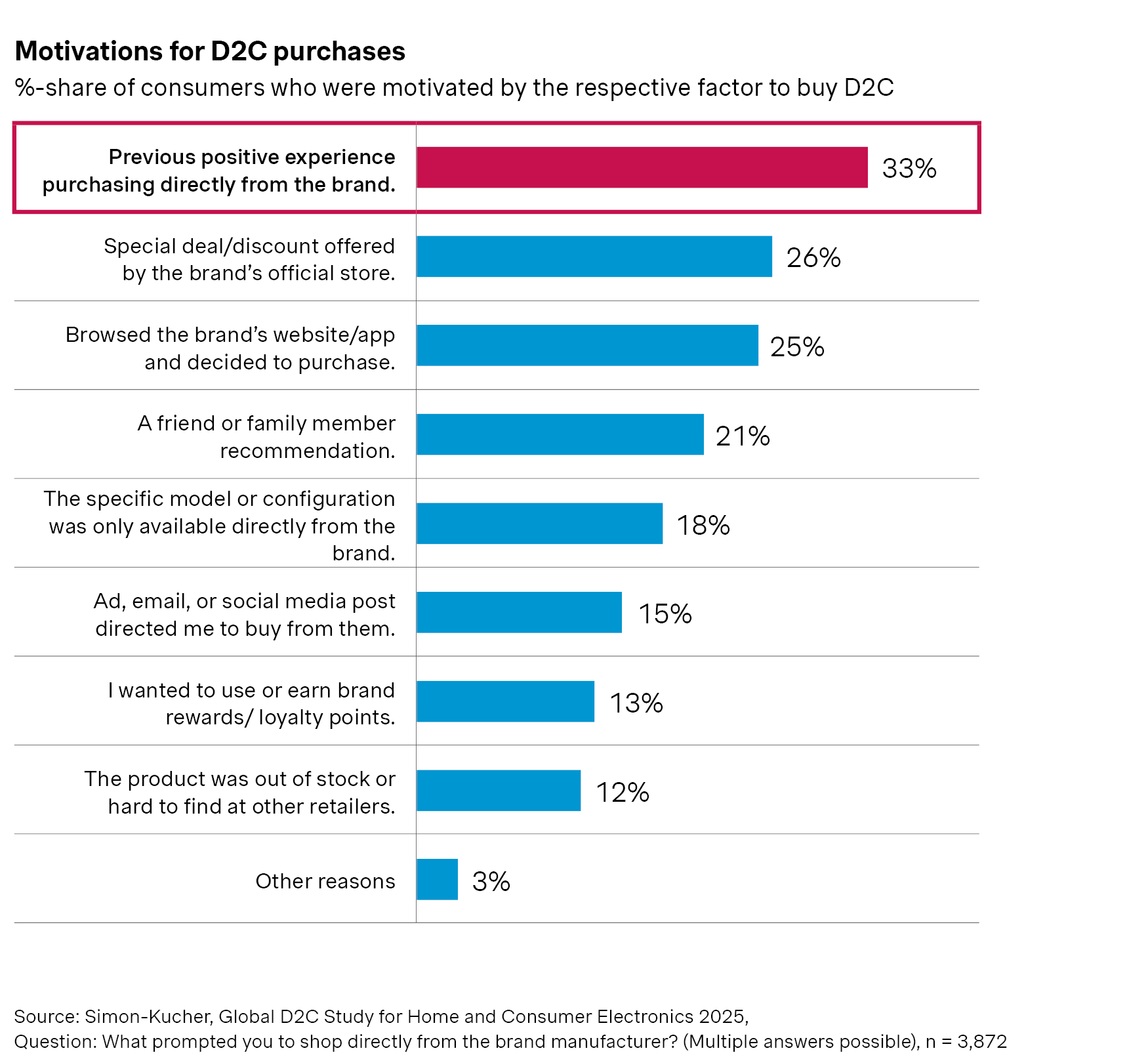
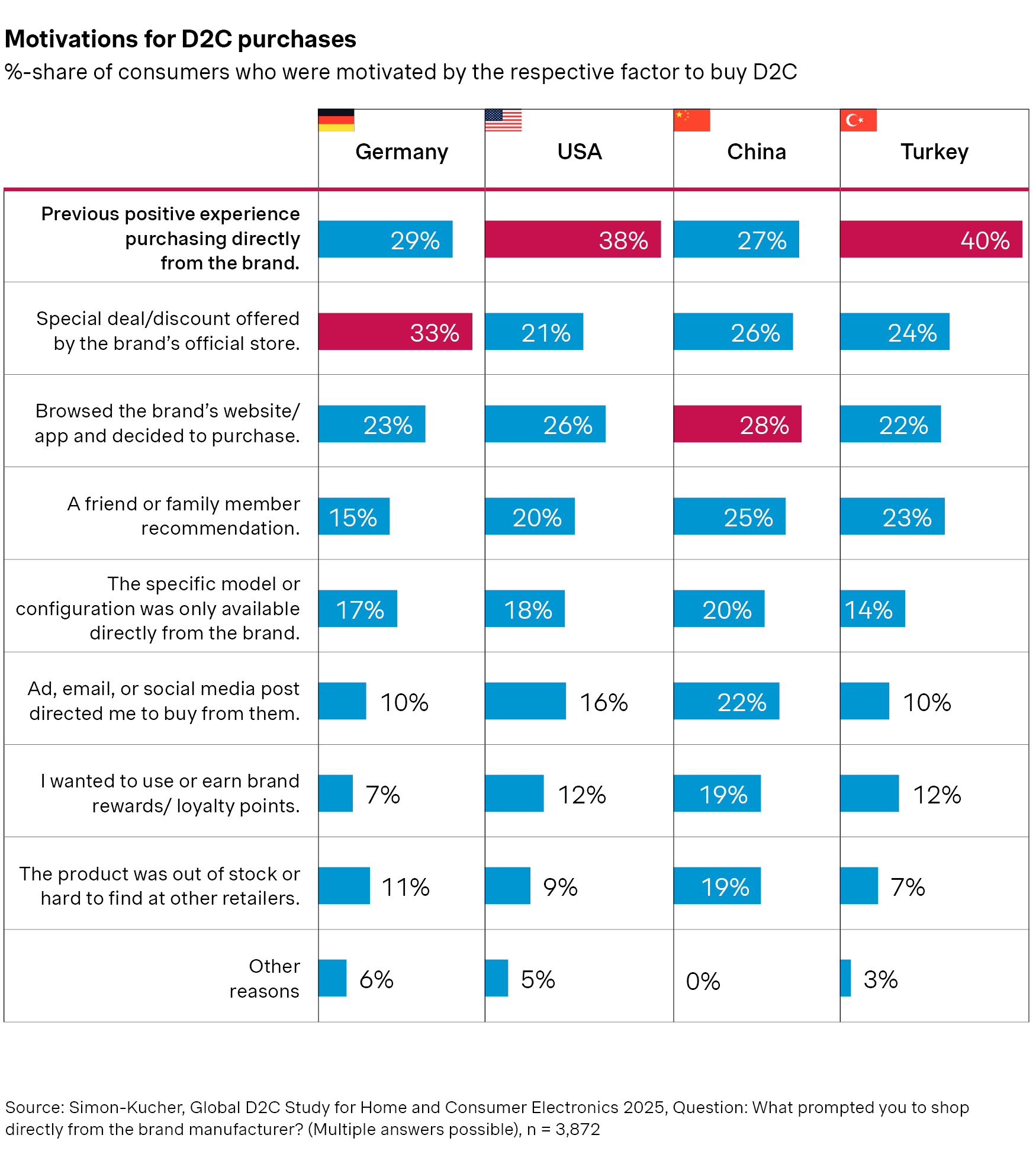
For many consumers, the decision to buy direct starts with something simple: a good past experience. In fact, one in three (33%) say their most common reason for choosing a D2C channel is that they’ve already had a positive purchase experience there before. It’s proof that investing in a seamless, rewarding D2C journey pays off, not just in satisfaction, but in repeat business.
That said, motivations vary by market. In Germany (48%) and the US (39%), consumers are driven by competitive D2C pricing, with the perception that buying directly means getting a better deal. Meanwhile, in China (38%) and Turkey (49%), the strongest motivator is trust in authenticity and confidence that what they’re buying is genuine and high quality.
Interestingly, price sensitivity doesn’t tell the whole story. Over a third (37%) of consumers are willing to pay a premium for a direct brand purchase, provided it comes with added benefits, whether that’s exclusive offers, personalized support, or access to the latest products. Another 39% simply expect parity with retail prices, highlighting how carefully brands must balance perception and value.
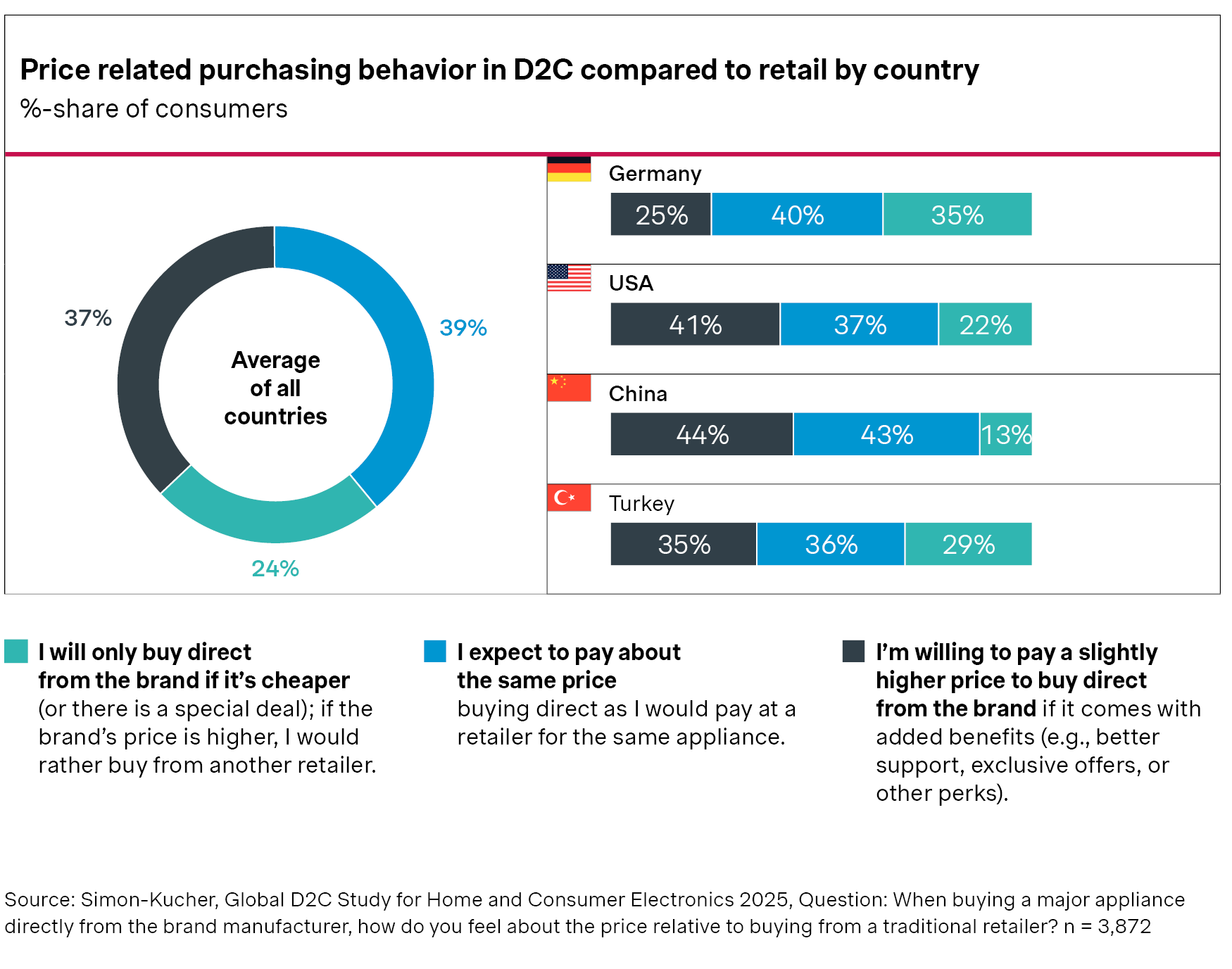
Expectations also differ across markets: in Germany (35%) and Turkey (29%), many consumers still anticipate that D2C prices should be lower than retail. For brands, this means that a “one-size-fits-all” D2C pricing approach won’t work. The drivers of trust, value, and loyalty vary as much as the markets themselves.
Obstacles on the road to conversion
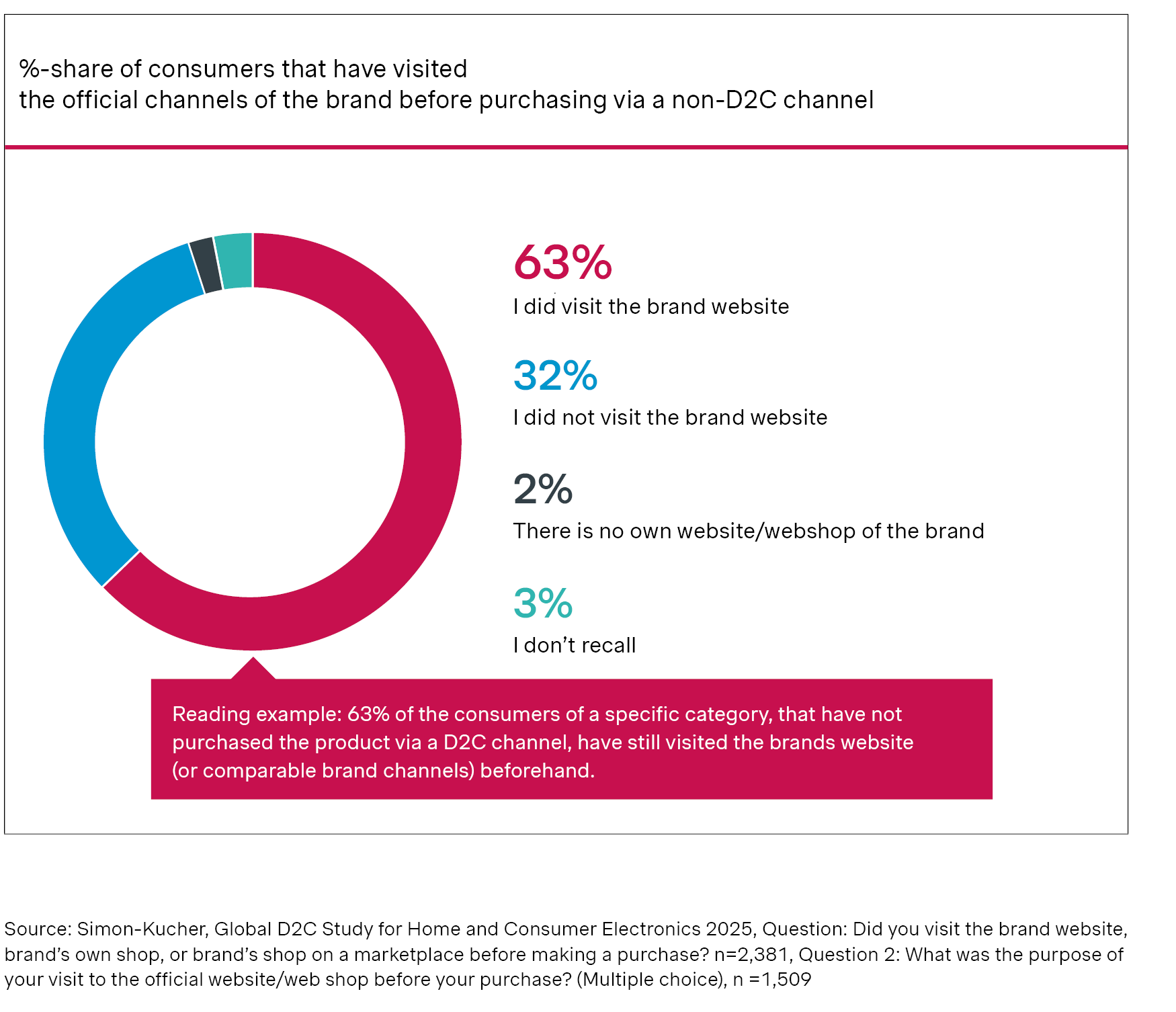
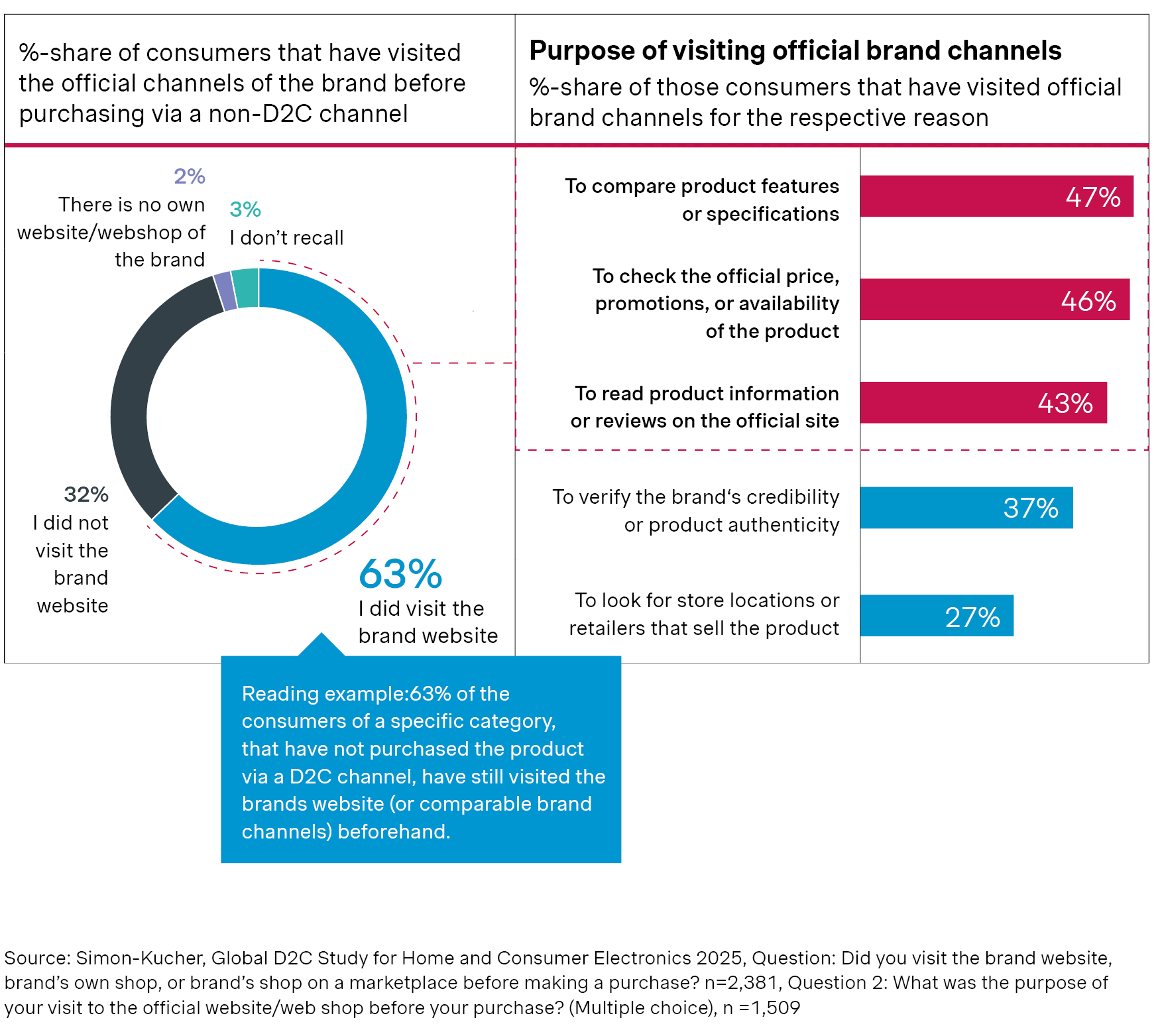
Interest in buying direct is high. Conversion, less so. Our study shows that nearly two-thirds of consumers (63%) visit a brand’s website at some point in their purchase journey. They’re comparing features (47%), checking prices (46%), and reading reviews (43%). In other words, brands are already part of the decision-making process. They just aren’t always where the final purchase happens.
Many consumers still prefer physical stores (32%), valuing the ability to see and test products before buying. Others stick with retailers for better deals or pricing (31%), or simply for the convenience of one-stop shopping (22%), especially when they’re buying multiple products or brands at once.
The reasons differ by market. In Germany, price remains the biggest deterrent to D2C. In China, it’s the continued preference for physical stores. And in markets like the US and Turkey, both factors come into play, highlighting how D2C success depends on addressing the right friction points in each region.
Under what conditions do consumers share their data?
When it comes to data, consumers are open if they see what’s in it for them. Our study finds that while 25% are “very willing” and 42% are “somewhat willing” to share personal information, this willingness hinges on clear, tangible benefits.
The most effective incentives are personalized and value driven. Consumers are most motivated by discounts or coupon codes (50%), followed by loyalty program rewards (42%), faster or more convenient checkout experiences (35%), and tailored product recommendations (30%).
However, what builds trust differs by market. In Germany (42%), consumers share data primarily when rewards are offered. In the US (44%) and Turkey (37%), it’s about transparency and understanding how their data will be used. Meanwhile, in China (34%), privacy assurance is the key enabler.
The takeaway? Brands must earn data, not just collect it. Those that offer genuine value, communicate openly, and protect consumer trust will unlock the full potential of personalized D2C engagement.
What this means for manufacturers
Our global study shows that consumers are ready to buy directly, but brands still need to deliver the right mix of value, experience, and trust to capture that potential. To unlock the full power of D2C, manufacturers must go beyond simply “being present online.” They need to define what their D2C channel means, how it fits within the broader ecosystem, and how it can deliver differentiated value without undermining retail partnerships.
Here are five strategic recommendations for designing, optimizing, and scaling an effective D2C approach.
Define the role of D2C in your omnichannel strategy
Start by asking: What role should D2C play in the channel mix? Is it about acquiring new consumers, driving retention and repeat purchases, or acting as a “shop window” to showcase the brand and its innovation? What strategic objectives and KPIs define success (margin, conversion rate, loyalty, or customer lifetime value?) How does D2C interact with other sales channels? For instance, should premium shoppers be guided toward D2C for personalization, while value-conscious buyers remain with retail partners? A clearly defined role avoids internal conflicts and ensures that the D2C channel strengthens, not cannibalizes, the broader ecosystem.
Example: Dyson
Dyson offers a strong blueprint for how to clearly define the role of D2C within a broader omnichannel ecosystem. The brand uses its own channels to deliver deeper product storytelling, portfolio breadth, personalized recommendations, and rich post-purchase engagement such as styling tutorials or maintenance guidance. Meanwhile, mass distribution partners ensure scale and accessibility, particularly for entry-level propositions. Retail stores, both Dyson Demo stores and partner retailers, provide hands-on experience and expert consultations. By giving each channel a distinct purpose, Dyson avoids internal friction and creates a coherent, journey-based experience for consumers.
Create a clear D2C value proposition
Consumers need a reason to buy directly. Without a clear, differentiated value proposition, your brand’s website becomes just another sales touchpoint. Ask yourself: What do we provide our consumers that they can’t get elsewhere? Exclusive products or limited editions? A superior experience via faster shipping, easier returns, or personalized service? Access to extensive personalization, bundles, or curated recommendations? The best price, or simply the best care? Once defined, the value proposition should guide every element of the D2C offer, from content and pricing to packaging and service.
Example: Ninja
Some brands are proving that even the most routine purchases can feel engaging and personal. Take Ninja. The brand has built a direct-to-consumer (D2C) presence that adds value beyond the product itself, offering recipe inspiration, personalized recommendations, seamless online experiences, and a sense of belonging through its community.
Establish a D2C portfolio, pricing, and promotion strategy
Competing solely on price is a dead end. Instead, build distinctiveness into your offer. A well-structured D2C assortment might include exclusive SKUs or versions that differentiate the direct channel from retail, bundled offers that provide more value without undercutting street prices, or targeted promotions that reward loyalty or drive conversion without triggering retailer pushback. Meanwhile, strategic D2C pricing must balance competitiveness and control. A clear RRP framework and disciplined promotional calendar help prevent price erosion and avoid buy-box battles.
Example: Razer
Razer, a specialist gaming brand, demonstrates how a differentiated D2C assortment can enhance the direct channel without undermining retail relationships. The brand offers D2C-exclusive products and editions available only on its own website, clearly signaling added value for direct buyers. Instead of relying on price cuts, Razer leans into non-price promotions such as early access, collectable drops, and a gamified loyalty program that rewards engagement. The result is a D2C proposition that feels distinct, premium, and worth seeking out, without triggering retailer pushback.
Establish an agile D2C user experience and conversion optimization loop
Our study shows that over 60% of consumers visit a brand’s D2C website during their purchase journey, yet many don’t convert. This gap represents a massive revenue opportunity. To close it, brands must treat the D2C experience as a live system, not a static storefront. Continuously test, measure, and optimize page layouts, checkout flows, and messaging. Use data-driven A/B testing to understand friction points. And design for conversion through intuitive navigation, trust signals, and personalized recommendations. Small UX changes, when continuously tested, can yield major improvements in engagement and conversion rates.
Example: Direct-to-consumer electronics brand
A leading direct-to-consumer brand is known for high-quality digital experiences, but equally for the continuous optimization behind them. The brand systematically runs A/B tests and micro-iterations across product pages, checkout flows, and mobile UX to reduce friction and improve conversion. This ongoing experimentation mindset allows the brand to respond quickly to behavioral data, refine decision-making tools, and ensure the buying journey remains intuitive even for complex, high-involvement products.
Formalize D2C organization, processes, and responsibilities
Finally, D2C must be managed like a business. Establish a dedicated D2C unit with its own P&L and cross-functional “squad” spanning marketing, sales, tech, and operations. Define clear governance to minimize friction with local markets and ensure compliance. And learn from best-in-class organizational blueprints. Many successful D2C brands run hybrid setups combining central excellence with local agility.
Our best-in-class clients focus on building dedicated D2C units with their own budgets, talent, and capabilities, enabling them to operate with the speed and ownership required to scale the channel. Clear governance frameworks help balance potential channel conflicts, with leadership actively managing trade-offs between traditional retail and D2C. This ensures that the direct channel grows as an integrated, strategic part of the business rather than as an isolated initiative.
How Simon-Kucher can help
Building a strong D2C strategy isn’t just about setting up a channel. Manufacturers must create the right value proposition, pricing logic, and experience design to win consumer trust and loyalty. At Simon-Kucher, we help brands identify where and how to capture D2C growth, from market positioning and customer insights to conversion optimization and data-driven personalization.
To access the full study results and explore how your brand can unlock its D2C potential, get in touch with our team.
Form placeholder. This will only show within the editor