Growing competition in Europe’s rail market is changing how operators design their services, set fares, and reach customers. Simon-Kucher’s Transport Center of Excellence examines the commercial lessons from aviation and the early evidence from Europe’s liberalized rail markets.
Competition is expanding across Europe’s passenger rail market. The changes echo the deregulation of the airline industry in the 1970s, when new entrants reshaped fares and the passenger experience. Rail operators are beginning to face similar decisions about the services they offer and the customers they serve.
Product differentiation is becoming more pronounced as operators introduce experiences designed for passengers with different willingness to pay. Fares often fall sharply when markets open to competition. Distribution also becomes more complex as customers gain more ways to compare and book journeys.
These developments have implications for operators’ commercial strategies through 2030. Three areas deserve particular attention: product, pricing, and distribution.
How competition changes the rail product
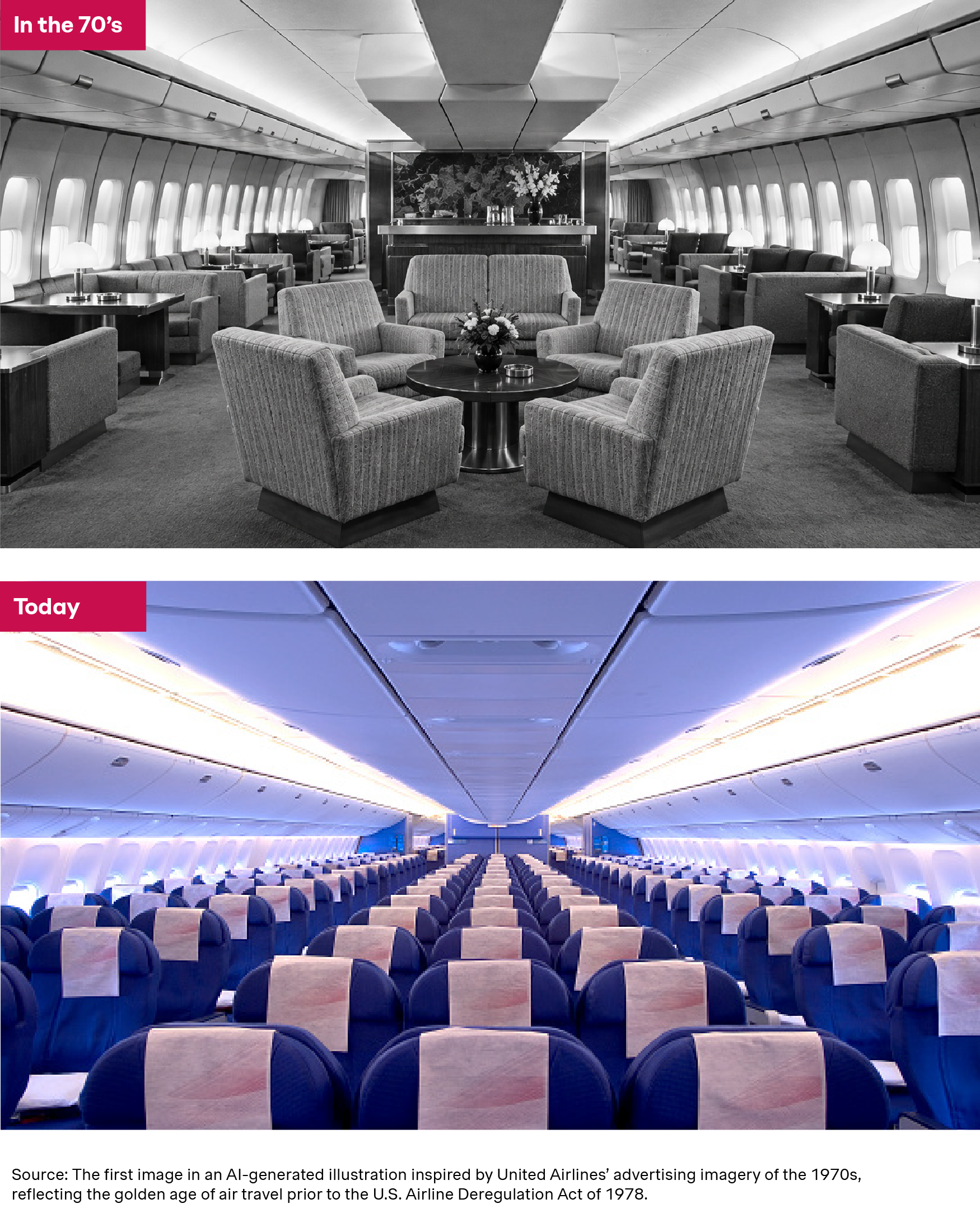
The airline industry offers a useful comparison for rail operators facing increased competition. Before US airline deregulation, high fares supported a relatively premium experience, with more space and onboard service. As competition developed, airlines changed the product itself.
Premium cabins became more differentiated, while economy cabins became denser and more services were sold separately.
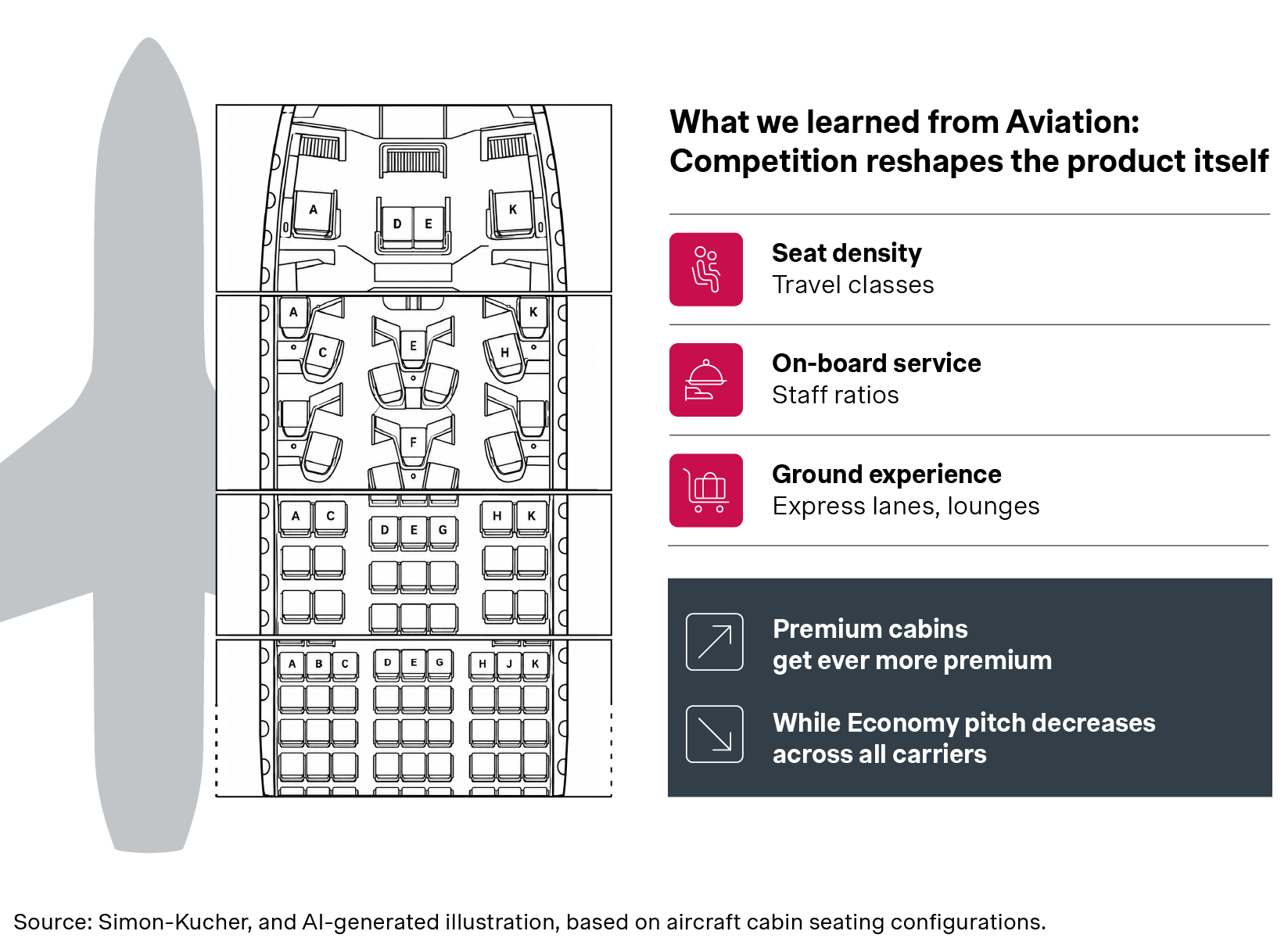
This shift can be seen in three areas:
- Seat density and cabin mix. Airlines have introduced sharper distinctions between travel classes. JetBlue, for example, has moved away from a uniform 32-inch seat pitch toward a more differentiated configuration, with 30 inches in the rear, 35 inches in an enhanced economy section, and 36 to 37 inches in domestic first class. The aim is to capture additional revenue from passengers who value more space.
- Onboard service. Premium passengers may receive dedicated crew, catering, and reserved baggage space. Economy offerings increasingly charge separately for services such as baggage and seat selection.
- Ground experience. Dedicated check-in, fast-track security, lounges, and priority boarding give passengers additional reasons to choose premium fares.
Early signs of similar differentiation are visible in Italy and Spain, where new rail entrants have introduced different standards of comfort and service. The UK has also seen the introduction of premium economy offerings.
Rail operators have several ways to adapt their products:
- Optimize onboard space. Layout of passenger accommodations (LOPA) reviews can identify opportunities to increase seat capacity by reassessing toilet ratios, luggage storage, and underused space. Operators should also examine the balance between first- and second-class seating. In some cases, replacing first-class space with second-class seats could generate more revenue per coach after service costs.
- Assess the value of onboard amenities. A bar takes up space and adds operating costs. Its contribution should be evaluated against its effects on passenger volumes, market share, willingness to pay, and brand positioning.
- Refine fare families and service bundles. As airlines have done, rail operators can unbundle selected services to serve different customer needs. Italy and Spain show that seat selection can be sold separately in a competitive market.
- Use customer insight to shape the offer. Products and bundles need to reflect what passengers value and how much they are prepared to pay.
Competition in railways will challenge operators to look at product and space optimization
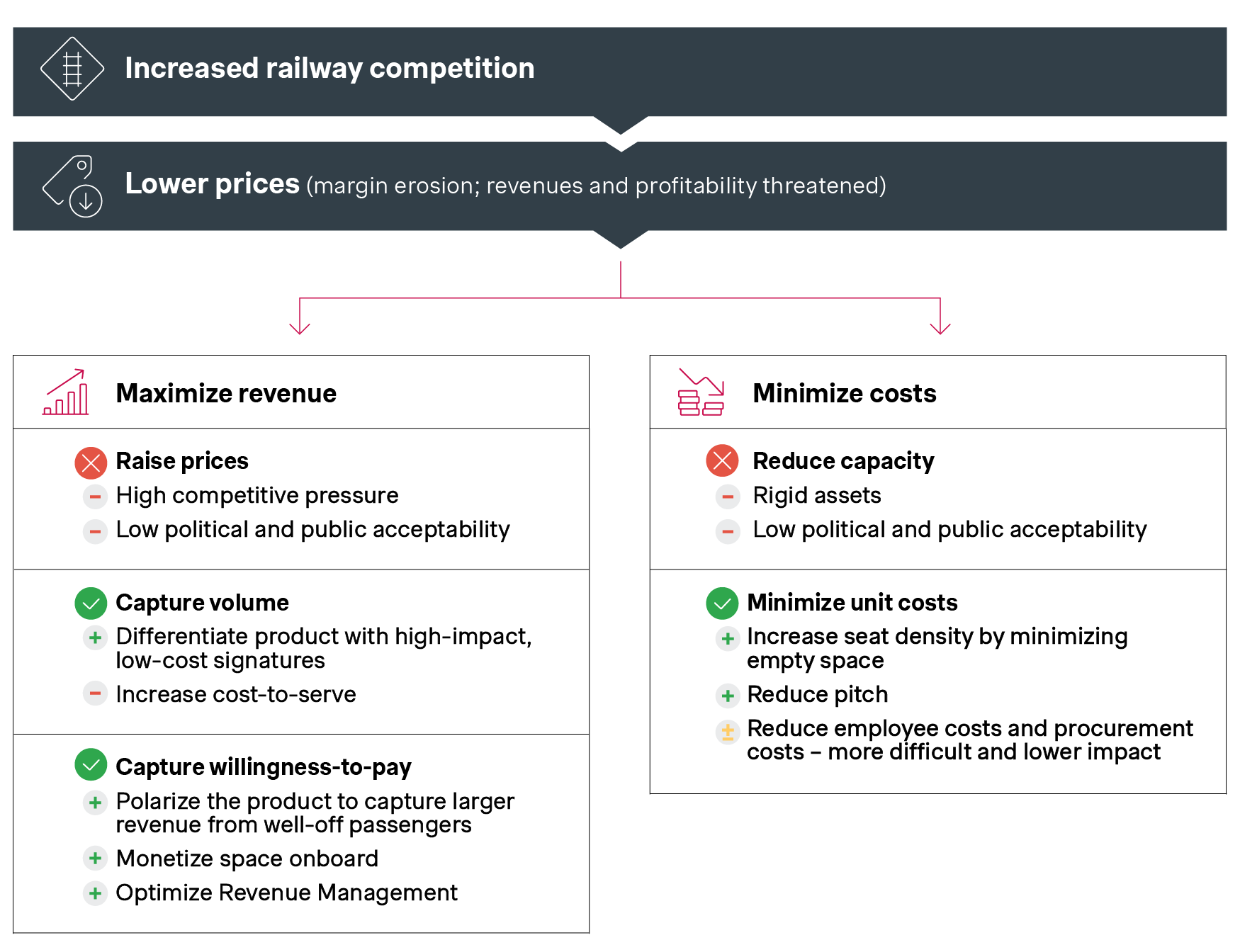
The aim is not simply to fill more seats, but to generate more value from each service. Customer insight can help operators identify where additional comfort and amenities justify their cost, and where changes to the onboard offer can improve yield.
How competition reshapes rail pricing
Experience across Europe shows that new competition can bring substantial initial fare reductions.
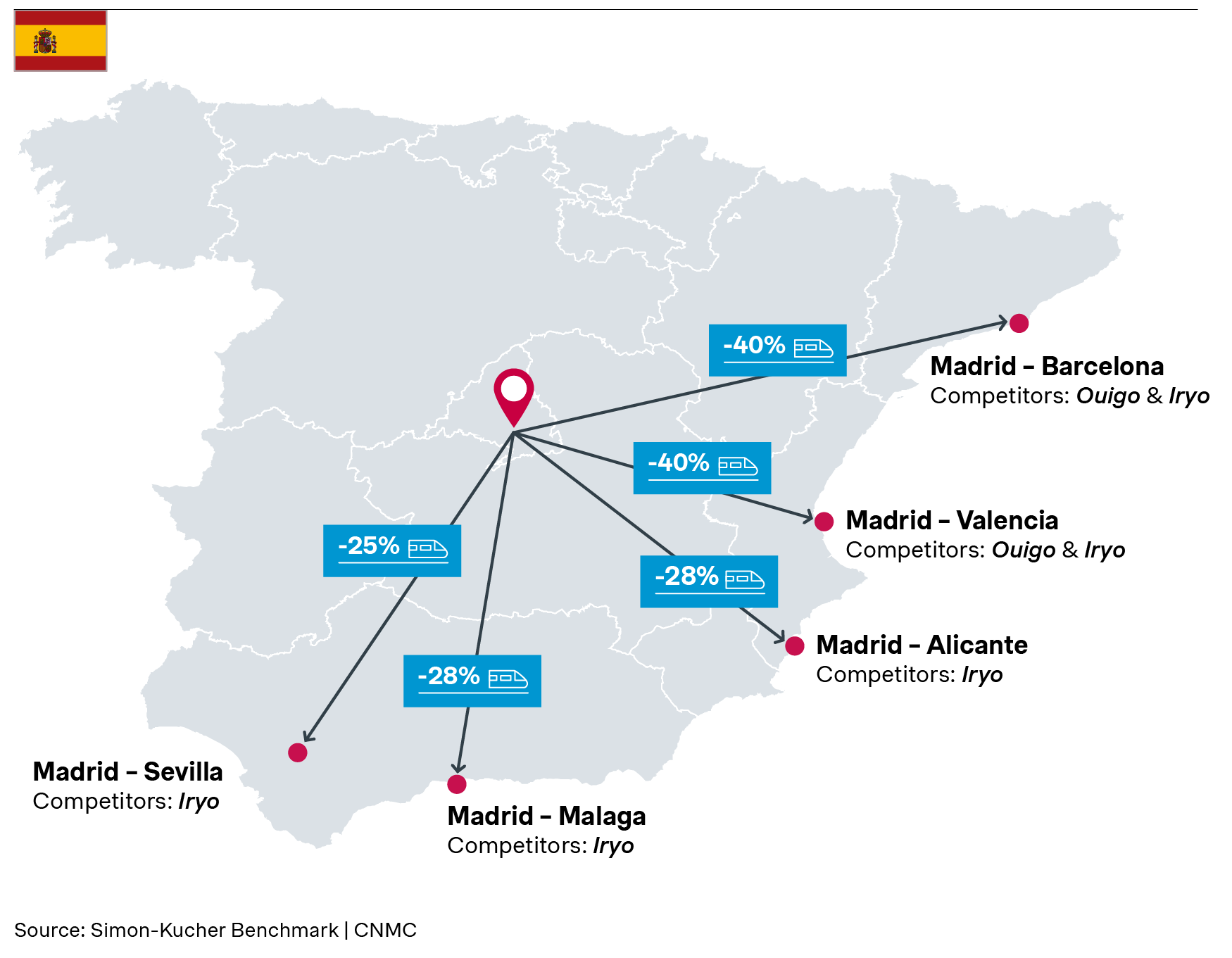
In Spain, opening Madrid’s high-speed routes to competition led to average price declines of 25% to 40%, according to the local regulator. The largest decreases occurred on routes with three competing operators.
France and Italy show a similar pattern. On routes with two operators, initial price declines of approximately 23% to 30% have been observed, broadly in line with Spanish routes served by two competitors. The economics differ by country. Lower infrastructure access charges have helped sustain competition in Italy, while France’s high tolls present a greater challenge.
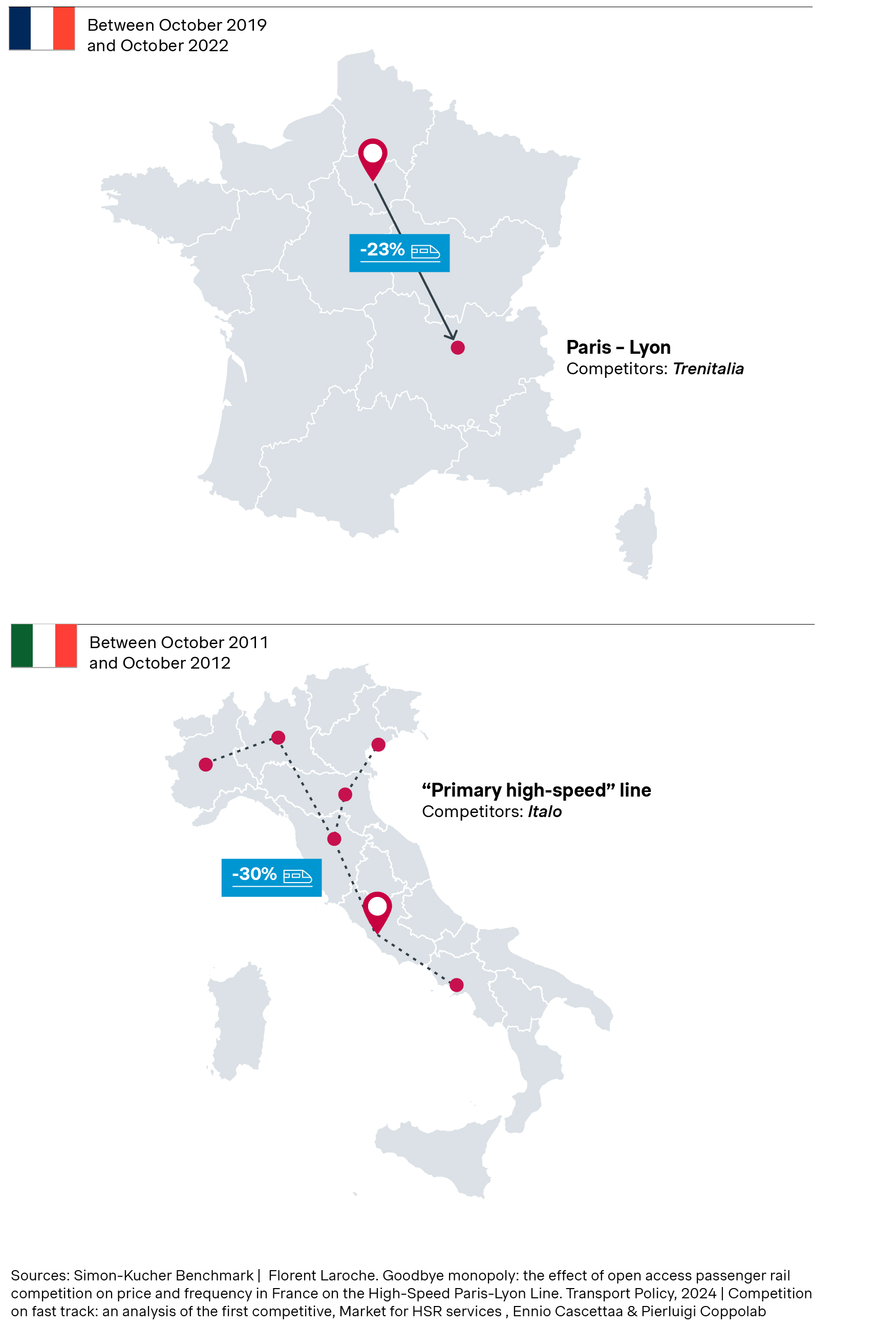
Over time, fares tend to recover from their initial lows and settle at a new level, often below pre-entry prices. Higher passenger volumes can help offset lower fares.
The outcome varies by market, making it important for operators to track performance and adjust their commercial offers as competition develops.
Pricing decisions should be linked to product changes. More differentiated fares, supported by revenue management and a clear understanding of willingness to pay, can help operators improve average yield.
Distribution: Competing for the booking and the customer
More operators and more differentiated fares make it harder for customers to compare their options. This makes distribution strategy increasingly important, both for securing bookings and maintaining customer relationships.
Operators should consider several areas:
- Third-party distributors. Make product and pricing differences easy to understand when customers compare services across operators.
- Booking fees. Assess where fees can generate revenue and how they affect the attractiveness of each sales channel.
- Loyalty programs. Give customers a clear reason to book directly and recognize the value of repeat business.
- Third-party partnerships. Where direct sales are limited, manage distributor relationships carefully and protect access to customer insight.
- Repackaging. Review where services can be combined or presented differently across channels, and how this affects the offer customers see.
Large language models are also beginning to disrupt how travelers discover and book journeys. Their implications for rail distribution warrant close attention.
What rail operators should do next
The experience of Europe’s newly competitive routes points to three commercial priorities for operators:
- Product: Differentiate the passenger experience to address a wider range of willingness to pay and support market growth.
- Pricing: Prepare for significant initial fare pressure as competition increases. Spain has seen reductions of 25% to 40% on newly contested routes. Differentiated pricing and revenue management can help operators improve yield as markets develop.
- Distribution: Keep the customer at the center of commercial decisions. Strengthen loyalty and direct relationships before passengers establish habits with competing operators.
As competition grows, rail operators will need to make sharper choices about the products they offer, the prices they charge, and how they reach customers.
Those that understand what passengers value and adapt their commercial strategies accordingly will be better placed to protect profitability and compete in Europe's changing rail market.
Speak with Simon-Kucher’s Transport Center of Excellence about how product, pricing, and distribution strategies can help your rail business respond to growing competition. Contact our experts