
The 2026 NRDL process has been well underway with a few notable tweaks, while the main themes on innovation and competition will feature more prominently than ever.
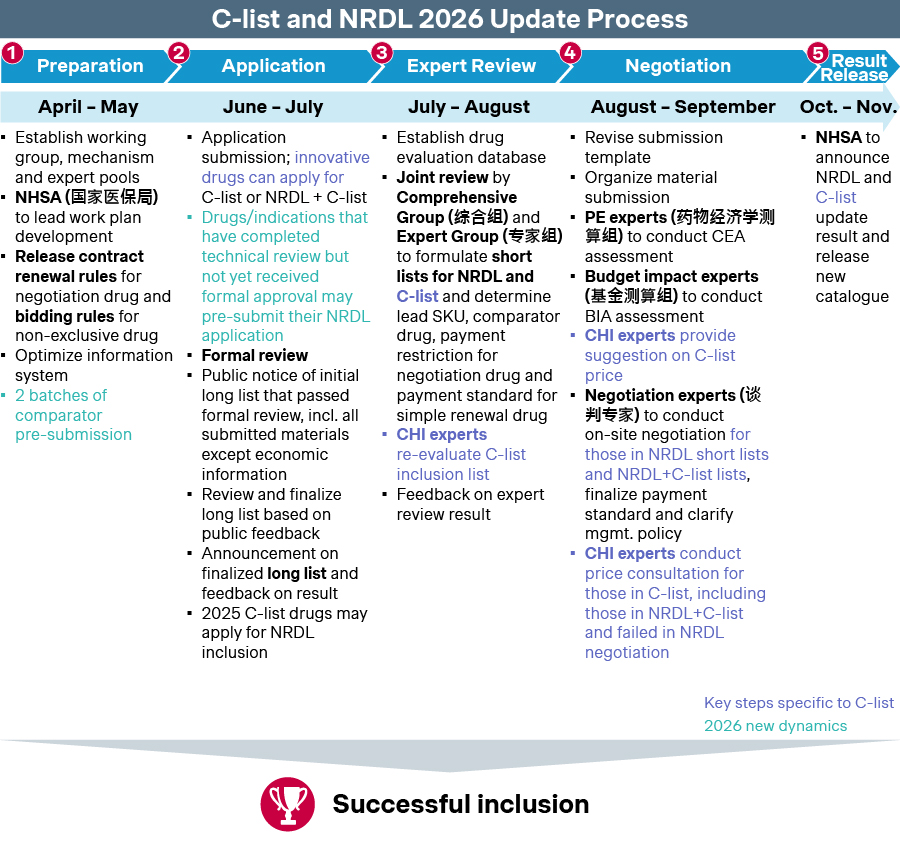
Breaking away from the traditional timeline, the 2026 National Reimbursement Drug List (NRDL) started one month earlier than usual. New windows were also introduced for qualified candidates to discuss comparator choices with payer experts before dossier submission, and for candidates anticipating formal regulatory approvals to pre-submit their NRDL dossiers.
Source: Simon-Kucher, NHSA, press release.
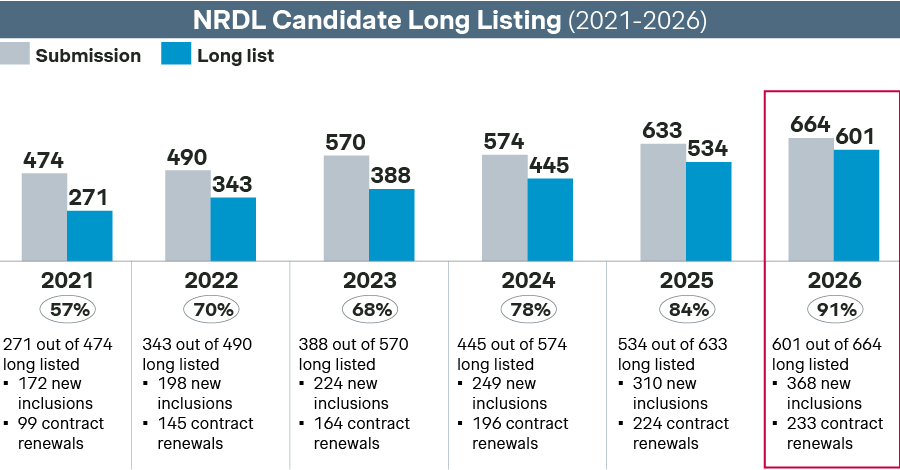
In early July, a record number of candidates made it through the qualifying round by passing the formal review process.
- A total of 368 drugs will be up for NRDL new listing, a marked increase from 310 candidates last year.
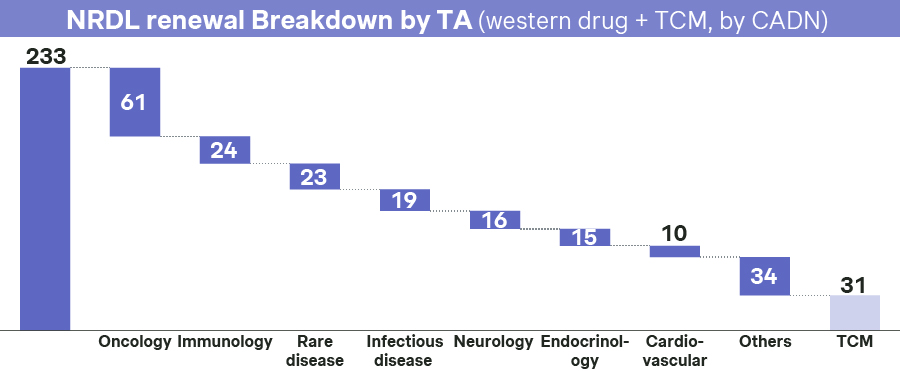
- Another 233 drugs passed the formal review for NRDL renewals and re-negotiations, compared with 224 candidates last year.
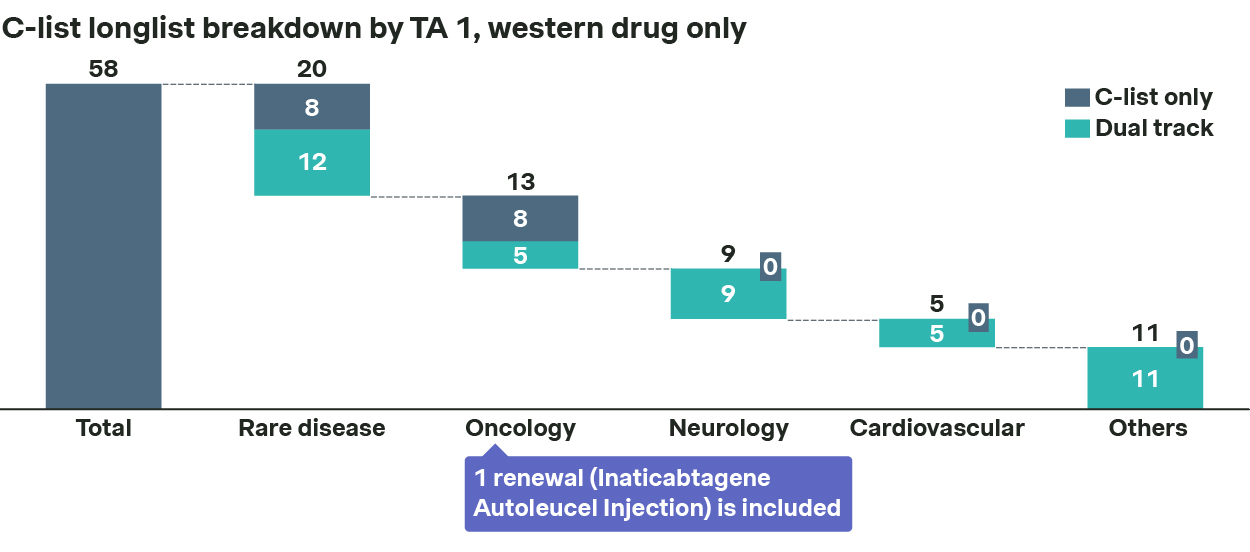
- In comparison, this year’s C-list candidates stood at 58, less than half of the 121 candidates when it was first unveiled in 2025. Of the 58 candidates, 42 opted for dual-track C-list and NRDL applications, down from 77 last year.
Source: Simon-Kucher, NHSA, press release.
Key therapeutic areas
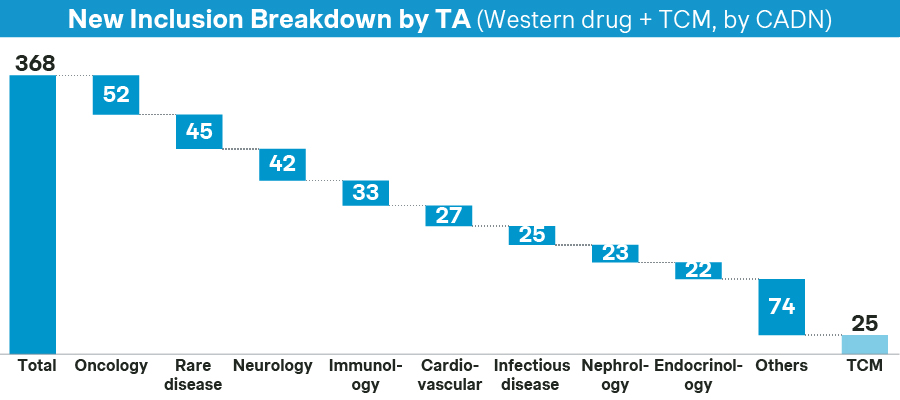
Among the 368 new listing candidates, oncology, rare diseases, neurology, immunology, and cardiovascular diseases rank as the top five therapeutic areas.
Source: Simon-Kucher, NHSA, press release.
Oncology
Oncology continues to be the largest TA, with 52 candidates vying for new listing and 60% carrying the Class 1 new drug designation. 16 of the Class 1 candidates opted for the newly introduced comparator pre-communication process, and seven claimed no comparator in their dossiers in a bid to establish differentiated positioning.
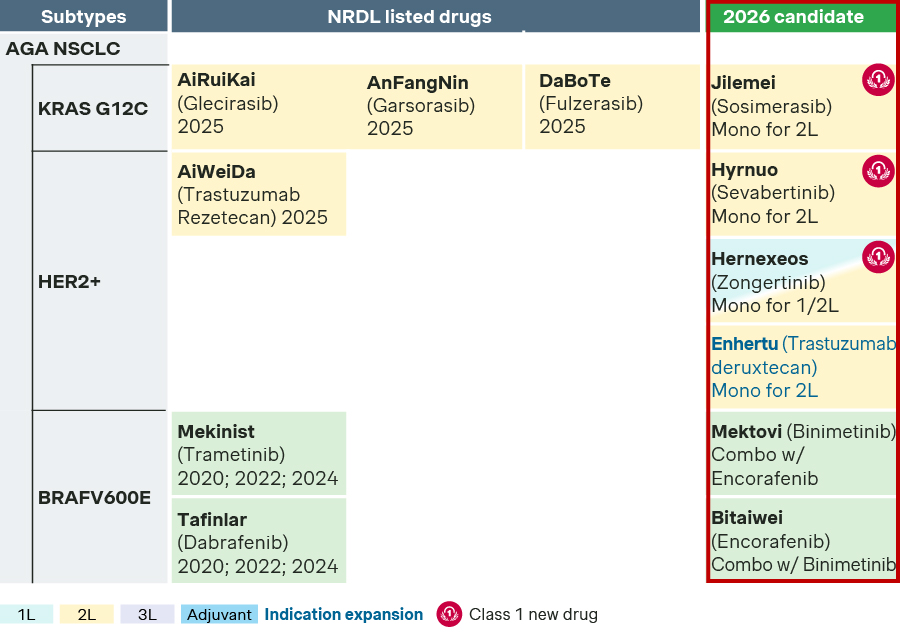
- In HER2+ non-small cell lung cancer (NSCLC), the two new TKIs, Hernexeos and Hyrnuo, took distinct approaches with their comparator strategies. Hernexeos claims no comparator status and strives to position itself in the frontline, addressing unmet needs across first- and second-line patients. In contrast, Hyrnuo acknowledges early-mover ADC trastuzumab rezetecan as its comparator and focuses on the second-line HER2-mutant population. It emphasizes its efficacy across different mutation subtypes and in patients with brain metastases, as well as its superior safety profile and more convenient dosing versus its ADC comparator. Enhertu, another major ADC, is also entering the segment through indication expansion, further intensifying competition in this niche segment.
Source: Simon-Kucher, NHSA.
- Gastric cancer has long been a leading malignancy in China, with a high disease burden but limited treatment options. That is about to change following the launch of new therapies across different lines of treatment this year. In first-line treatment, Vyloy aims for NRDL listing for CLDN18.2-positive patients, who account for around 40% of the gastric cancer population. In second-line treatment, anbenitamab targets around 10% of gastric cancer patients who are HER2-positive, partially overlapping with Enhertu's newly expanded gastric cancer indication vying for NRDL as well. For third-line treatment, the local candidate KaiLiMei or satricabtagene autoleucel is in the spotlight as the world’s first CAR-T therapy for a solid tumor. The company started early to prepare for C-list well ahead of its formal regulatory approval in June 2026, taking advantage of the new pre-submission window.
- In breast cancer, kumocilib is positioned as a triple-target inhibitor for CDK2/4/6 to differentiate itself from the many incumbents in this crowded space. Meanwhile, two ADCs – Datroway for TROP2 and trastuzumab boderastuzumab for HER2 breast cancer – are also gearing up for the race, striving to differentiate from the omnipresent Enhertu, as well as other upcoming local ADCs.
- In lymphoma, two BCL-2 inhibitors, sonrotoclax and lisaftoclax, are seeking NRDL inclusion in chronic lymphocytic leukemia and small lymphocytic lymphoma. In follicular lymphoma, the next-generation CD3/CD20 bispecific antibody Epkinly or epcoritamab draws on its Phase 3 study published in The Lancet, as well as its China-specific patient data with a 95% objective response rate and over twofold PFS benefit. It also cites the treatment cycle limits in its label to demonstrate a manageable budget impact to preempt payer concern.
- In nasopharyngeal carcinoma, the world's first EGFR×HER3 bispecific ADC izalontamab brengitecan seeks NRDL inclusion alongside becotatug vedotin. In biliary tract cancer, zanidatamab aims to graduate into the NRDL formulary after being included in the C-list last year, which helped it achieve listing in 31 provinces and 49 CHI formularies to date.
- Of the 52 oncology candidates, around 30% are repeat applicants following earlier NRDL setbacks. Many of them came better prepared with revised NRDL strategies. Some have shifted their indication focus, as with encorafenib, while others have changed comparators, as seen with ifupinostat, epinocostat, and Besponsa. Several candidates have also been proactively upgrading their evidence packages with additional clinical data and real-world evidence, as exemplified by Scemblix and Hetronifly, among others.
Rare disease
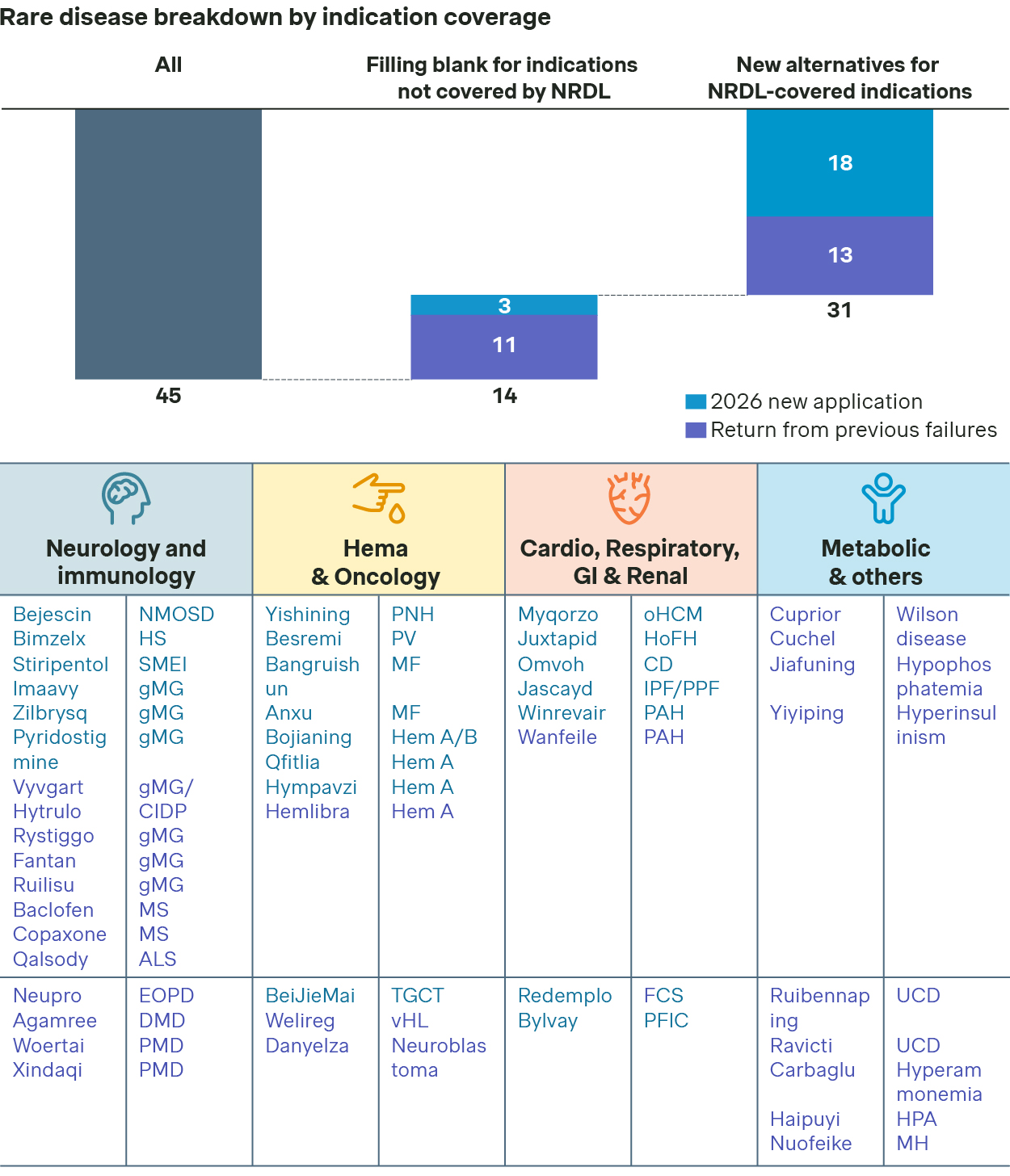
A total of 45 rare disease candidates advanced to the next round, up from 37 in 2025. Among them, 21 are first-time applicants and 11 were launched within the past year.
- A number of the new applicants are striving to address unmet needs in emerging rare disease indications. Particularly noteworthy is the world's first APOC3-targeted siRNA drug, Redemplo or plozasiran. With its innovative RNA interference degradation mechanism, it has achieved remarkable clinical efficacy in familial chylomicronemia syndrome (FCS) by cutting APOC3 event risk by 83%. In comparison, another nucleic acid drug, Wainua, for transthyretin amyloid polyneuropathy (ATTR-PN), decided to pursue the C-list instead.
- Seven returning applicants, following unsuccessful applications in 2025, are back with stronger evidence packages. Welireg stands out as the first therapy built on the Nobel Prize-winning HIF mechanism to spare VHL patients from repeated resections. This year's application spotlights its tangible reduction in healthcare resource utilization and is endorsed by recently updated Chinese clinical guidelines. Meanwhile, Ravicti for urea cycle disorders (UCD) has strengthened its case with two new real-world studies – one from China, one global – plus post-launch retrospective data that sharpen the efficacy narrative and support the case for inclusion this year.
- In pulmonary fibrosis, the PDE4B inhibitor Jascayd showcased its anti-fibrotic effects, FVC maintenance efficacy, and compelling survival benefits in both IPF and PPF indications. Pulmonary arterial hypertension (PAH) is also likely to see fresh developments with the new entrant Winrevair. Compared with incumbents mainly focusing on improving vasodilation and vascular resistance through traditional pathways, Winrevair prevents abnormal thickening of vascular walls through the activin signaling pathway, achieving etiological treatment that extends patients' overall survival by an impressive 16.5 life-years, a major step change to the PAH treatment paradigm.
- Paroxysmal nocturnal hemoglobinuria will see two new local candidates challenge the incumbents Soliris and Fabhalta with claims of superior efficacy and safety. In myelofibrosis, two domestic Class 1 new drugs also go head-to-head, with bezacitinib emphasizing its highly selective targeting of JAK2 with better drug tolerance and safety, while rovadicitinib strives to establish itself as the first JAK/ROCK dual-target inhibitor with the potential to reverse fibrosis.
- In obstructive hypertrophic cardiomyopathy, Myqorzo positions itself as a new-generation cardiac myosin inhibitor therapy representing a further shift from conventional symptomatic management toward intervention in the underlying disease mechanism. Compared with Camzyos, which enjoys the first mover advantage with 2024 NRDL listing, Myqorzo seeks to demonstrate faster onset, superior efficacy, and a better safety profile, aiming to establish itself as the new standard of care for patients with this rare cardiac disease in China.
- The larger candidate pool and higher quality of innovations, combined with more certainties from the comparator pre-communication process for seven rare disease drugs, have raised expectations for more successes this year, compared with the underwhelming results of the 2025 NRDL.
Source: Simon-Kucher insights.
Neurology
42 neurology products passed the formal review, with 20 new faces applying for the first time.
- In migraine, Ajovy strives to achieve a breakthrough on the prevention front, while Nurtec focuses on acute treatment. Nurtec is again pursuing dual-track submission for both the NRDL and C-list, while proactively strengthening its dossier with the latest international guideline recommendations and multiple Chinese real-world studies to demonstrate that it can effectively reduce monthly migraine days and achieve rapid relief among patients with poor response or intolerance to triptans.
- Most analgesic and anesthetic applications are formulation innovations, while Omixion stands out as a unique Class 1 drug indicated for the reversal of neuromuscular blockade induced by rocuronium. It proposes NRDL-listed Bridion as its comparator, while highlighting its safety advantages for anesthesia recovery.
- The two rival Alzheimer’s disease therapies, Kisunla and Leqembi, are both making a pivot form C-list to NRDL. Both have made remarkable progress in provincial listing as well as hospital and pharmacy access, but are pursuing NRDL listing for broader reach and better coverage. In its NRDL dossier, Leqembi focuses on establishing its superior safety profile, especially in Asian patients, while Kisunla has gone a step further by updating its China label with improved titration to address ARIA risk concerns shortly after FDA approval, and strengthened its dossier with new data to underscore sustained clinical benefits beyond the 52-week treatment period.
Immunology
The immunology space also features strong competition and rivalries, with many showcasing their value propositions in chronic disease management as the core narrative.
- In asthma, Tezspire presents itself as the first and only TSLP biologic offering a new solution for non-Type 2 inflammatory asthma patients, with superior efficacy and faster onset over comparator Nucala based on NMA and MAIC. In contrast, Exdensur strives to differentiate from Fasenra by highlighting a greater reduction in acute exacerbations and a more than twofold improvement in clinical remission, supported by a 2026 Chinese Expert Consensus. With dosing intervals of up to six months, its sustained efficacy in both asthma and nasal polyps further strengthens its value proposition for comorbidity management.
- In ulcerative colitis, Velsipity offers a highly selective S1P receptor modulator for patients with moderate-to-severe conditions. In addition to its dosing advantage as a once-daily oral treatment, its dossier highlights one of the largest Phase 3 trials conducted in an Asian population, with Chinese patients comprising 96% of participants.
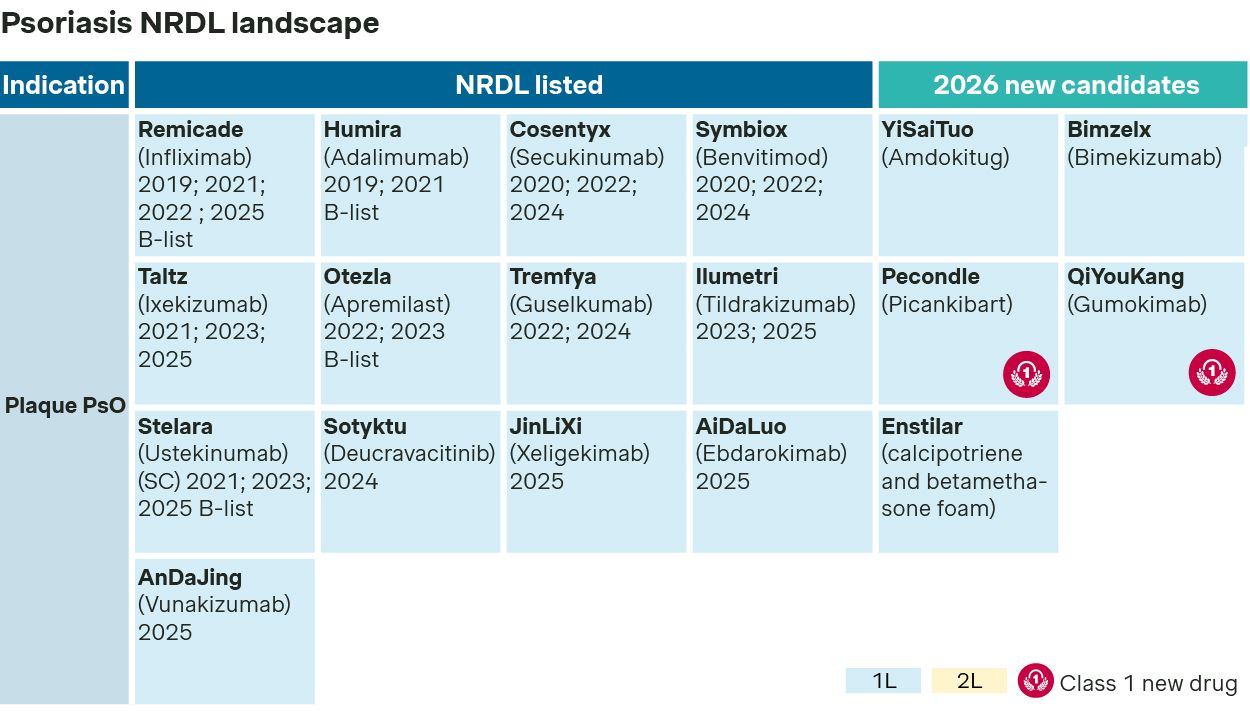
- Plaque psoriasis is one of the most contested indications, with 13 NRDL listed incumbents and five more new contestants this year. Of the two targeting the well-established IL-17A pathway, anmukitug focuses on its Q8W maintenance dosing, while gumokimab emphasizes superior PASI 100 and PASI 75 outcomes at 52 weeks. Bimzelx pivoted its application from C-list to NRDL this year, striving to differentiate itself as the world’s first and only biologic targeting IL-17A/IL-17F dual pathways, with efficacy advantages in psoriasis and nr-axSpA. Picankibart also enters the field as a novel IL-23p19 inhibitor. Interestingly, while Ilumetri was assigned as its comparator during the pre-communication process with NRDL payer experts, it didn’t accept that selection and insisted on Tremfya as the appropriate comparator in its dossier.
Source: Simon-Kucher, NHSA.
Highlights from other therapeutic areas
Other therapeutic areas also feature an interesting dichotomy, with stiff competition in some indications alongside exciting innovations and potential breakthroughs in others.
- In lipid management, both icosapent and pemafibrate target the hypertriglyceridemia population but with different thrusts. The former is primarily used to reduce triglyceride levels in adults with severe hypertriglyceridemia, with a greater focus on addressing residual lipid-related risk through the EPA pathway. The latter targets non-familial hypertriglyceridemia and improves triglyceride metabolism through the PPARα pathway, representing a new option beyond conventional fibrates.
- In severe lower-limb ischemia, a plasmid-based gene therapy known as donaperminogene seltoplasmid leveraged both the dossier pre-submission and comparator pre-communication opportunities afforded by the 2026 NRDL. By producing hepatocyte growth factor in patients with severe lower-limb ischemia, it demonstrated significant efficacy in 90% of cases in its clinical studies spanning nine years, filling the treatment gap for the high-risk population unsuitable for revascularization or surgeries.
- Libevitug emerges as a remarkable new therapy for chronic hepatitis D infection. It targets the PreS1 region of the HDV/HBV surface antigen and blocks viral binding to NTCP, preventing entry into hepatocytes. Clinically, Libevitug demonstrates compelling efficacy in virological responses, ALT normalization, and hepatocirrhosis reduction. Given the severity of hepatitis D and the limitations of nucleoside analogue therapies, Libevitug represents a true breakthrough in antivirals and a poster child of Chinese innovation all the way from bench to bedside.
- In IgA nephropathy, three new therapies with distinct MoAs have emerged. Vanrafia is the first and only highly selective endothelin A receptor antagonist with non-immunosuppressive kidney protection. Voyxact targets the APRIL pathway by reducing pathogenic IgA at its source, with Q4W dosing as a major differentiation. Telitacicept, in comparison, highlights its MoA blocking APRIL/BLyS dual pathways, as well as real-world data for long-term kidney protection among Chinese patients.
- In reproductive health, two long-acting recombinant follicle-stimulating hormone (rFSH) drugs and one rFSH/rLH combination drug passed the formal review. The rFSH products emphasize dosing convenience and improved cycle management, while the combination therapy highlights improvements in clinical outcomes and real-world usage from its early-access pilot in the Greater Bay area. In light of the ongoing policy efforts to boost the birth rate in China, reproductive health is expected to receive greater priority, which may be reflected in NRDL considerations for 2026 and beyond.
Renewal highlights
233 candidates are up for contract renewals this year, with oncology, immunology, and rare diseases as the top therapeutic areas.
Source: Simon-Kucher, NHSA, press release.
- Around 70 products are planning to expand their indications through the contract renewal process, and some may need to brace themselves for the re-negotiation pathway. In oncology, 27 products will seek indication expansions, including Enhertu, which is targeting five more indications across HER2+ GC/GEJC, NSCLC, as well as HR+/HER2 low breast cancer and HER2+ neoadjuvant breast cancer, while local rival Jiatailai focuses on HR+/HER2− breast cancer and 2L EGFR NSCLC. In immunology, 12 products plan to expand their indications, led by Dupixent which aims to add COPD, asthma, bullous pemphigoid, and prurigo nodularis in one go. In rare diseases, Koselugo and Soliris are also preparing to expand into new patient populations.
- The regular listing process has been further refined, with more standardized procedural requirements and clearer China drug pricing rules. The pricing matrix covering annual cost and expected budget impact, as well as the latest changes in the competitive landscape, will inform regular listing and pricing outcomes. Meanwhile, drugs with annual costs exceeding RMB 300 million are expected to face a minimum 10% price cut when transitioning to the regular NRDL.
- An evolving competitive landscape and growing budget pressure make early lifecycle management, indication expansion scenario planning, and preparation for different renewal pathways increasingly important for NRDL incumbents.
C-list highlights
With a significant drop from 121 candidates in its debut to 58 candidates this year, the industry appears to be recalibrating its expectations for the C-list. The list is reserved for high-value, high-price therapies, though actual implementation and uptake have varied widely so far.
- Among the new listing candidates, over half are rare disease and oncology drugs, including gene therapies, CAR-Ts for solid tumors and blood cancers, TCEs, ADCs, and radiopharmaceuticals.
- Many of the candidates are returning after unsuccessful attempts last year, including hemophilia gene therapy XinJiuNing and ALS RNA therapy Qalsody. Many are better prepared this time, with new data and evidence on efficacy and safety in their updated dossiers, while highlighting prior coverage from commercial health insurance (CHI) to demonstrate a manageable budget impact.
- There are also 24 first-time candidates with unique value propositions. Pluvicto seeks C-list inclusion as the first radioligand therapy for mCRPC. Its value proposition centers on the new MoA against the PSMA target, and more importantly its superior efficacy and clinical benefits, which are supported by the latest CSCO, ASCO, and ESMO guidelines, as well as real-world evidence from Chinese patients. Puzolcabtagene autoleucel seeks to be recognized as the first and only CAR-T therapy for children and adolescents with acute B-lymphoblastic leukemia to differentiate itself from five incumbent products and two other candidates in the CAR-T space this year. Tremelimumab strives to fill the gap for hepatocellular carcinoma treatment with impressive data from its global Phase 3 HIMALAYA trial and the subgroup of patients from Hong Kong and Taiwan. In addition, it went the extra mile by tailoring its dossier to check the boxes of each of the four C-list criteria one by one.
- In fact, innovative MoA and modality, significant clinical value, the absence of an NRDL substitute, and compatibility with CHI have been stated as the key criteria for C-list inclusion.Notably, many C-list candidates this year place greater emphasis on the last criterion, citing evidence from prior City-CHI coverage to demonstrate the predictability, manageability, and sustainability of broader inclusion.
Source: Simon-Kucher.
Key takeaways
The NRDL process and its rules have been undergoing constant finetuning, more so this year, with notable timeline changes and, more importantly, new measures for comparator pre-communication and dossier pre-submission, which have been welcomed by the industry in general. In fact, of the 57 candidates opting for the comparator pre-communication process, 54 passed formal review, and of the 60 candidates pre-submitting NRDL dossiers ahead of formal regulatory approval, 49 made it to the next round.
57 drugs took advantage of the new comparator pre-communication process, with 54 making it through the formal review
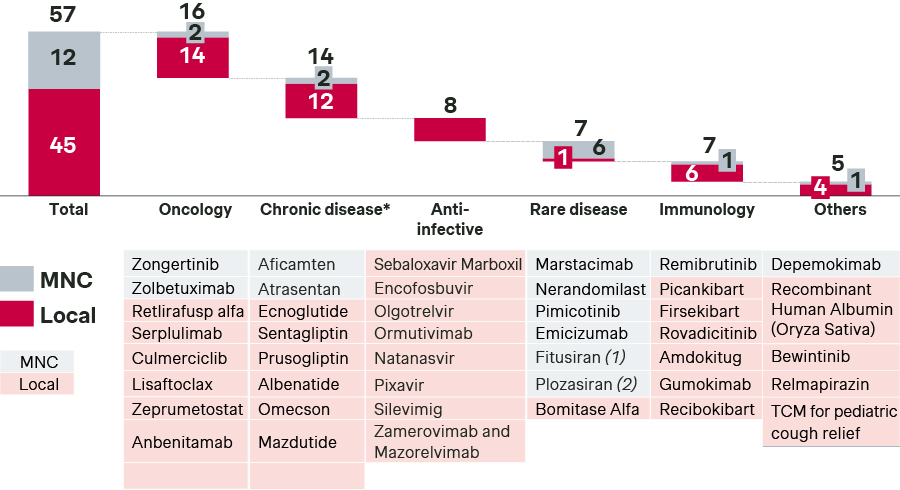
Source: Simon-Kucher; NHSA. *Chronic diseases include neurology, endocrinology, cardiovascular, and nephrology.
At the same time, with a record number of candidates in the running for NRDL new listings and renewals, and many new innovative therapies for the C-list, the real game is just getting started.
Notably, the recent updates to China’s pharmacoeconomic assessment guideline may also influence China drug pricing and NRDL negotiations in 2026. Many candidates are proactively fine-tuning their approaches accordingly, ranging from comparator selection to evidence packaging and pharmacoeconomic model preparation, as they adapt to the latest changes and brace for the next legs of the odyssey.
Get in touch with our experts to learn more about our services and capabilities.