
AI is raising the bar for pharma tender management. Our 2026 Tender Excellence industry study shows that technology can improve speed, consistency, and decision quality, but only when companies have the right capabilities in place.
Pharma companies are paying close attention to AI and tender technology. In our 2026 Tender Excellence industry study, in which we interviewed industry leaders across innovative pharma, generics, and biosimilars manufacturers in Europe and Asia, 70% of respondents identified AI as the most important trend in tender management. At the same time, our findings show a gap between growing interest in AI and organizational readiness: many companies still need stronger governance, strategy, data, and execution processes before they can fully benefit from the technology.
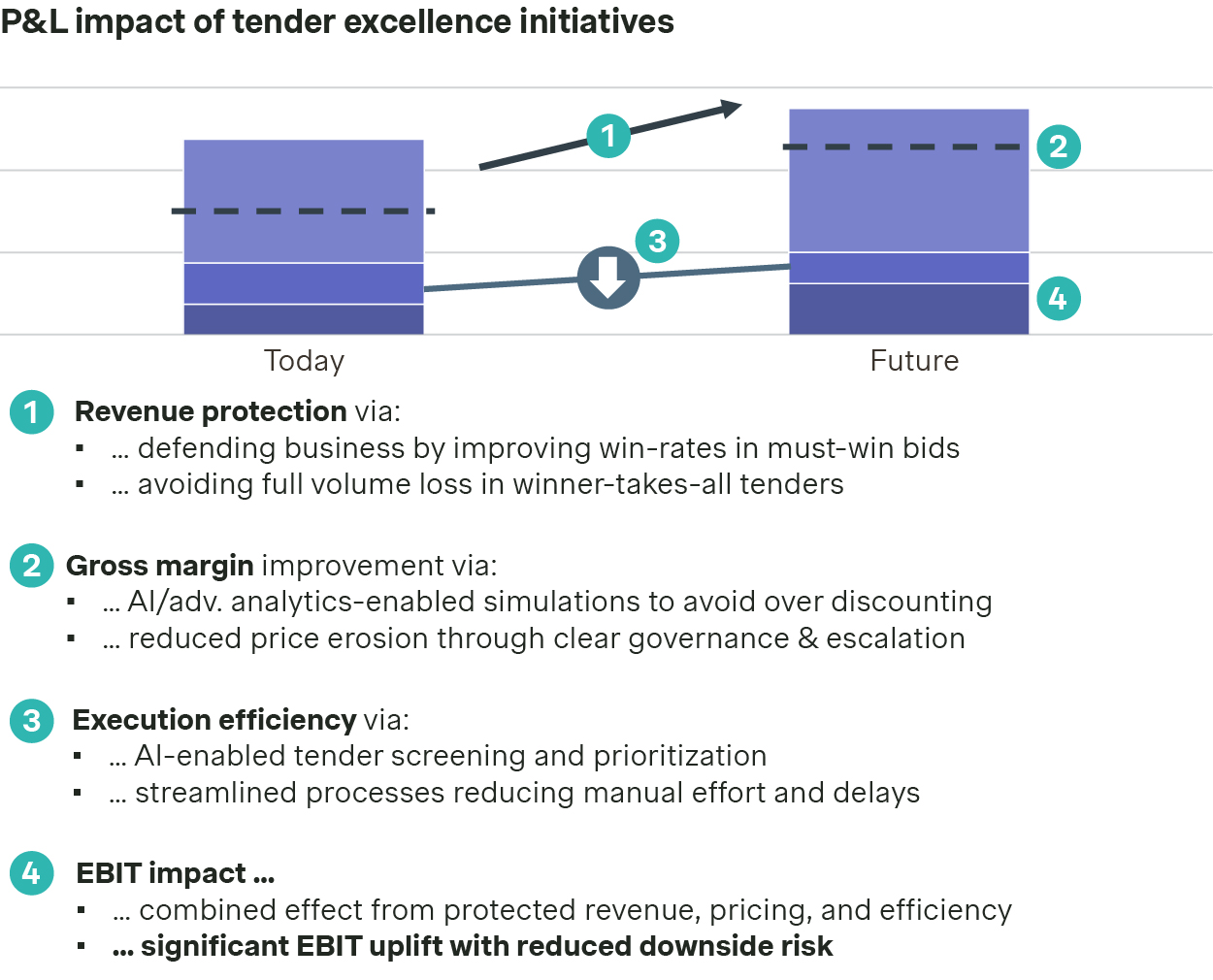
Most leaders recognize that better tender capabilities can help protect revenue in must-win bids, improve pricing discipline, reduce manual effort, and create a stronger fact base for decision-making. The companies best positioned to benefit from AI are not necessarily those moving fastest on tools but the ones building the right foundations around them.
Source: Simon-Kucher insights
Tenders are strategically important for pharma growth
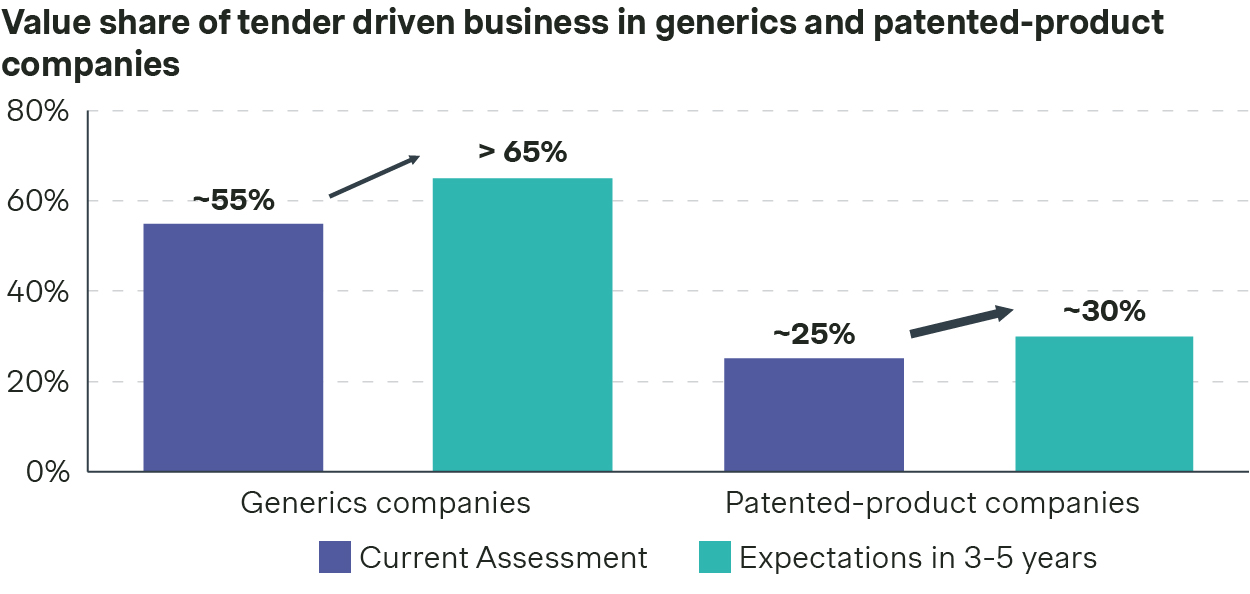
Pharma leaders in our study described tenders as an increasingly important commercial lever rather than an operational response to procurement. In generics, tender-driven business already represents around 55% of revenue and could rise to more than 65% over the next three to five years. The share is lower but still substantial in patented-product companies: around 25% today, climbing to around 30% over the same period.
Source: Simon-Kucher insights
The business implications are significant. Tenders can influence revenue, market access, price levels, and competitive positioning for years, particularly when contracts are large, multi-year, or winner-take-all. A lost tender can trigger rapid volume loss, while a poorly governed price decision can create broader margin pressure. As more business becomes tender-driven, pharma companies need to treat tender excellence as part of the broader commercial excellence agenda.
The external environment reinforces this point. Interviewed leaders pointed to procurement centralization and stricter compliance standards as the most important trends shaping tender management. They also highlighted broader tender adoption, increasing use of non-price criteria, growing payer professionalization, and more complex tender models as relevant developments. Tender management is now more data-intensive and more dependent on early and proactive preparation.
AI is already changing what better tender management can look like
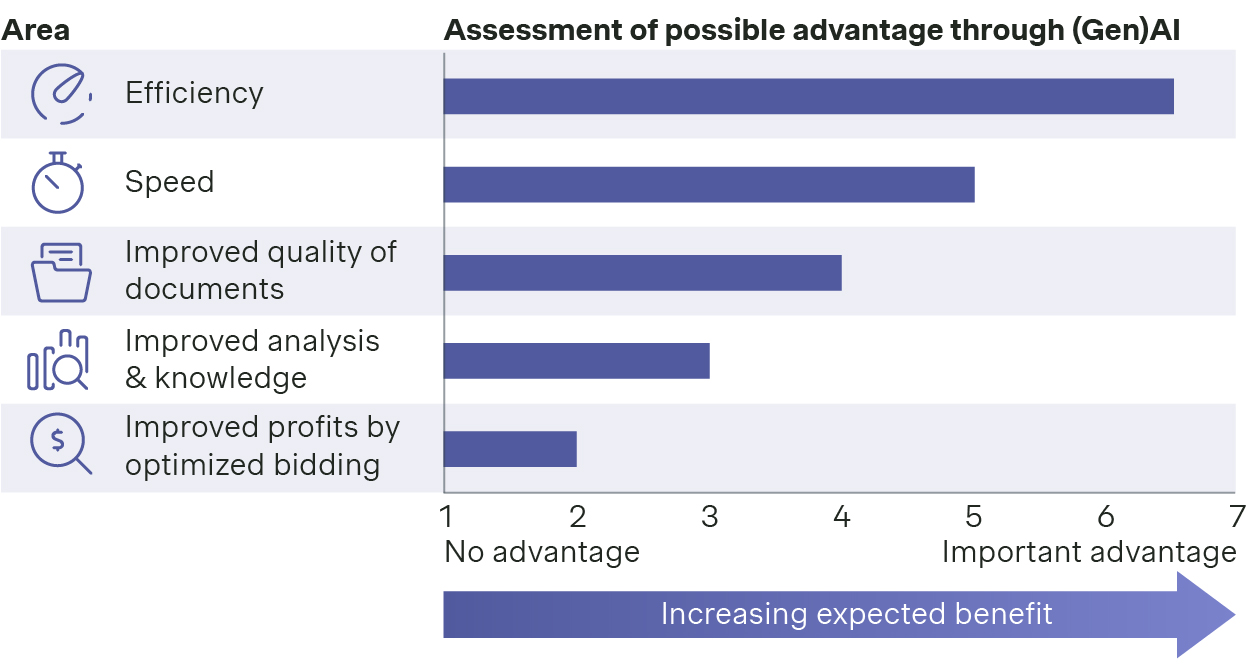
Leaders see the biggest near-term benefits in efficiency, speed, and quality control, especially through the automation of routine tasks, reduced manual workload, faster response timelines, and more consistent tender documentation.
Source: Simon-Kucher insights
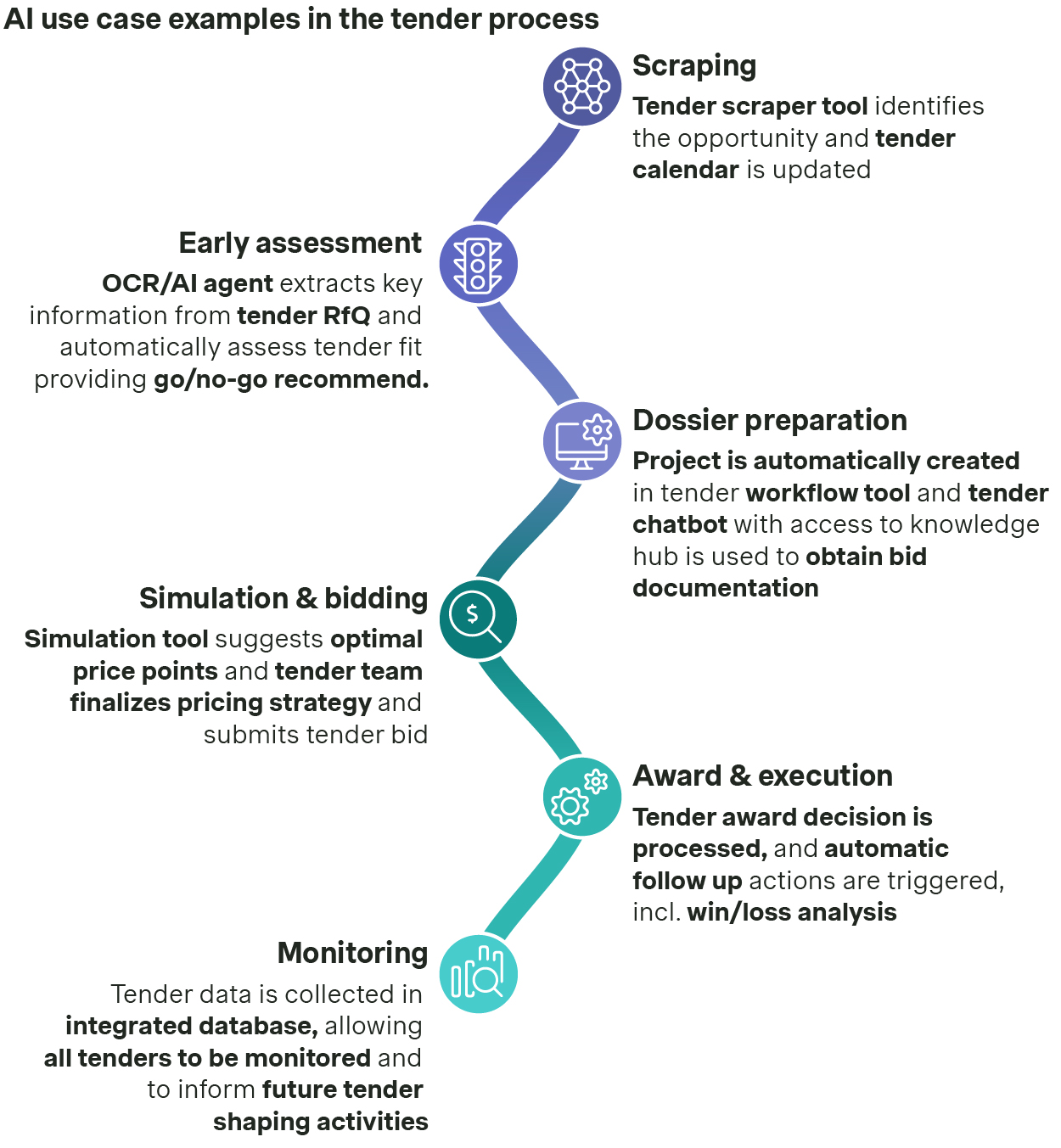
The use cases are already practical. Tender scraping can help companies identify and screen relevant opportunities fast and reliably, while RfQ extraction can structure requirements, terms, and evaluation criteria efficiently. Go/no-go support can assess strategic fit and prioritize resources. Workflow and calendar tools can support planning, task coordination, and approval management. Post-tender analytics can capture win/loss lessons and feed them into future bids.
This is why many pharma leaders see AI as a practical capability upgrade. One interview perspective was clear about the competitive logic: once adoption is common, AI may not deliver lasting competitive advantage, but companies that do not use it risk falling behind. Used well, AI helps teams move faster, process more information, reduce avoidable errors, and focus expert time on the decisions that matter most.
Source: Simon-Kucher insights
Pharma companies are interested in technology, but readiness remains uneven
The study also suggests that the gap between leaders and followers is starting to widen. Some companies have already moved beyond fragmented tools and are building integrated end-to-end tender support, with selected AI use cases already in place and further expansion underway. Others remain at an earlier stage, often focused on basic system support, local solutions, or exploratory pilots. The risk is that the performance gap becomes harder to close as more mature companies learn more from every tender cycle.
Data remains a major readiness gap. While 80% of companies say they have a central tender database, 60% still identify data gaps as a key barrier to deploying AI and advanced analytics. It is critical to consolidate available information in an AI-ready tender database, but best-practice companies do not wait for the perfect data foundation. They start with focused AI use cases, build experience in priority areas, and use early momentum to improve data quality, structure, and availability over time.
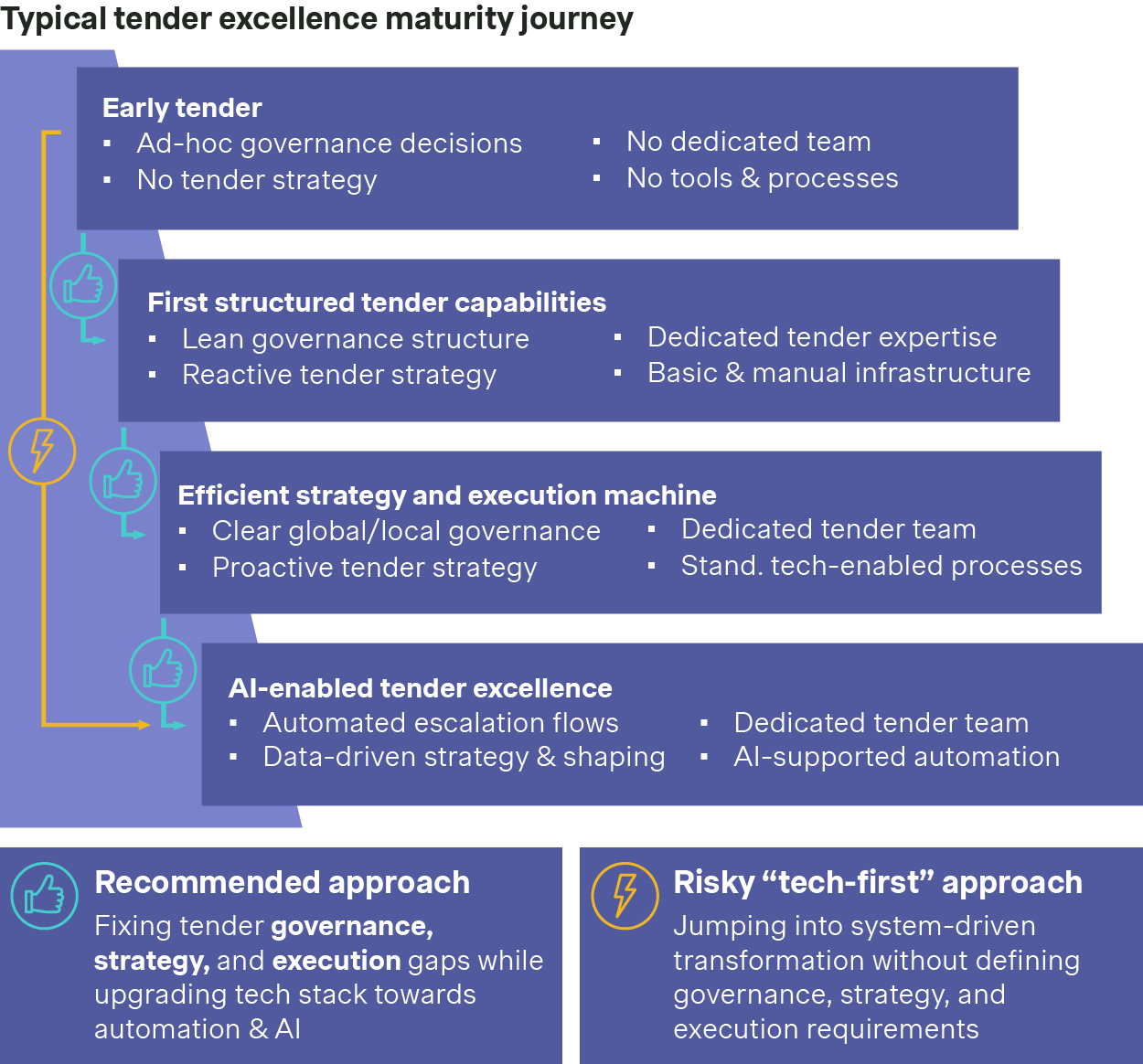
However, this pragmatic approach only works if companies are also focusing on their tender management basics. AI use cases can create momentum, but they will not clarify who owns a strategic tender decision, define escalation rules, or create a tender strategy. Several experts we interviewed described bottlenecks in decision-making, limited local resources, manual coordination, and weak post-tender follow-up as recurring pain points. These are governance, process, and capability issues that need to be addressed for technology to deliver its full value.
The most successful transformations start with a clear view of the business problem, the decisions that need support, and the data and processes required to improve tender management.
Source: Simon-Kucher insights
What pharma leaders should fix now
The study points to four areas pharma companies should address if they want to capture the value of AI, analytics, and tender systems.
- Define a structured tender strategy
The study found that 75% of pharma companies do not have a structured tender strategy and landscape assessment approach. Leaders linked this to fragmented execution, opportunistic participation, time-consuming preparation for lower-priority tenders, and limited visibility on upcoming opportunities. A stronger approach starts with understanding the tender landscape, identifying must-win opportunities, assessing the competitive position, and focusing resources where they can create the most impact.
- Clarify governance and escalation
Tender decisions can have implications beyond a single market or contract, especially when price levels, reference effects, or strategic accounts are involved. Pharma leaders highlighted the need for clearer ownership, better escalation logic, and more decision-ready information for central and regional teams. In many cases, the most effective model is hybrid: local teams lead market execution, while central or regional teams provide strategic guidance, pricing guardrails, data infrastructure, and escalation support.
- Standardize execution before scaling tools
Several leaders described tender execution as too manual, too locally driven, and too dependent on individual experience. Common issues include limited visibility on upcoming tenders, poor coordination before submission, inconsistent bid decision processes, and missing win/loss analysis after the award. Companies need to map the end-to-end process, define roles and responsibilities, clarify handoffs, and establish common milestones. Tools can then reinforce the process instead of forcing teams to work around a system logic that does not match business needs.
- Build a practical data and system roadmap
Not every company needs a full end-to-end tender platform immediately. Some should start with a tender calendar and opportunity screening. Others may prioritize workflow automation, approval routing, post-tender analytics, or better integration between tender data and broader revenue management systems. The right roadmap depends on tender exposure, market archetypes, current maturity, data quality, and internal capabilities. What matters most is that system investments are connected to clear business requirements and can scale beyond fragmented local solutions.
Best-in-class companies already have integrated end-to-end tender systems in place. What sets them apart is that these systems were designed around clear business needs and established tender processes, rather than through a tech-first approach, allowing tools and AI automation to deliver tangible impact and efficiency.
The opportunity: From reactive tendering to scalable capability
The next phase of tender excellence will be defined by companies that combine strong foundations with data, systems, and AI. Pharma companies do not need to pause technology investment, but they do need to anchor each investment in a clear business need.
For pharma leaders, the priority is therefore clear. Build visibility on the tender landscape, decide which bids matter most, strengthen governance and escalation, improve data quality, standardize execution, and then use AI and systems to scale what works.
At Simon-Kucher, we help pharma companies assess tender maturity, define governance and strategy, improve execution processes, design data and system roadmaps, and develop AI-supported tender solutions.
In the coming years, AI will become part of everyday tender management. The real differentiator will be an organization's ability to combine AI with clear strategy, robust governance, high-quality data, and disciplined execution. Pharma companies that build these foundations today will be best positioned to win in a more competitive and tender-driven market.
You can also watch out webinar to hear more insights from our experts.
Get in touch to discuss how your organization can adopt AI in pharma tender management and build the strategy and data needed to make it work.