
Explore how pharmaceutical companies can align evidence generation across key stages of the product lifecycle to maximize the value for innovative medicines in China. Real-world case studies highlight effective approaches and success factors.
In China's increasingly complex pharmaceutical market, generating more evidence does not necessarily translate into greater product value. Despite substantial investments in clinical and real-world evidence (RWE), pharmaceutical companies often struggle to ensure that evidence generation is aligned with long-term business objectives, addresses the evolving needs of stakeholders across the product lifecycle, and is effectively coordinated across internal functions. As a result, critical evidence gaps persist, resources are spread across disconnected initiatives, and opportunities to accelerate approval, reimbursement, and market access may be missed.
Integrated Evidence Planning (IEP) is becoming a strategic imperative for pharmaceutical companies seeking to maximize the full potential of innovative medicines in China. By generating “the right evidence, for the right stakeholder, at the right time”, IEP enables companies to move from reactive evidence generation to proactive, lifecycle-oriented planning, facilitates faster approval and access, ensures optimal pricing and reimbursement outcome, and strengthens competitive differentiation.
Effective IEP requires an integrated approach across the product lifecycle stages, internal functions, and external stakeholders. By systematically identifying evidence gaps, mobilizing cross-functional resources, and anticipating evolving stakeholder expectations, pharmaceutical companies can optimize resource allocation and build a stronger foundation for sustainable market access.
Integrated evidence planning needs to be integrated at three levels
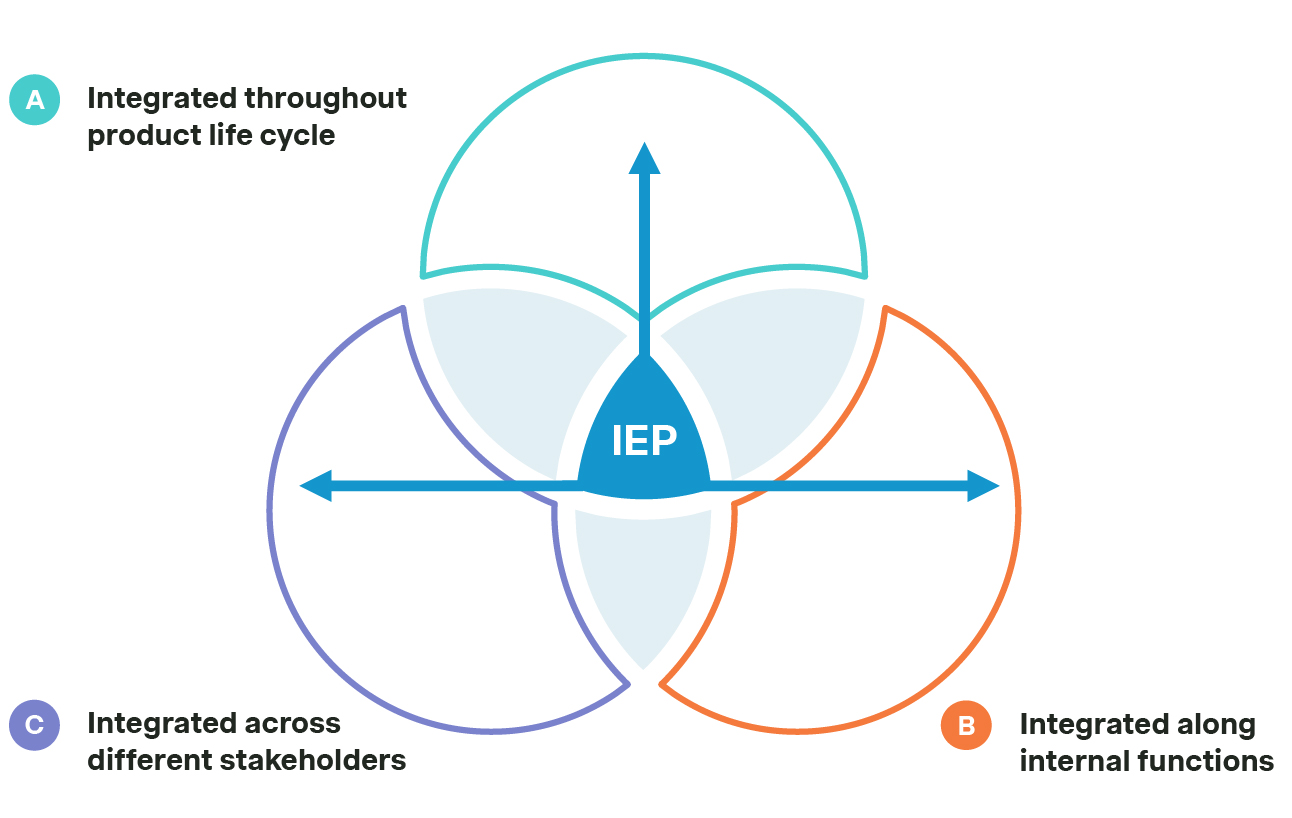
Source: Simon-Kucher insights
Integration throughout the product lifecycle
Successful IEP requires pharma companies to plan early and anticipate evidence requirements at each stage of the product lifecycle, identify potential gaps, and develop and execute a forward-looking evidence generation strategy. Rather than reacting to individual regulatory or market access milestones, companies should incorporate evidence requirements across the product lifecycle into the development blueprint early on.
Evidence throughout product lifecycle stages
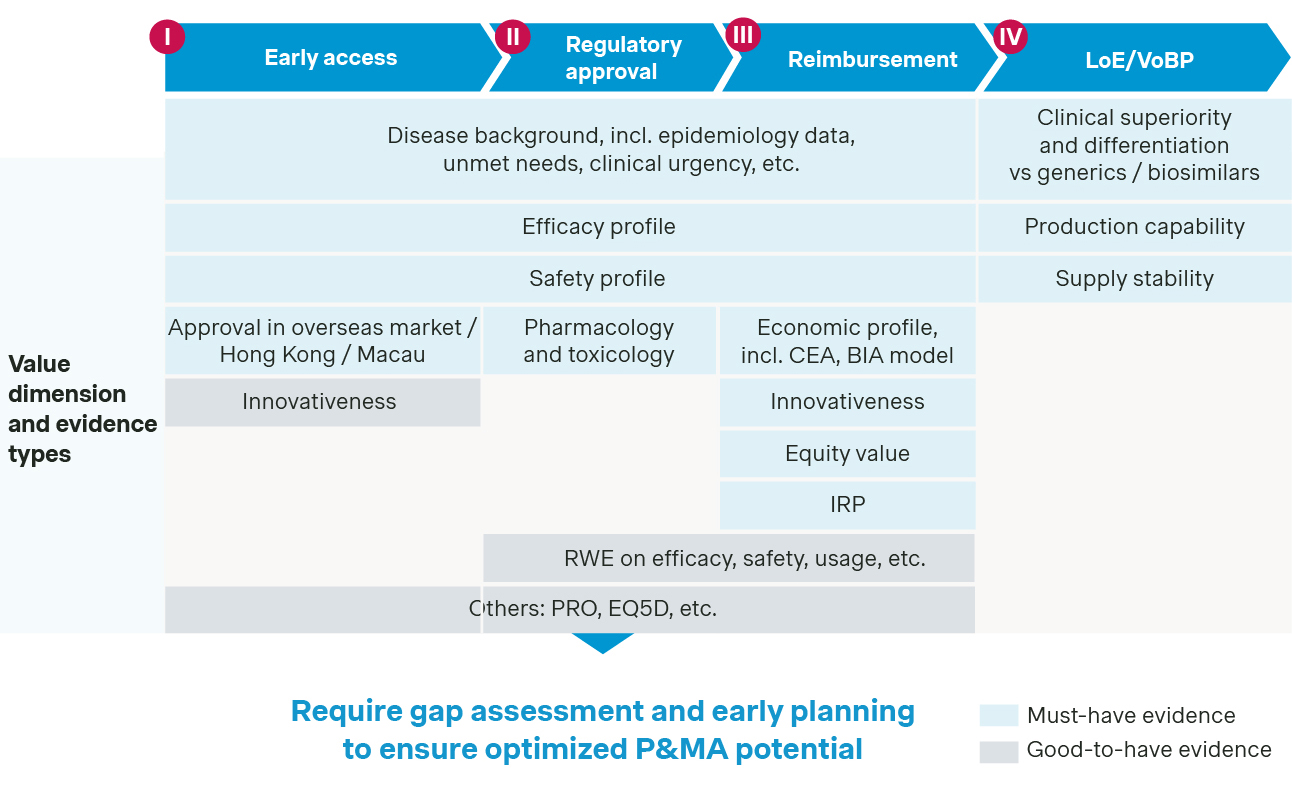
Source: Simon-Kucher insights
- For early access to China through Bo'ao or the Greater Bay Area (GBA), a comprehensive evidence package is required to support applications and institutional evaluations. This typically includes evidence of overseas regulatory approvals, such as approvals in Hong Kong or Macau where applicable; disease background, such as disease burden, unmet medical needs, clinical urgency, and current treatment practices based on clinical guidelines; as well as product-specific information, including approved labeling and efficacy and safety profiles. Together with institutional qualifications and other application requirements, these materials provide the basis for evaluating whether an innovative medicine can be introduced through an early access pathway.
- For regulatory approval, in addition to disease description and clinical trial results, regulatory authorities assess evidence relating to pharmacology, toxicology, pharmaceutical quality, clinical study results from global and China trials, and the overall benefit–risk profile. RWE generated through early access programs may also provide supportive evidence for regulatory submissions and, where accepted by regulators, facilitate the approval process.
- For reimbursement, the National Reimbursement Drug List (NRDL) evaluates innovative therapies across five distinct value dimensions: efficacy, safety, innovativeness, economic value, and equity. Each requires a tailored evidentiary narrative, with broad implications for IEP.
- For efficacy and safety, the National Healthcare Security Administration (NHSA) increasingly emphasizes comparative value against NRDL comparators. This creates challenges for products approved primarily on the basis of Phase 2 single-arm studies or Phase 3 placebo-controlled trials, where direct evidence against active treatment alternatives may be limited. Robust indirect treatment comparisons, real-world comparative studies, and other complementary evidence may therefore become critical.
- For economic value, NRDL assessment considers multiple factors, including cost-effectiveness, budget impact, and international reference prices. This makes the early incorporation of health economic endpoints into clinical development, the generation of robust China-specific epidemiological data, the clarification of drug consumption and duration of treatment, and the collection of relevant international pricing information increasingly important for NRDL listing and pricing outcomes.
- Alternative reimbursement pathways, including city commercial health insurance (city CHI) and the C-list, may apply different evaluation priorities. For example, China's emerging C-list may place relatively less emphasis on economic value and equity than the NRDL, while assigning greater importance to “insurability”, including the feasibility of CHI coverage, fund risk exposure, and product suitability for commercial insurance arrangements. Evidence strategies should therefore be tailored to the specific objectives and decision criteria of each reimbursement pathway.
- For drugs with LoE / VoBP pressure, evidence generation focuses on demonstrating meaningful differentiation from competitors and generics. Comparative clinical evidence supporting superior efficacy, safety, convenience, or other clinically relevant advantages becomes particularly valuable. For VoBP, manufacturing capacity, supply reliability, and the ability to ensure consistent product availability may also influence eligibility. An effective IEP should anticipate these evolving requirements rather than treating reimbursement inclusion as the endpoint of evidence planning.
A few innovative therapies have exemplified the integrated approach with different thrusts.
- A novel RNA therapy for hyperlipidemia incorporated China-specific RWE into its early evidence planning to accelerate regulatory approval, facilitate NRDL inclusion, and differentiate itself from PCSK9 mAbs. Its first real world study (RWS) in China was launched in 2021 in Bo'ao as part of an early access program. The study generated real world data from Chinese patients before the completion of local trials and provided additional safety evidence ahead of regulatory approval in China in 2023. Following approval, a retrospective RWE study compared the therapy with PCSK9 mAbs, demonstrating greater LDL-C reduction vs. PCSK9 mAbs with sustained and stable target achievement. The two studies provided evidence that real-world dosing is aligned with the label, pre-empting payer concerns on budget impact.
A novel RNA therapy A leveraged Bo’ao RWE to support regulatory approval, NMA and comparative RWE to demonstrate relative efficacy, and post-launch RWE to inform BIA
Product A evidence packages
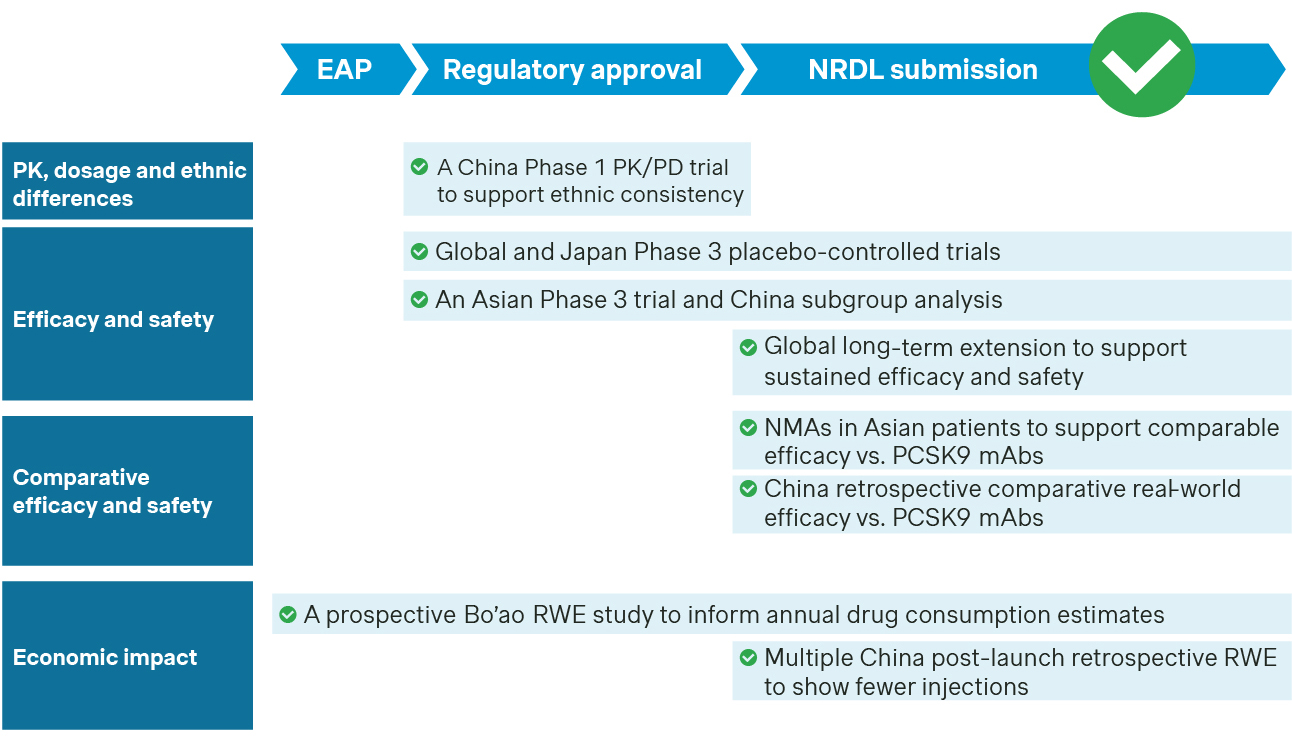
Source: Simon-Kucher insights; NMPA; NHSA
An innovative rare disease therapy faces uncertainty when it comes to its dosing schedule. Its label specifies once-weekly dosing for at least four consecutive weeks, and follow-on treatment depending on clinical evaluation. The duration of treatment (DoT) could range from four to 52 weeks under the default annual cost calculation typically adopted by NRDL payers. The DoT was not an issue during regulatory approval as long as the risk-benefit had been proven, but it could have significant implications for NRDL submission. The company anticipated payer concerns on budget impact and developed evidence from global trials and Bo'ao RWE to support a four-week dosing regimen. This went a long way to preempt payer concern on DoT and improve the outcome of its NRDL listed price.
An innovative rare disease therapy B planned early and leveraged its RWE during EAP to help NRDL listing by minimize dosing impact
Product B China pricing evolution, kRMB
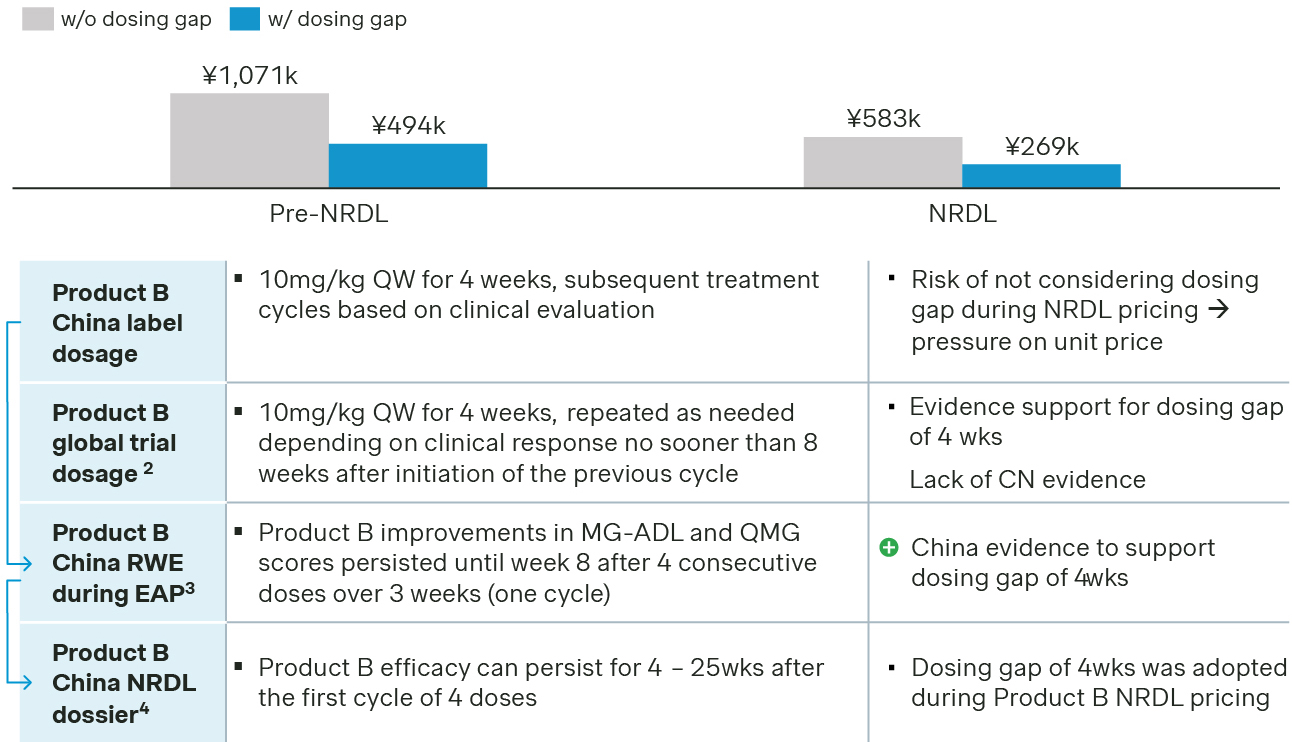
Source: Simon-Kucher insights, NHSA
In contrast, missteps can be costly in many ways.
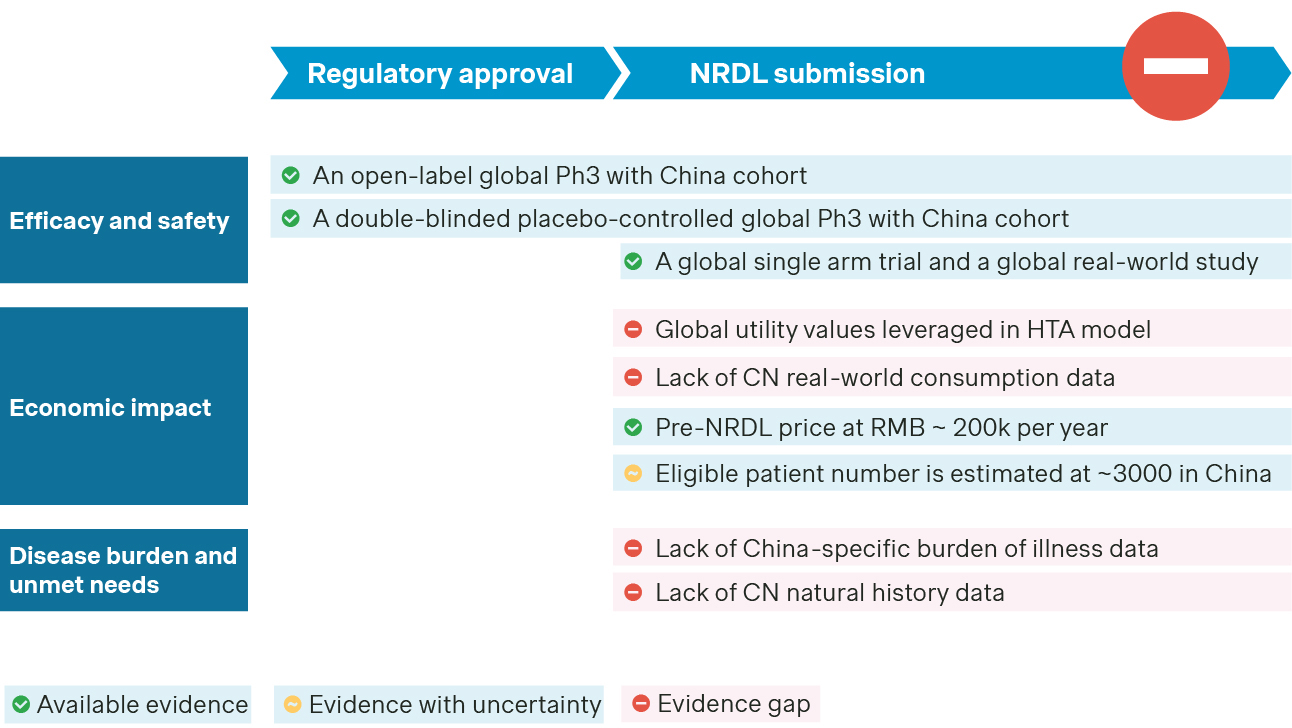
- A rare disease drug achieved regulatory approval with a global placebo-controlled Phase 3 trial, including a small China bridging cohort. During NRDL negotiations, payers challenged the extrapolation of global utility values in the drug's HTA model and the lack of China-specific real-world consumption data. Patient-reported outcomes and health-related quality of life were not collected during the trial, no indirect treatment comparison was performed, and post-launch RWE was unavailable to address questions on its real-world efficacy, safety, and consumption. Not surprisingly, the drug's NRDL attempt was not successful, and the drug subsequently exited China market after failing to gain traction.
A failure case: A rare disease drug C failed in NRDL in lack of IEP, and its sponsor exited China afterwards
Product C evidence packages
Source: Simon-Kucher insights
Integration across internal functions
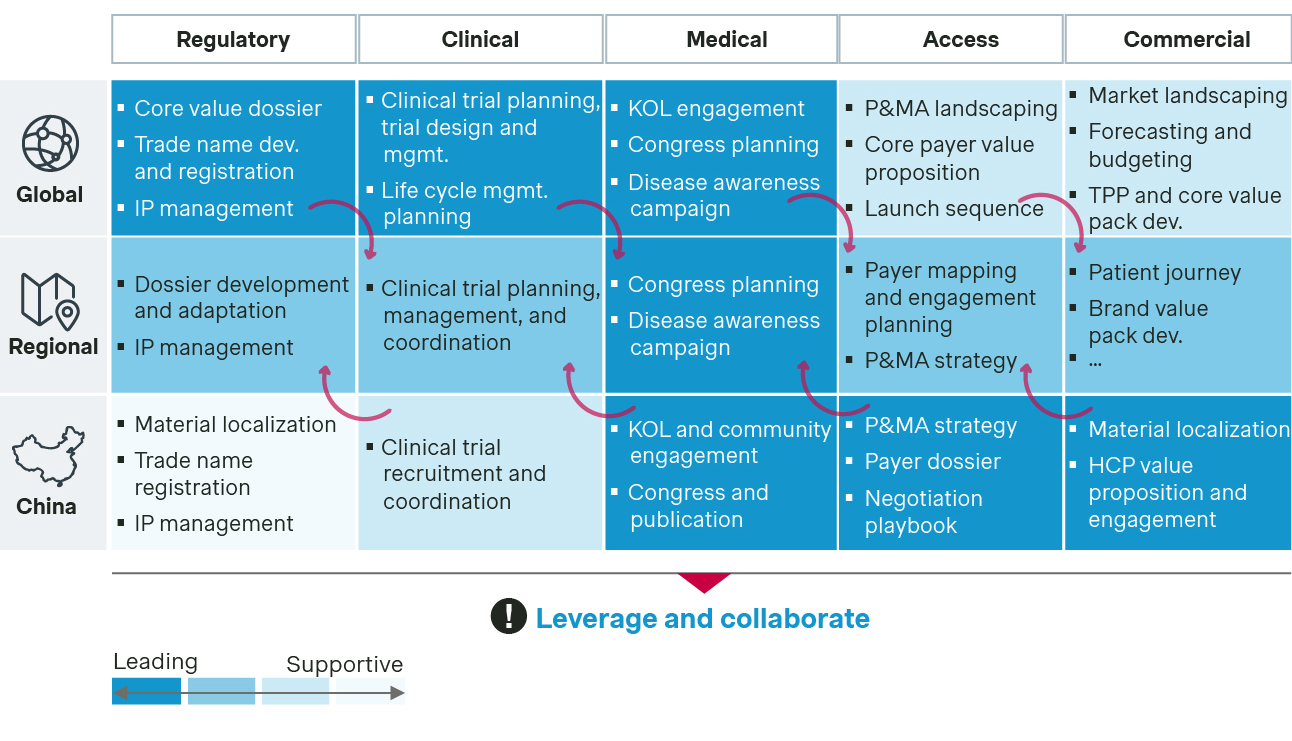
Effective IEP depends on close collaboration across multiple internal functions. However, successful integration requires more than simply coordinating independent evidence generation activities. It calls for “integrated governance”, in which teams work toward shared strategic objectives, align priorities, and make coordinated decisions.
Integrated internal planning and coordination
Source: Simon-Kucher insights
- Global, regional, and China teams: Global teams typically lead pivotal development, global medical strategy, methodological standards, and large investments. Regional or Asia-Pacific teams can coordinate subgroup evidence and transferable methods, while recognizing that Asian data are not automatically equivalent to Chinese data. China teams are responsible for local evidence requirements for NMPA, NRDL, hospital adoption, and subsequent access, feeding these requirements back into global decisions. These teams need to work together to ensure that China-specific considerations are adopted into global protocols.
- Regulatory, clinical, medical, access, and commercial functions: Effective IEP requires clearly defined responsibilities and close collaboration across internal functions, with each contributing distinct expertise to a shared evidence strategy.
- Clinical Development leads trial design, endpoint selection, comparator identification, and subgroup analyses to establish robust efficacy and safety evidence.
- Regulatory Affairs ensures alignment with NMPA/CDE requirements and supports regulatory submissions and label optimization.
- Medical Affairs focuses on addressing unmet clinical needs through real-world evidence generation, investigator-initiated research, and scientific engagement with healthcare professionals.
- HEOR/RWE teams develop indirect treatment comparisons, pharmacoeconomic models, and observational studies to demonstrate comparative and economic value.
- Market Access translates these findings into payer-relevant value propositions, identifies evidence gaps critical to NRDL negotiations, and informs reimbursement and pricing strategies.
- Commercial teams contribute insights into market dynamics, treatment pathways, competitive positioning, and patient needs to support evidence prioritization and future product differentiation.
The guiding principle is not that every function produces identical evidence, but that each function understands how its work contributes to the shared objective. For example, global clinical teams could lead global trials, while China's clinical and regulatory teams could ensure local requirements are addressed through China bridging trials and label alignment. Medical Affairs could interpret China-specific safety findings; HEOR could assess the feasibility and limitations of indirect comparisons; Market Access could identify reimbursed reference options, NRDL evidence priorities, as well as likely payer concerns; and commercial teams could provide treatment-pathway and hospital-readiness insights within appropriate scientific and promotional boundaries.
Integration across different stakeholders
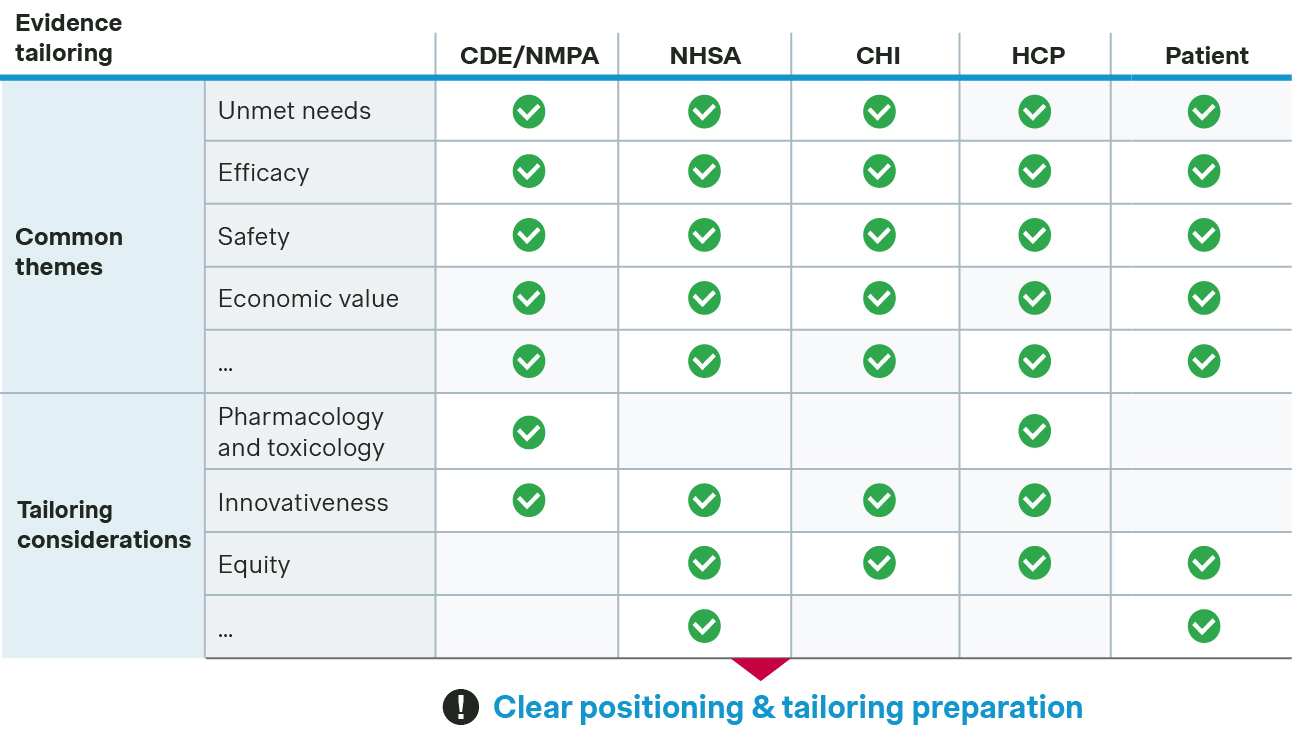
IEP needs a clear, consistent core message that fits the brand's positioning, while tailoring the evidence to each stakeholder.
Integrated external planning and early preparation
Source: Simon-Kucher insights
- NMPA regulators primarily assess whether a medicine demonstrates sufficient efficacy, safety, and quality to support regulatory approval. Key considerations include the robustness of clinical trial design, appropriateness of endpoints and comparators, representativeness of the study population, and overall benefit–risk profile.
- NHSA payers evaluate innovative medicines from a broader perspective, balancing clinical benefits, patient needs, economic value, and sustainability of basic medical insurance funds. Unlike regulatory approval, NRDL inclusion requires companies to demonstrate not only that a treatment is effective, but also how its value compares with existing treatment options and whether its expected budget impact is manageable. Evidence priorities therefore extend beyond traditional efficacy and safety endpoints to include comparative effectiveness, cost-effectiveness, and budget impact.
- CHI payers represent an increasingly relevant stakeholder group as China continues to develop supplementary reimbursement pathways for innovative medicines, including the emerging C-list. Compared with basic medical insurance, commercial insurers may place greater emphasis on insurability and the practical feasibility of coverage. Relevant considerations can include the predictability of treatment costs, clarity of the eligible patient population, attractiveness for new enrollment, and the feasibility of risk-sharing or other payment arrangements. Evidence strategies targeting commercial insurance should therefore complement traditional clinical and economic value assessments with information that supports benefit design, underwriting, utilization management, and financial risk control.
- HCPs prioritize evidence that supports clinical decision-making and improves patient outcomes in clinical practice. Beyond overall efficacy and safety, physicians are interested in identifying patients most likely to benefit, understanding treatment positioning within existing clinical pathways, and evaluating the practical implications of treatment administration and adverse-event management. Relevant evidence may include subgroup analyses, long-term clinical outcomes, real-world effectiveness, safety in specific patient populations, and comparisons with commonly used treatment alternatives.
- Patients provide an important perspective on evidence generation, particularly as healthcare decision-making places greater emphasis on patient-centered value. While clinical efficacy remains fundamental, patients may also prioritize quality of life, symptom control, treatment convenience, and financial affordability.
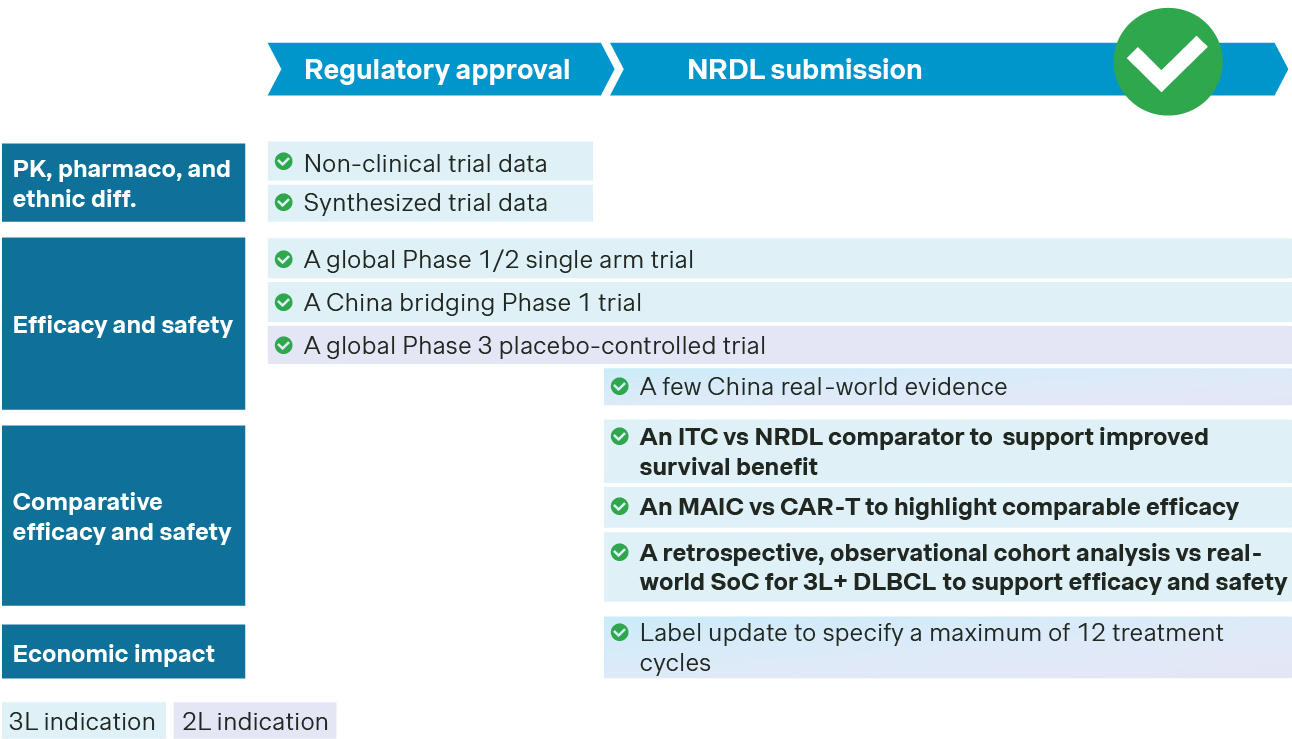
An innovative oncology therapy D provides an additional example on how IEP should be tailored to different stakeholders. Drug D was developed across different lines of therapy for oncology indication, but with only single-arm trial and placebo-controlled trial. While evidence from clinical trials may be sufficient to meet regulatory requirements and support approval, the single-arm designs as well as placebo-controlled design, may be viewed unfavorably by NHSA payers due to the lack of comparative evidence demonstrating superiority vs NRDL-listed comparators. This evidence gap could undermine the justification for a price premium during NRDL listing. To strengthen its evidence package, Drug D leveraged an indirect treatment comparison against relevant comparators, along with a retrospective cohort analysis against real-world SoC to demonstrate compelling survival benefit through Matching Adjusted Indirect Comparison and QALY improvements, and achieved successful NRDL inclusion as a result.
An oncology drug D leveraged different evidence to support regulatory approval, reimbursement assessment, and competitive differentiation
Product D evidence packages
Source: Simon-Kucher insights
Key considerations to achieve success in IEP
- Plan early with clear objectives. IEP should begin early in the development plan, rather than being introduced shortly before regulatory submission or NRDL negotiation. Companies should define their long-term regulatory, reimbursement, and competitive objectives upfront and translate them into concrete evidence requirements. This includes incorporating payer-relevant endpoints, such as validated quality-of-life measures, relevant comparators, and subgroup analyses, into clinical development plans wherever feasible.
- Identify and prioritize evidence gaps through cross-functional governance. Companies should establish a systematic, cross-functional process to map existing evidence, identify gaps against stakeholder requirements, and prioritize evidence generation activities according to their potential impact. A strategic roadmap should clarify which gaps are most critical, which studies can address multiple objectives, and how resources should be allocated across functions and geographies. Regular governance reviews should ensure that priorities remain aligned as clinical data, reimbursement policies, and competitive dynamics evolve.
- Select fit-for-purpose evidence and tailor it to stakeholder needs. Evidence generation should be driven by the decisions it is intended to support, rather than by methodological preferences alone. Companies should engage relevant stakeholders early, through appropriate channels, to understand which evidence types are most relevant to each value dimension. Depending on the objective, this may include head-to-head randomized controlled trials to establish clinical differentiation, China-specific real-world evidence to demonstrate local relevance, indirect treatment comparisons to address comparator gaps, or budget impact models grounded in local epidemiology and treatment patterns. The ultimate objective is to maximize the value of each evidence investment across the product lifecycle.
Get in touch with our experts to strengthen your evidence strategy for better market access in China.