Simon-Kucher's 2026 US Automotive Study examines how affordability pressure is reshaping vehicle demand, purchase decisions, and the economics of ownership.
The 2026 US automotive buyer: More selective, not simply more price-sensitive
The US automotive market is not facing a collapse in consumer interest. It is facing a more selective buyer.
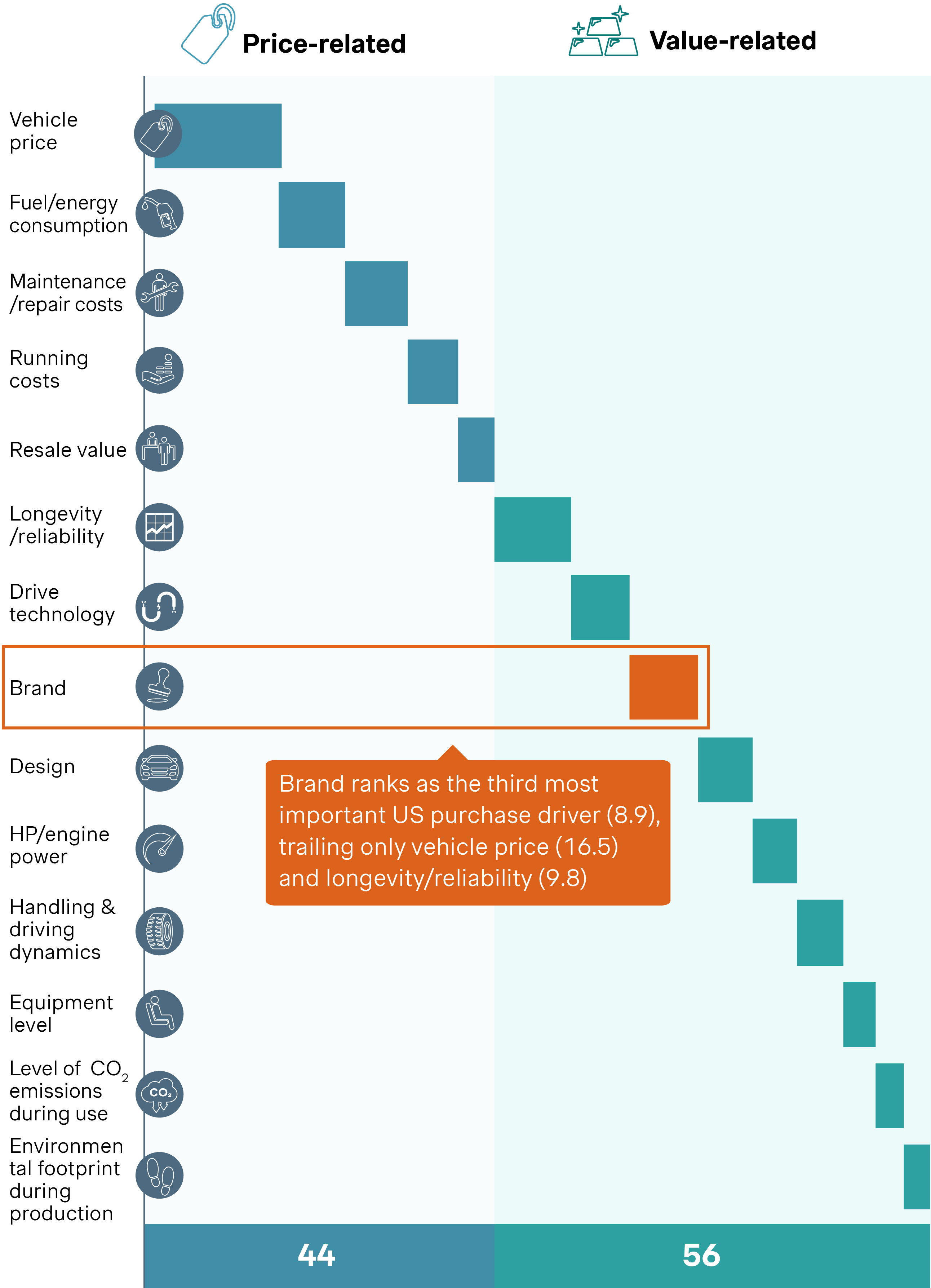
While price remains the strongest individual purchase driver, the findings of Simon-Kucher's 2026 US Automotive Study point to a broader shift in how consumers assess value. Buyers are weighing affordability against reliability, ownership costs, and the risks associated with unfamiliar products or technologies. As a result, purchasing decisions are becoming more conditional, with consumers increasingly willing to reconsider vehicle age, replacement timing, and powertrain choice to achieve an acceptable balance between cost and confidence.
For manufacturers and dealers, these changes have implications beyond vehicle pricing. Maintaining demand increasingly depends on making the overall value proposition more accessible, transparent, and credible throughout the ownership lifecycle.
Affordability is changing participation in the new-car market
New-car affordability remains a significant challenge for US consumers, with average new-vehicle prices approaching $50,000 while the maximum purchase budget reported in the study has declined to approximately $44,500. Although these figures represent different measures, the roughly $5,500 gap illustrates the pressure consumers face when evaluating new vehicles.
This pressure is not evenly distributed across income groups. New-car purchase intent has declined disproportionately among lower- and middle-income households, while higher-income buyers remain comparatively resilient. This divergence suggests that affordability is increasingly shaping not only how much consumers are willing to spend, but also which households remain active participants in the new-vehicle market.
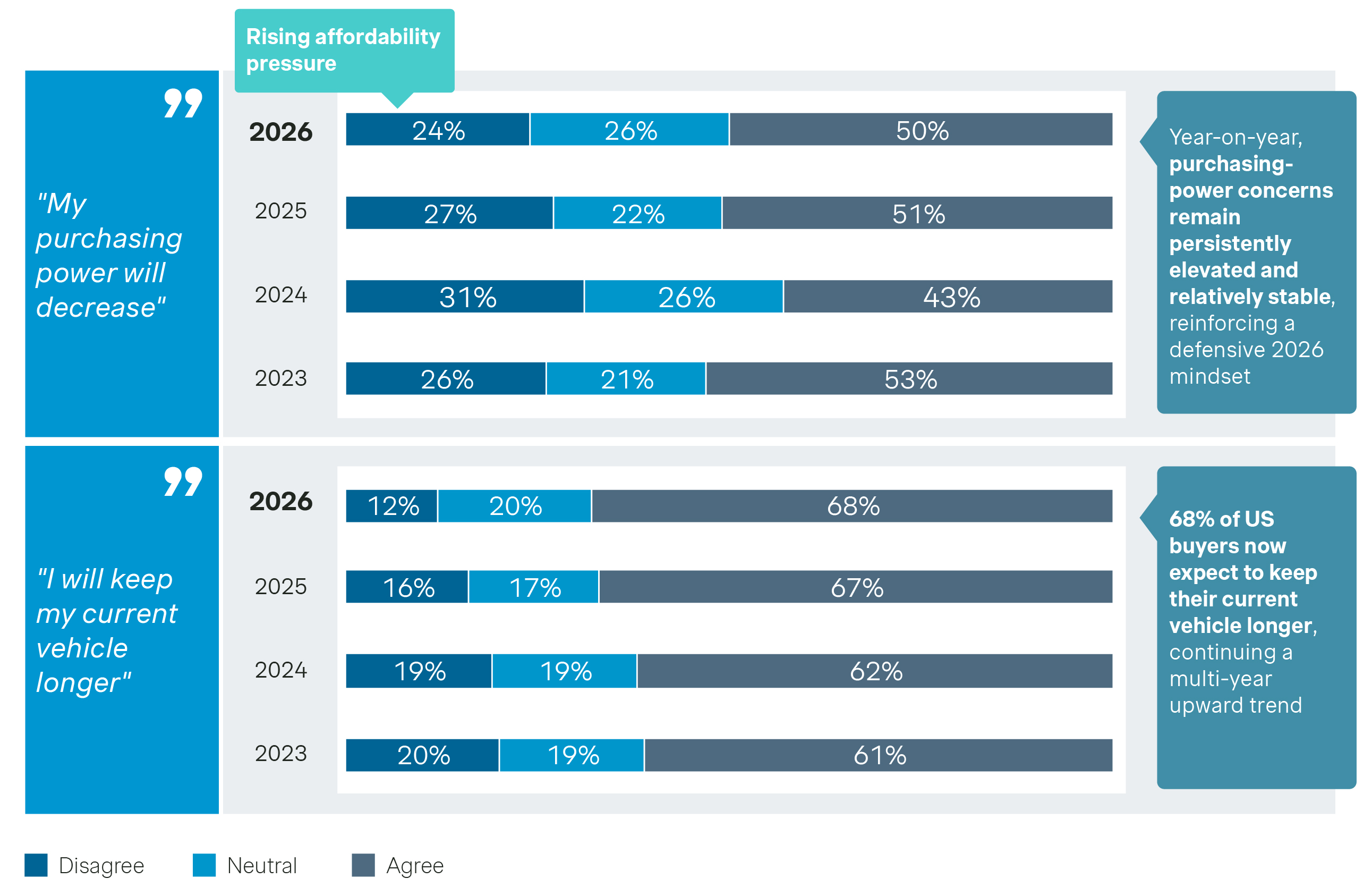
Consumers are responding by adjusting their replacement decisions rather than necessarily abandoning vehicle ownership. Some are extending the life of their current vehicles, while others are considering recently used or certified pre-owned (CPO) alternatives that offer a different balance between purchase price and vehicle quality.
As replacement cycles lengthen, maintaining relationships with these customers becomes increasingly important, particularly through certified pre-owned programs, maintenance, and other services that extend beyond the initial sale.
Used vehicles are gaining relevance, but affordability alone will not drive conversion
As more consumers consider alternatives to purchasing new, used and certified pre-owned vehicles are becoming a more important part of the automotive market. When asked how they would respond to further increases in new-car prices or less attractive discounts, 65% of US respondents indicated that purchasing a CPO vehicle would be appealing, while 64% expressed similar interest in recently used vehicles.
However, greater consideration of used vehicles does not necessarily mean consumers regard them as inexpensive. In fact, 61% believe current used-car prices exceed what they consider reasonable, suggesting that buyers are evaluating used vehicles primarily relative to the cost of buying new rather than against an absolute expectation of affordability.
This places greater importance on the quality and credibility of the used-vehicle offer. Purchase price, mileage, warranty coverage, vehicle-history transparency, and seller trustworthiness receive nearly identical importance ratings, indicating that potential savings must be weighed against concerns about condition and future ownership costs. Hidden defects and unclear vehicle histories remain particularly important barriers, cited by 58% and 50% of respondents respectively.
These concerns create opportunities for manufacturers and dealers to differentiate used vehicles beyond price. Vehicle-history reports and extended warranties increase purchase confidence for 61% and 59% of respondents, while documented maintenance histories and certification can provide additional reassurance about vehicle condition. As used vehicles become more relevant to consumers managing affordability, the ability to substantiate quality and reduce perceived ownership risk may become an increasingly important source of competitive differentiation.
Ownership economics are becoming part of the purchase proposition
The emphasis on future ownership costs extends beyond the used-vehicle market. As consumers retain vehicles for longer periods, maintenance, repairs, and ongoing operating expenses become more important considerations in the overall economics of vehicle ownership.
This creates an opportunity for manufacturers and dealers to bring aftersales services closer to the initial purchase decision, particularly through maintenance plans and warranty products that provide greater visibility over future costs. Approximately 80% of US respondents consider integrating prepaid maintenance or extended warranties into the vehicle purchase process helpful or convenient, indicating broad receptiveness to combining vehicle purchase and ownership services.
Interest in long-term prepaid service contracts varies considerably by generation, with 71% of Gen Z and Millennial respondents finding these products attractive, compared with just 39% of Baby Boomers. This divergence suggests that prepaid maintenance represents a particularly promising opportunity among younger customers, while a more targeted approach to product design and commercialization may be necessary to appeal to older buyers.
For manufacturers, integrating maintenance and warranty products into the initial vehicle offer could also change the economics of customer retention. Establishing the service relationship at purchase provides an opportunity to maintain contact with customers over longer ownership periods, while reducing uncertainty around maintenance costs may strengthen the perceived value of the vehicle itself. The commercial potential therefore lies less in bundling services for its own sake than in designing ownership propositions that consumers can understand, evaluate, and trust.
EV consideration remains constrained by practical ownership concerns
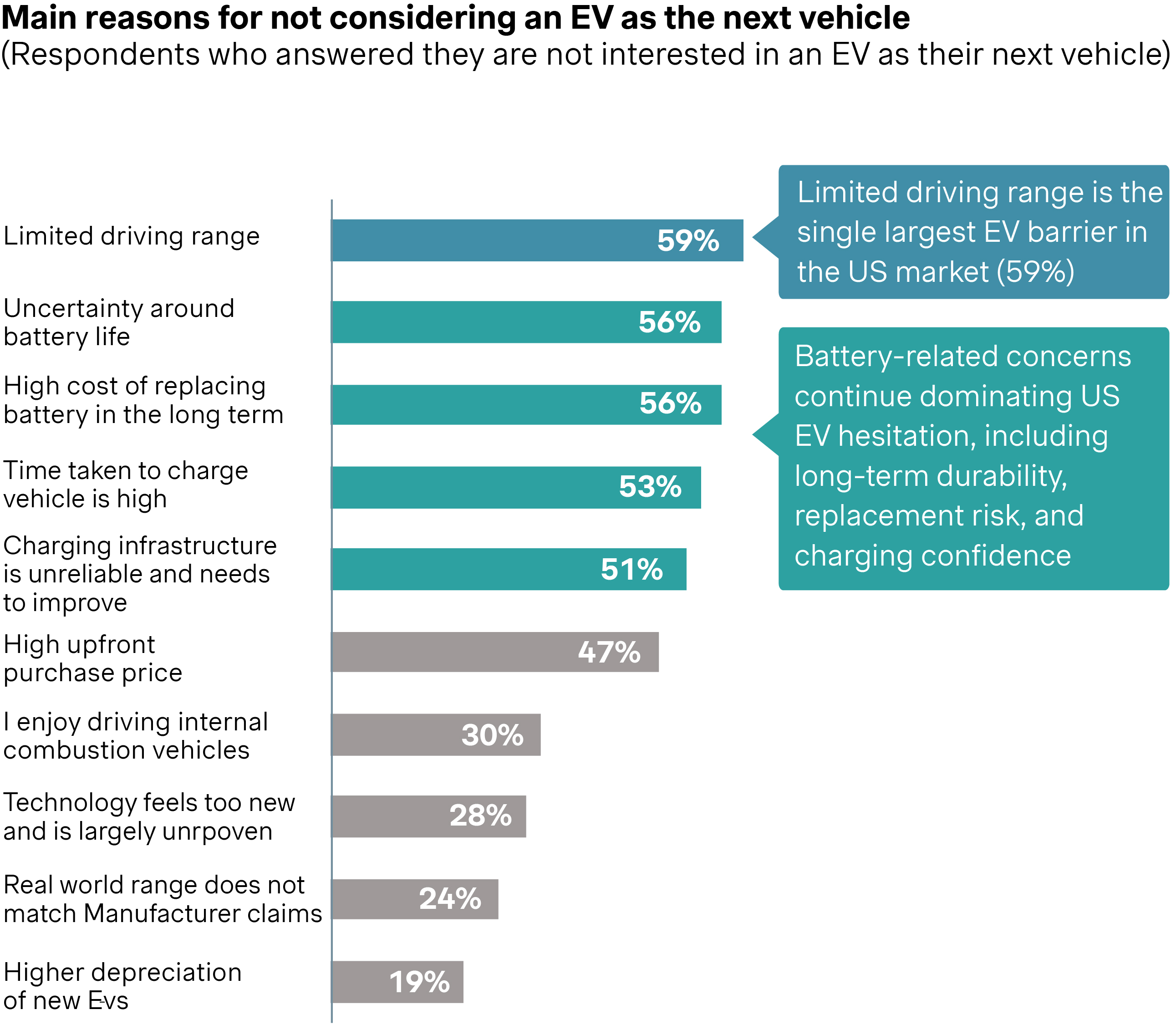
Electric vehicles present a similar distinction between long-term interest and immediate purchase considerations. Although 60% of US respondents believe EVs represent the future of the automotive industry, only 47% would consider purchasing one as their next vehicle, suggesting that acceptance of electrification has not yet translated into comparable willingness to adopt the technology.
The barriers are predominantly practical. Among consumers unwilling to consider an EV, limited driving range is the most frequently cited concern at 59%, followed by uncertainty about battery life and potential battery-replacement costs, both at 56%. These findings indicate that hesitation extends beyond upfront affordability to questions about reliability, usability, and the financial implications of long-term ownership.
The distinction matters because improvements in vehicle technology do not necessarily resolve consumers' perceptions of ownership risk. Greater driving range may address one concern, but confidence in battery durability, charging availability, and future repair costs also influences whether consumers regard an EV as a viable alternative to a conventional vehicle.
Manufacturers therefore face a challenge that extends beyond accelerating electrification. Hybrid and range-extender technologies may provide alternatives for consumers who are interested in electric propulsion but remain hesitant about fully electric ownership, while more transparent information on battery performance, charging, and long-term costs could help strengthen the proposition for battery-electric vehicles. The pace of adoption will depend in part on how effectively manufacturers translate technological progress into practical ownership benefits.
Brand familiarity remains valuable in an increasingly crowded market
Brand continues to influence vehicle purchasing decisions, accounting for approximately 9% of purchase-driver importance among US respondents. Its relevance is reinforced by the growing number of manufacturers competing for attention, with 56% of consumers reporting that they have lost track of the brands available in the market.
This proliferation of choice appears to strengthen the role of familiarity. Seventy-three percent of respondents express a preference for known brands, suggesting that established manufacturers benefit from the reassurance associated with prior experience, perceived reliability, and an existing service network. For newer entrants, the challenge is not simply generating awareness but establishing comparable confidence in product quality and long-term support.
At the same time, consumers do not rely exclusively on manufacturer reputation when evaluating vehicles. Independent tests and reviews are trusted by 60% of respondents, compared with 40% for manufacturer information and 26% for dealers. Other customers' experiences also rank highly, indicating that brand claims are increasingly evaluated alongside external evidence.
The commercial implications differ for established manufacturers and new entrants. Incumbents can draw on existing customer relationships and service infrastructure, but must continue to substantiate the value associated with their brands. Newer manufacturers, meanwhile, may need to invest more heavily in independent validation, warranty assurance, and consistent ownership experiences to overcome the disadvantages of limited familiarity. In both cases, product quality and the ability to demonstrate it remain central to maintaining consumer confidence.
Competing on value requires reducing uncertainty throughout ownership
The findings of the 2026 US Automotive Study suggest that affordability pressure is changing consumer behavior in ways that extend beyond conventional price sensitivity. Buyers are reconsidering when to replace their vehicles, evaluating used alternatives more seriously, and paying greater attention to the risks associated with vehicle condition, technology, and future ownership costs.
These changes create different challenges across the market. For new vehicles, affordability is becoming a more significant constraint on participation among lower- and middle-income households. In the used-vehicle market, stronger consideration is accompanied by concerns about quality and reliability. EV adoption remains limited by practical ownership uncertainties, while growing competition among automotive brands increases the importance of familiarity and independent validation.
Although these developments affect different parts of the customer journey, they share a common underlying requirement: consumers need greater confidence in the value they receive relative to the financial commitments and risks they assume.
For manufacturers and dealers, this places greater importance on making vehicle and ownership economics transparent, substantiating claims about reliability and performance, and maintaining customer relationships beyond the initial transaction. Certified used-vehicle programs, warranty protection, proactive maintenance, and integrated ownership services offer different ways to address these needs, with the appropriate approach depending on customer segment and vehicle proposition.
As the market becomes more selective, competitive advantage will depend not only on offering vehicles at attractive prices, but also on demonstrating why those vehicles represent sound purchasing and ownership decisions. Manufacturers that can combine affordability with credible quality, transparent costs, and reliable long-term support will be better positioned to convert consumer interest into purchases and sustain relationships throughout the ownership lifecycle.
Explore Simon-Kucher's 2026 US Automotive Study for further findings on consumer preferences, vehicle purchasing behavior, and the implications for manufacturers and dealers.