
A successful emerging market launch depends on more than product availability or price. Pharmaceutical leaders need to understand local patient pathways, pinpoint barriers to diagnosis and treatment, and adapt commercial execution to the realities of each market.
Emerging markets are becoming increasingly important to pharmaceutical growth, generating approximately 23% of revenues for the largest pharmaceutical companies in 2024. Yet, standard global launch models often fall short. While the fundamentals of segmentation, positioning, account prioritization, field-force effectiveness, and performance management still matter, these models frequently assume an access environment that does not exist in emerging markets. An approved, clinically effective medicine can remain out of reach because patients cannot be diagnosed, referred, funded, or treated.
Brazil's lung cancer landscape clearly illustrates this gap. Despite the availability of targeted therapies for ALK-positive lung cancer, a 2026 survey found that only 44% of clinicians in the public system reported routine access to the biomarker testing needed to identify eligible patients. Moreover, 72% cited a lack of public reimbursement as a barrier to targeted treatment.
The disconnect between product availability and actual treatment is the emerging market launch chasm. Closing it means adapting launch excellence to how care is delivered and paid for locally. In this context, commercial excellence increasingly becomes patient-access excellence.
Why the global launch template often underperforms in emerging markets
Global launch playbooks typically assume a predictable path from diagnosis to treatment, a workable funding route, and the local capabilities needed to drive adoption. However, across many emerging markets, funding pathways vary widely, diagnostic and treatment capacity are uneven, and policies can shift rapidly. Teams also face speed-versus-affordability trade-offs, global–local coordination gaps, and limited visibility into launch readiness.
While affordability is a major concern in these markets, it is only one part of the equation. Our research on equitable access suggests that lower prices alone may not necessarily expand access when market readiness, supply chains, diagnostics, or treatment infrastructure remain constrained.
India's obesity-treatment market illustrates the point: despite cutting Wegovy's price by up to 37% in November 2025, Novo Nordisk still trailed Eli Lilly's comparatively costlier Mounjaro, which recorded around ten times Wegovy's monthly sales value in January 2026. While clinical efficacy and launch timing also played a role, research suggests that Lilly’s investment in physician education, healthcare-provider partnerships, and local distribution collaborations have helped them attain and maintain their market leadership. Effective emerging market launch strategies therefore need to address pricing, physician readiness, patient awareness, and pathway navigation. 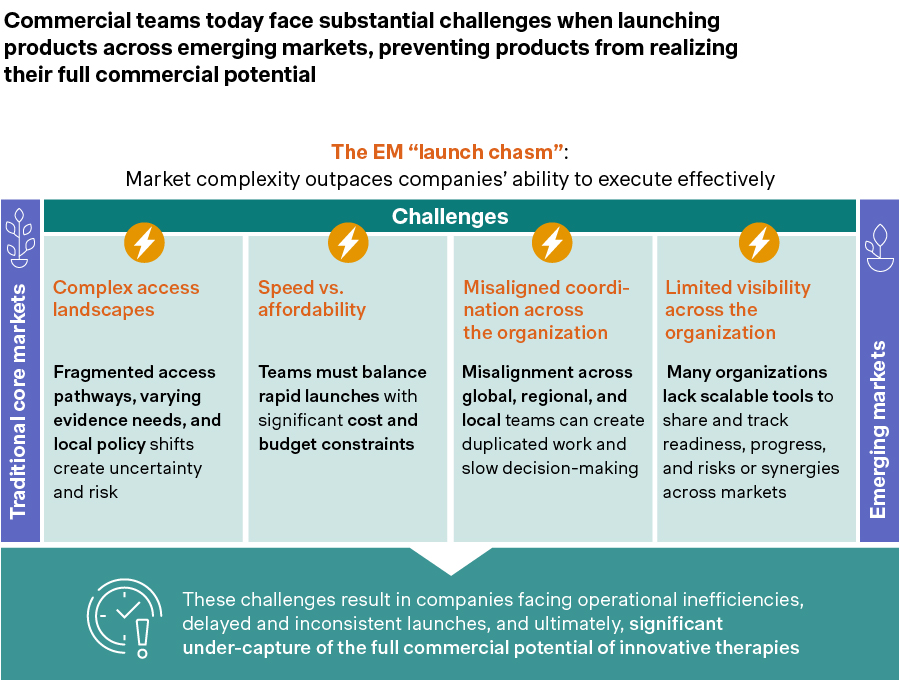
Figure 1: The key gaps preventing launch success in emerging markets
What can companies do?
Understand your markets and how to access them.
Start with the realities of funding, patient affordability, diagnostic and treatment infrastructure, policy, competition, and affiliate capabilities. Look beyond a country-wide approach - a private hospital network may offer a very different route to treatment than the public system in the same market. Segment opportunities by their funding and access environments, and prioritize realistic patient reach, price potential, and speed-to-access, not simply market size alone.
Assess the patient pathway end-to-end.
Trace how patients move from awareness and diagnosis through referral, funding, treatment initiation, and continued use. Quantify drop-offs, wherever possible, to identify the key access constraint. For example, if biomarker testing is unavailable, lower prices may not help; and if funding is the bottleneck, private payer engagement or alternative financing may matter more. In other markets, specialist capacity or infrastructure readiness may instead be the limiting factor.
Prioritize and operationalize the right plays.
Once critical barriers are clear, focus on a few targeted interventions, such as diagnostic partnerships, referral networks, and alternative funding models. Each needs clear ownership, sequencing, milestones, and measures of impact. Our work on private health insurance partnerships in Southeast Asia shows the value of designing financing around the full patient journey, not isolated reimbursement categories.
Global teams can enable this with modular tools and locally customizable launch playbooks rather than rigid strategies. The aim is consistency in execution without losing flexibility to tackle the barriers that matter in each market.
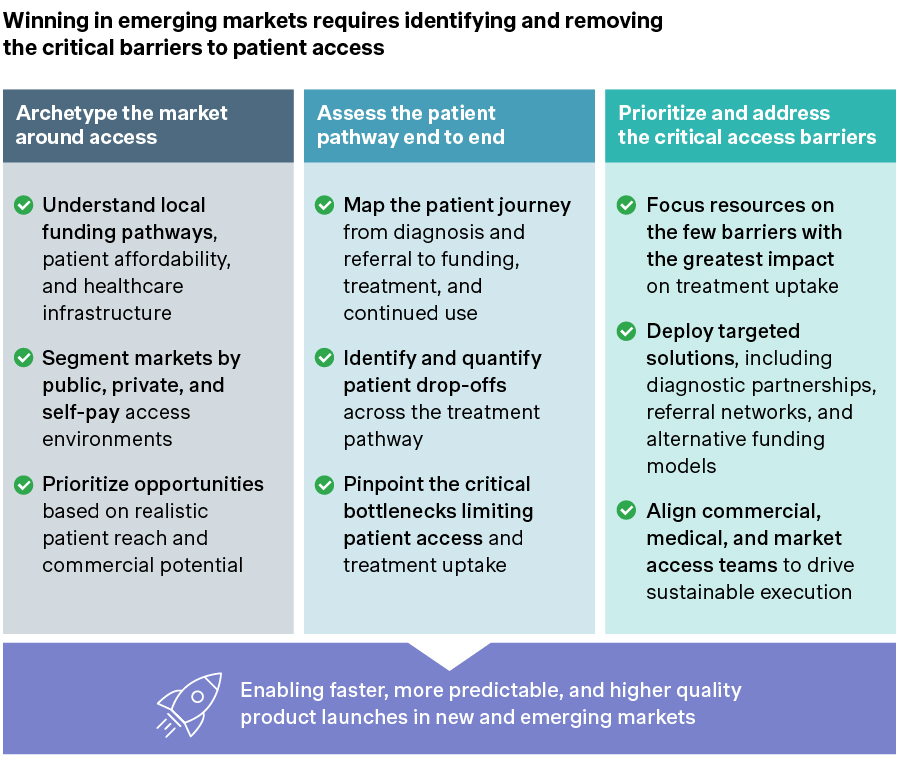
Figure 2: How to win in emerging markets
What does this mean for pharmaceutical leaders?
For pharmaceutical leaders, the shift is from localizing a global plan to designing for the local access environment. Launch readiness should assess commercial activities alongside whether patients can be diagnosed, referred, funded, treated, and retained. That calls for closer alignment across commercial, market access, medical, and supply teams.
Pharmaceutical companies cannot – and should not – solve every gap in an emerging healthcare system. The key is to identify the main constraints that determine access, and focus resources where companies can make a credible, sustainable difference.
The strongest launches combine the rigor of global commercial excellence with a granular understanding of local patient pathways. This can improve launch readiness, reduce execution surprises, and support sustainable growth.
At Simon-Kucher, we combine emerging-market expertise with commercial excellence frameworks to help you build practical, locally relevant pharma launch strategies. Contact us to discuss how to scale successfully across emerging markets.
Thank you to Cheng Kai Lim for the contribution!