
What does it take to monetize prevention in the self-care industry? Drawing on our Better Health 2025 study, we examine how manufacturers can move beyond product premiumization and capture value through smarter segmentation and well-designed hybrid offers.
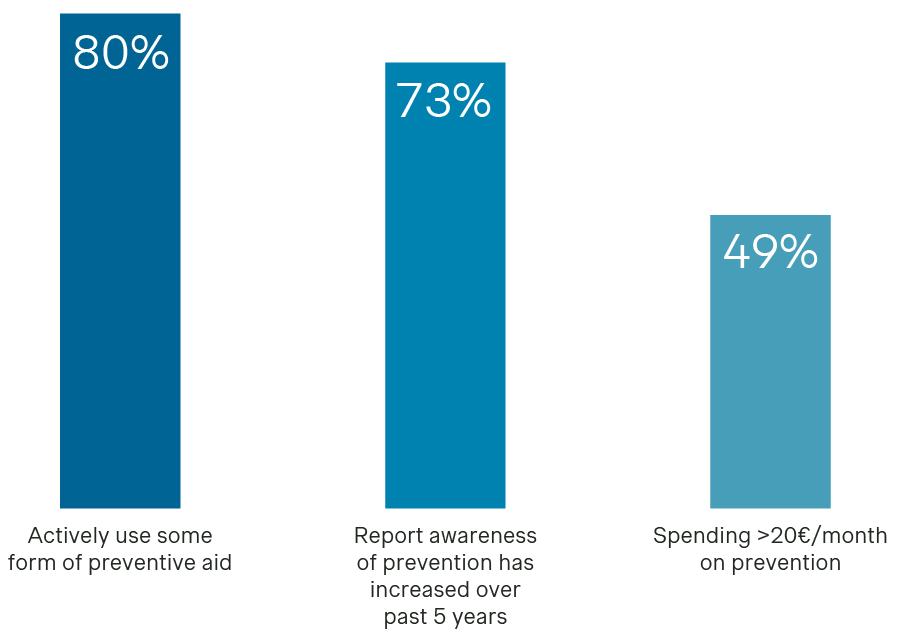
Demand for preventive healthcare is rising, but few manufacturers are converting it into pricing power.
That is the commercial reality emerging in the self-care industry. Simon-Kucher’s Better Health 2025 study confirms that consumer intent is growing and new value pools are emerging beyond traditional product categories. But demand alone does not guarantee pricing power.
Source: Simon-Kucher's Better Health 2025 study
If you treat prevention as a simple product premiumization story, you will miss the bigger opportunity. The real prize lies beyond the pill: in offers that combine trusted products with digital support, services, personalization, and ongoing engagement. The companies that win will redefine what prevention is worth and how that value is captured.
The growth story – and the challenge – now is about how to make the category profitable. Which consumers create the most value? What earns a premium? Which hybrid models can be monetized? And how do you turn all of that into a coherent commercial architecture?
Which prevention consumers create the most value?
Start with market structure. Prevention is not a typical market, and that matters commercially.
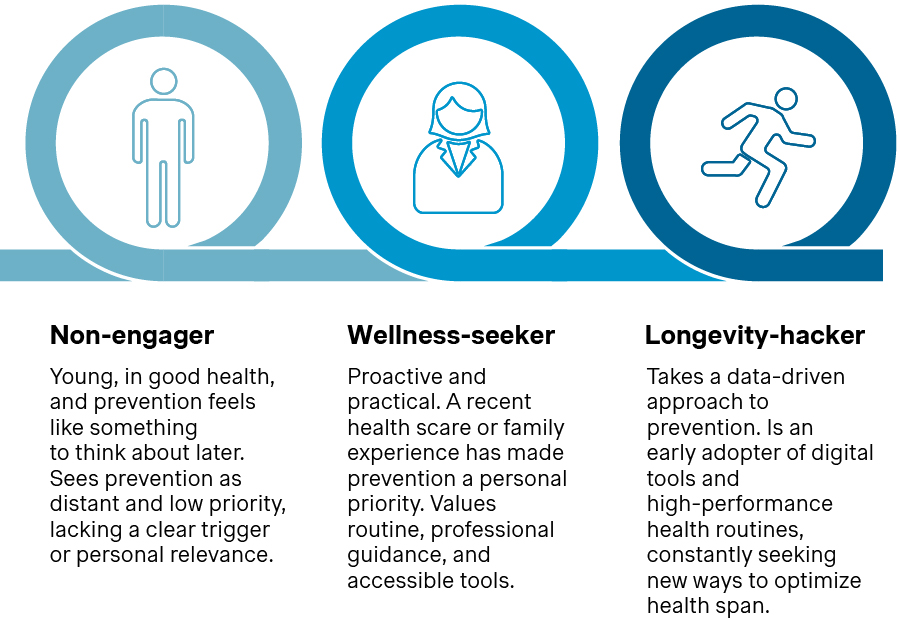
Better Health 2025 points to three distinct value pools. First, there are less engaged consumers who may be open to prevention but need simple, low-friction activation. Second, there is a broader engaged mainstream where scale sits. Third, there is a narrower longevity-driven group that represents the premium edge.
Source: Simon-Kucher's Better Health 2025 study
These groups do not create value in the same way. Less engaged consumers expand the category, but are harder to monetize in the short term. They need trust, clarity, and ease before they trade up. By contrast, consumers who are already active in prevention welcome advanced solutions and recognize value beyond the core product.
That is why segmentation matters so much. Many manufacturers lose margin by placing premium innovation in the wrong segment.
If you want to grow in prevention, avoid building one proposition for a generic “health-conscious consumer.” Build a layered portfolio: one tier to drive activation, another to scale participation, and a third to capture premium value.
What earns a premium in prevention?
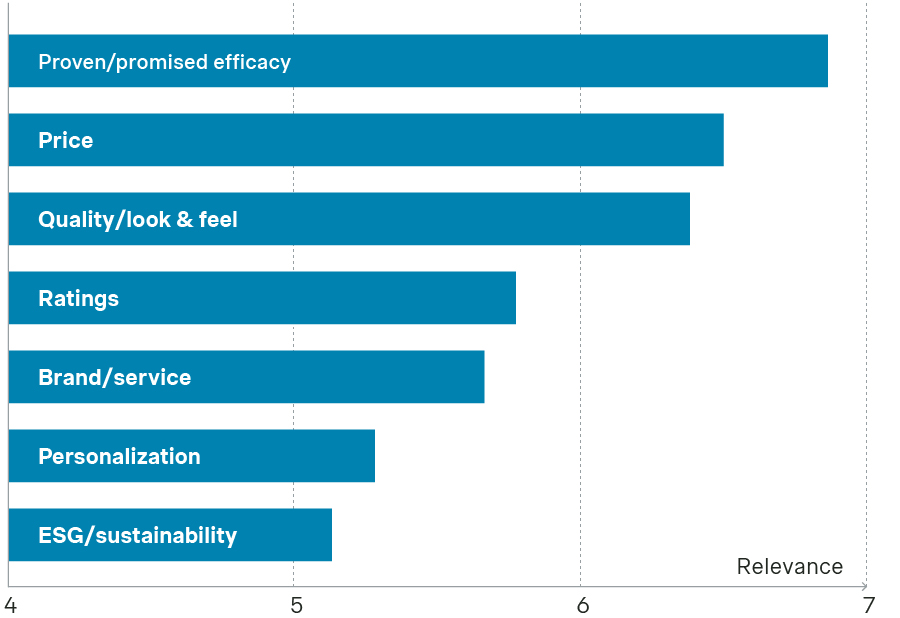
The real test of prevention monetization lies in understanding what consumers value enough to pay for - and “more features” is rarely the answer. Better Health 2025 points to a more disciplined hierarchy: willingness to pay rises when added value feels more effective, trustworthy, or useful over time.
Source: Simon-Kucher's Better Health 2025 study
That distinction is critical because adding features can spark interest, but only a few truly create pricing power. In prevention, proof matters most. Long-term benefit and trust follow closely behind. Convenience also helps and personalization has a role. But consumers do not reward complexity for its own sake, and they do not automatically attach value to every digital layer.
This also explains why premium openness is stronger in categories such as personalized nutrition and wearables than in more traditional OTC products. The strongest premium opportunities sit where prevention fits visibly and meaningfully into daily routines.
Income sharpens the picture further. Some consumers are more willing to pay for advanced solutions, making prevention monetization both a category and an affordability question.
Building pricing power in prevention takes discipline: identify the features that truly justify a premium. Otherwise, prevention innovation risks adding noise rather than creating value.
Which hybrid models can manufacturers monetize beyond the pill?
If product features alone do not earn the premium, value must come from the way offerings are combined and experienced.
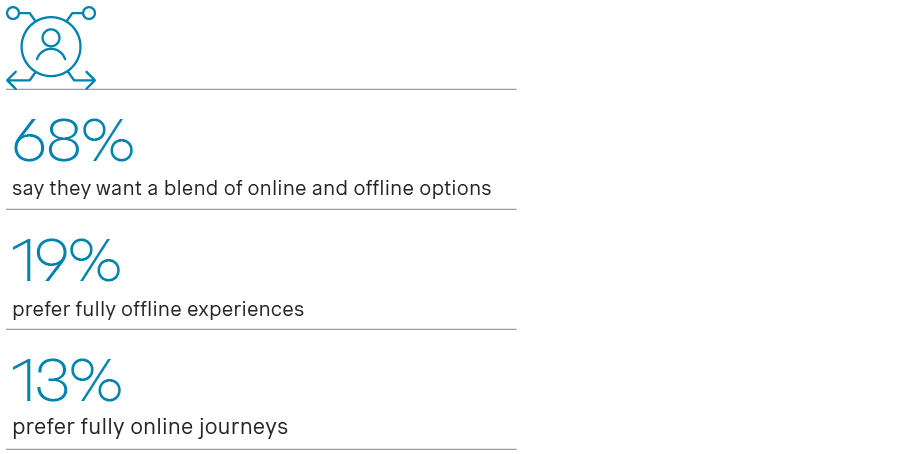
Hybrid models are the clear winner. Consumers do not want prevention to become purely digital. Around half already blend digital and non-digital aids, and a majority prefer a balanced mix of online and in-person interactions when making prevention decisions. The winning model is therefore product-led and digitally reinforced.
Source: Simon-Kucher's Better Health 2025 study
For most consumers, digital enhances the overall experience around the product and the trusted expert. It reduces friction, supports behavior change, improves continuity, and makes preventive routines easier to maintain. Its value is greatest when it reinforces a trusted core proposition rather than trying to substitute for it.
What does that look like in practice? It could be a supplement paired with a coaching app. It could be a diagnostic test linked to a replenishment plan. Or it could be a wearable embedded in a broader nutrition ecosystem. In each case, the product remains the anchor, but the value extends into guidance, monitoring, convenience, and continuity.
Commercially, this is what going beyond the pill should mean. Not every layer needs to be monetized directly. Some elements improve conversion, while others support trade-up or retention. Only a limited set carries a premium, and typically when it reinforces what consumers value most: proof, trust and convenience.
How can manufacturers operationalize prevention value capture?
The strategic move is to stop thinking only in terms of product pricing and start designing monetization architecture. The Better Health 2025 study confirms that prevention value is extending beyond traditional OTC into wearables, diagnostics, digital tools, and service-based solutions. That does not mean every brand should launch a subscription or a platform. It does mean understanding where to participate and how to capture a fair share of the value being created.
Prevention portfolios need clearer good-better-best logic and sharper bundle design with explicit rules on what is free, what is included, and what earns a premium. A simple framework: if a feature drives acquisition, it likely belongs at entry level; if it drives differentiation, it will help strengthen the offer; and if it drives willingness to pay, it should be monetized accordingly.
Governance matters just as much. Without a clear monetization architecture, prevention offers can quickly become cluttered with underpriced features and digital add-ons that create cost without improving price realization.
The prevention opportunity is real and growing. But market share will go to companies that build trusted prevention ecosystems around their products and price those ecosystems with real discipline. In a market where many players still focus on features, the advantage will go to those who know how to monetize trust, relevance, and sustained consumer engagement.
Turning that opportunity into growth depends on how tightly segmentation, value proposition design, pricing architecture, and monetization governance are connected. This is where Simon-Kucher can help. We work with manufacturers to identify the right value pools, define what consumers will pay for, design hybrid offers and bundle structures, and turn prevention demand into profitable growth.
Ready to build your prevention monetization architecture? Speak to us today.