Private label has crossed a critical threshold. What was once a trade-down response to inflation has become a lasting shift in consumer behavior. According to Simon-Kucher’s latest Global Shopper Study, branded products are no longer the automatic choice for many shoppers. Instead, they are being questioned, compared, and often rejected. For brands, this is not just a competitive challenge. It’s a moment of reckoning.
The verdict on brands: Trust is eroding
The numbers tell a stark story. More than half of global consumers, 57%, believe branded products are overpriced without offering a noticeable benefit. Even more concerning, 39% of shoppers describe branding as a money-making scheme. This is no longer a marginal perception issue. It’s a widespread loss of trust in the core promise of brands.
For decades, brands justified higher prices through quality, consistency, and emotional connection. Today, that equation is breaking down. When consumers no longer see a meaningful difference, the foundation of brand equity weakens. Indeed, brands are not just losing market share to private label products; they are losing their reason to exist in the eyes of the shopper.
A global shift to private label
Private label growth is no longer a temporary reaction to the cost-of-living crunch. It has become deeply embedded in how consumers shop.
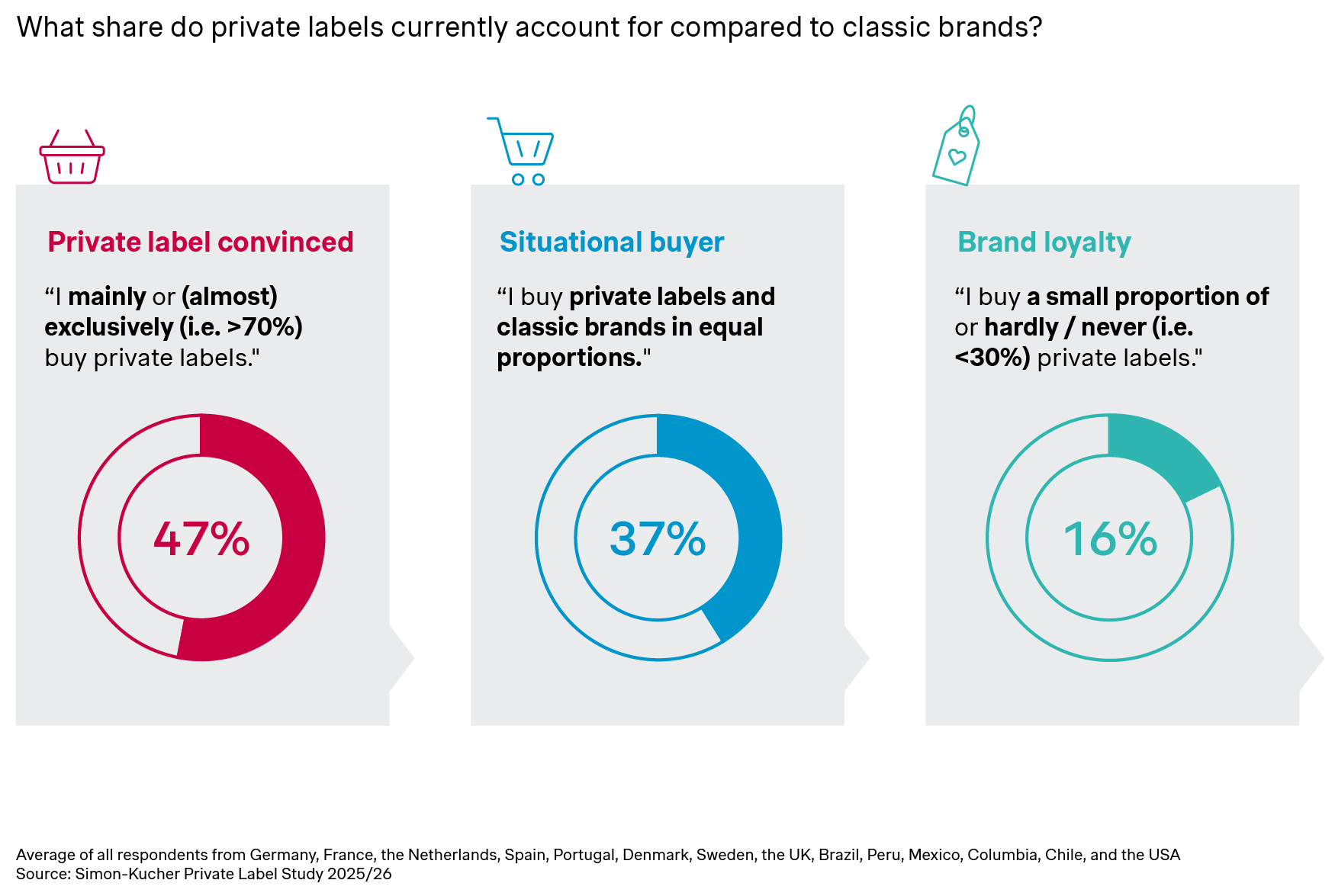
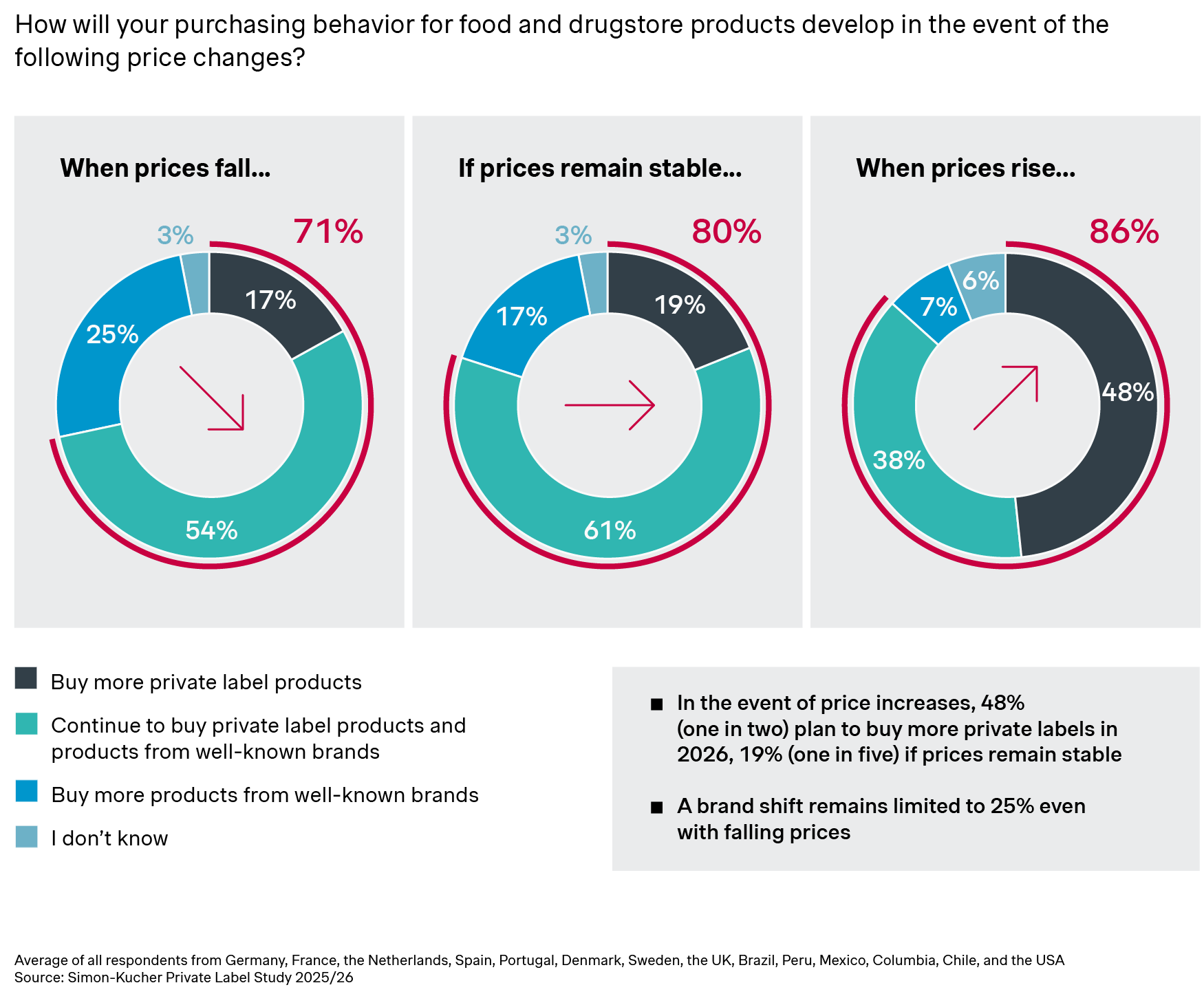
Our Global Shopper Study 2026, based on 14,000 consumers across 14 countries in Europe, North America, and Latin America, found nearly half of shoppers globally (47%) now predominantly or almost exclusively buy private label products, while only 16% remain primarily brand focused.
Even more telling is that their behavior does not reverse when prices stabilize. If prices fall, only a quarter of consumers say they would return to brands.
The key signals of this structural shift include:
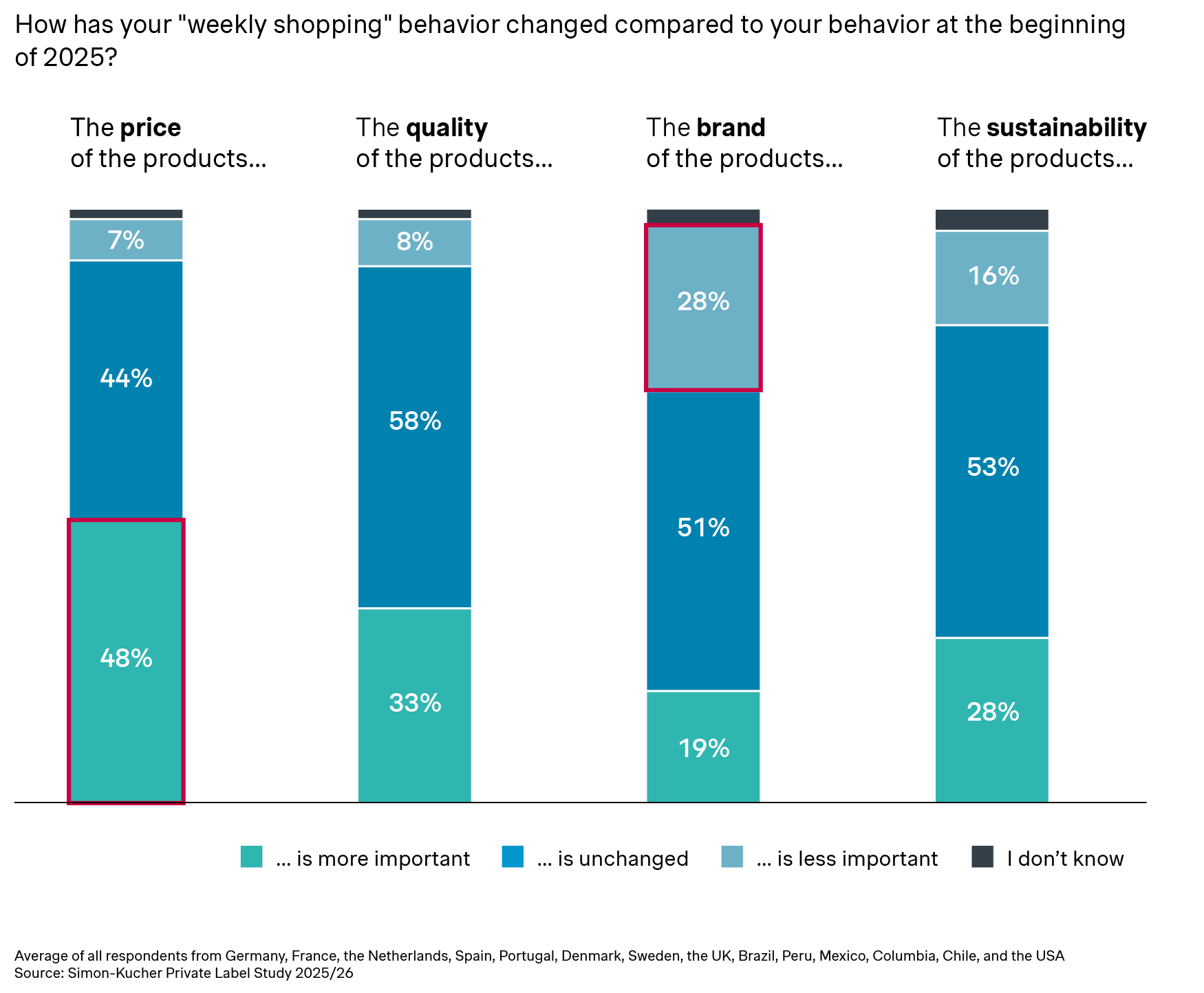
- Price remains the top purchase driver, with up to 59% saying it matters more than last year.
- Shopping frequency is increasing, reinforcing habitual decision-making.
- Private label share remains stable or rising across all markets.
Simply put, consumers have adjusted their expectations. What began as a cost-saving measure has evolved into a new default. Private label is now the baseline against which all branded products are judged.
The new consumer mindset: Proof over promise
The criteria for choosing brands have fundamentally changed. Consumers are no longer persuaded by branding alone. Instead, they are asking a simple question: is the premium justified? And while quality remains important, it is no longer assumed. It must be demonstrated.
This shift in mindset includes:
- 45 to 55% of consumers see no quality advantage in brands.
- Around 30% say brand importance has declined.
- Emotional appeal remains relevant, but primarily among younger consumers.
This signals a deeper transformation. Brands are no longer competing on storytelling alone. Now they must compete with evidence. Claims must be backed by tangible value because the traditional model of perceived superiority is no longer enough.
![graph 1]()
Private label now defines ‘good value’
Private label isn’t just winning because it’s cheaper. It’s winning because it has closed the gap on quality and expanded its role across categories and price tiers. In everyday categories such as household goods, dairy, and dry groceries, private label dominates and has become the trusted, rational choice for routine purchases.
At the same time, private label price tiers are evolving:
- 34% of consumers frequently buy basic private label products.
- 30% are now purchasing premium private label offerings.
- Growth in premium tiers is strongest among younger and higher-income shoppers.
Retailers are building sophisticated brand architectures that span entry-level to premium. This allows them to meet a wide range of needs while maintaining trust and price competitiveness. In fact, private label now defines what “good value” looks like.
The emotional retreat of brands
The role of branded products is narrowing. They remain strongest in categories driven by emotion, experience, or identity, such as alcohol, personal care, and pet products. However, their everyday relevance is declining. Not only are they purchased less frequently, but they are more associated with discretionary or treat-based occasions.
While emotional connection still matters, it is no longer sufficient on its own. As consumers age, even this emotional connection weakens, making brands more vulnerable over time.
To win, brands must complement their emotional heritage, an advantage private labels cannot easily replicate, with continuous innovation and greater portfolio depth to stay relevant across occasions and needs.
A global shift with local nuance
Consumer behavior toward private label and brands differs meaningfully across markets, shaped by varying levels of price sensitivity, trust in brand value, and perceptions of quality.
Some markets show a stronger structural shift toward private label products, combining high price sensitivity with pragmatic purchasing mindsets. Others exhibit more explicit skepticism toward brands, with consumers increasingly questioning whether higher prices are justified.
What brands must do now
One of the most important findings from our study is how difficult it is to win consumers back once they have shifted to private label. The implications for brands are profound. The longer they are absent from everyday decisions, the harder it becomes to regain relevance.
Competing with private label today requires a fundamental reset in how value is created and communicated, with a clear focus on retaining consumers early, as winning them back later is significantly more costly and less effective.
Three priorities stand out:
- Rebuild value transparency: Brands must clearly demonstrate why they cost more. This includes making quality differences visible and eliminating ambiguity in messaging.
- Deliver meaningful innovation: Innovation must go beyond incremental improvements. It needs to offer clear, perceivable benefits that matter to consumers.
- Strengthen authentic emotional connection: Emotional engagement remains important, but it must be grounded in real consumer needs and tailored to specific audiences.
Sustainability and purpose still have a role, but they are no longer decisive on their own. They must be integrated into a broader value proposition that resonates at the shelf.
A new competitive reality
Private label has earned consumer trust by delivering consistent quality, clear value, and increasing choice across price tiers. Brands, by contrast, are being held to a higher standard. They must prove their worth in every interaction.
The path forward for brands is clear: they must rebuild trust through transparency, innovation, and meaningful connection. Those that succeed will not just defend their position; they will redefine it.
For private labels, the opportunity lies in expanding beyond entry price into mid and premium tiers, winning across both core and niche segments, and driving growth through stronger category management and value-based pricing in close collaboration with retailers.
At Simon-Kucher, we specialize in helping consumer brands and private labels navigate complex challenges. With our expertise in pricing, marketing, consumer behavior, and retail strategy, we offer unique, data-driven insights tailored to your specific business needs. Contact us today to see how we can help you turn the challenges into opportunities.
Form placeholder. This will only show within the editor