
For many commercial banks, the past several years have reinforced an old lesson. Interest income still matters, but it is volatile. Rate cycles shift, deposit costs move, loan demand changes, and spread income can expand or compress quickly. That volatility has put renewed focus on non-interest revenue, which is more controllable and robust through the rate cycles.
This is especially relevant today as we are nearly two years into the current falling-rate cycle. Many commercial banks benefited early as they moved quickly to lower deposit costs while asset yields repriced more slowly, creating near-term support for net interest income (NII) and net interest margin (NIM). But that benefit will not last forever. With the FOMC’s latest projections pointing to policy rates stabilizing near current levels (figure 1), commercial banks will have less room to further reduce funding costs, while continued repricing of loans and other earning assets is likely to increase pressure on spread income. Therefore, capturing incremental non-interest revenue (NIR) will be key to helping commercial banks sustain revenue momentum.
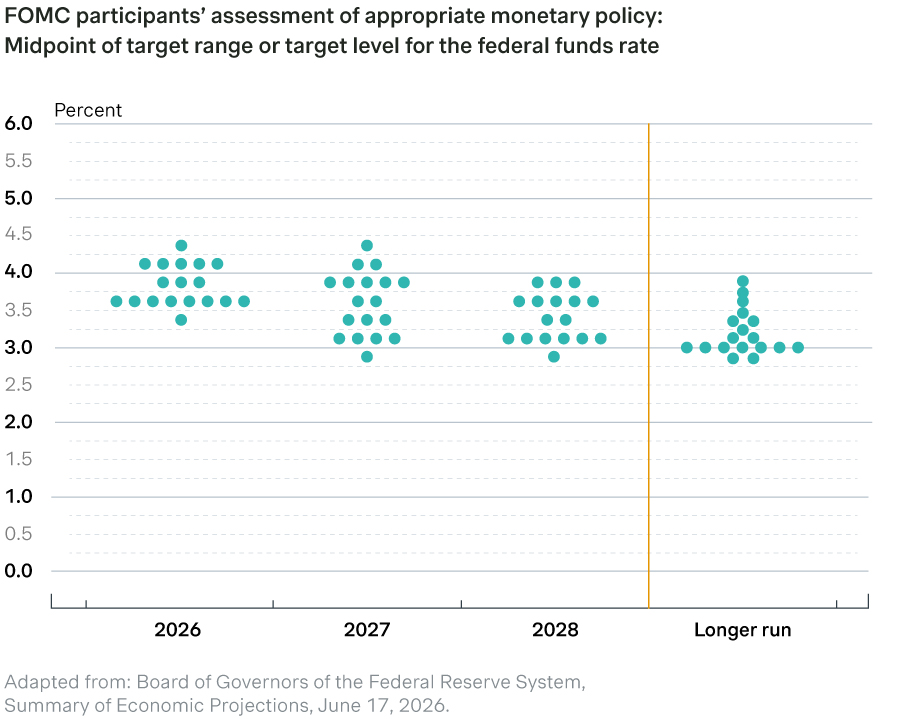
Figure 1 – FOMC Participants’ Projection for Fed Funds Rate
We examined how effective leading US commercial banks are at generating NIR by looking at NIR as a percentage of total commercial banking revenue (Figure 2), based on banks’ public reporting data, for the top 30 US banks by asset size, excluding custodians and investment banks.
We focused on the core lending, transaction banking, and payments revenues that are highly relevant for both national and regional banks. To normalize the comparison, we excluded investment banking and capital markets revenues, which make up a much larger share of total commercial banking revenue for nationals than regionals.
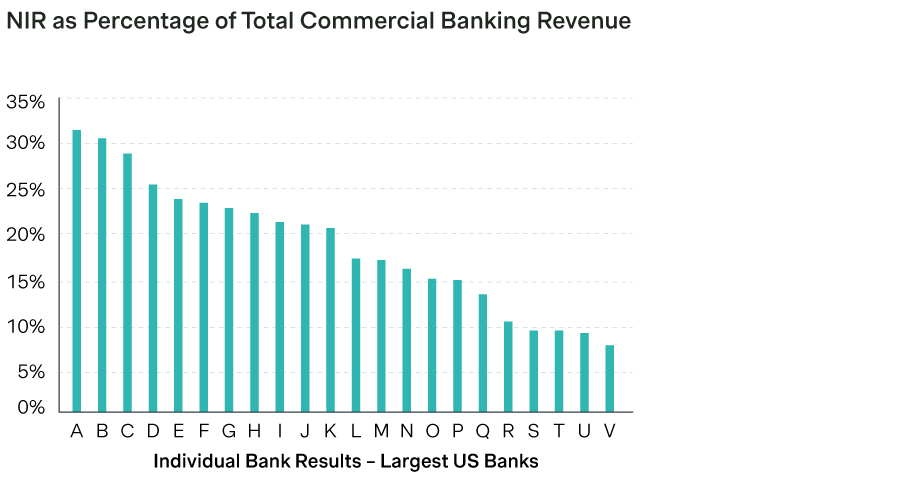
Figure 2 – NIR as Percentage of Total Commercial Banking Revenue
The main takeaway was that significant variance exists in banks’ ability to generate NIR. While some banks generate as much as one-third of their total commercial banking revenue from non-interest revenue, others generate less than 10%.
That variance raises an important question. Why do some commercial banks capture more NIR than others?
In our experience, over- and under-performance in commercial banking NIR is usually explained by three connected drivers: customer mix, customer primacy, and pricing discipline. Banks that perform well tend to have the right mix of clients, own more of the primary operating relationship, and price with greater discipline. Banks that underperform typically have a gap in one or more of those areas.
In this article, we will explore these three drivers primarily through the lens of treasury management fee revenue. Commercial banks also earn fees from lending, trade finance, FX and hedging, card, advisory, and other activities. However, for most regional and super-regional banks serving middle-market and mid-corporate clients, the largest recurring source of commercial NIR is in treasury management.
Driver 1: Customer mix
Not all commercial clients create the same NIR opportunity.
For commercial banks, the most important distinction is between real estate and non-real-estate clients. This distinction can typically be identified by the type of lending relationship: commercial real estate (CRE) for real estate clients and commercial and industrial (C&I) for non-real-estate clients. Within the non-real-estate portfolio, industry mix creates an additional layer of variation as well.
This distinction matters because real estate versus non-real estate (and different industries within the latter) have structurally different recurring fee potential.
CRE clients typically require large credit commitments to finance projects with relatively simple treasury management needs for their day-to-day operations. In contrast, collecting and making payments, managing payroll, moving funds across accounts, and maintaining operating liquidity are core to a C&I client’s daily business activity. That operating activity creates more recurring opportunities for NIR.
Industry mix within the non-real-estate portfolio also matters. Some industries are more cash-rich and transaction-intensive than others. Professional services, healthcare, property management and HOAs, and other industries with recurring cash movement and operating balances can be especially attractive from a fee and deposit perspective.
Different customer mixes create different fee ceilings. A portfolio weighted toward clients with low operating activity can be structurally constrained, while a portfolio with more operating-intensive businesses expands a bank’s addressable fee pool.
A helpful metric to manage against is C&I vs. CRE mix within the commercial banking portfolio. The first step for commercial banks with a heavier mix in CRE is to reassess whether the current mix reflects a deliberate strategic choice and whether it supports their fee income objectives. From there, the bank can either:
- Proactively shift its client mix over time with intentional, sharper targeting of cash-rich, operating-intensive segments where the bank can win meaningful operating economics with credit extension
- Or, if a higher CRE mix reflects the bank’s strategic choice, enhance fee capture on the margins by improving relationship primacy, optimizing pricing, and potentially pursuing innovative plays to serve the broader CRE ecosystem – extending beyond developers and property owners to construction companies, property management firms, and other businesses that support the asset throughout its lifecycle
Driver 2: Customer primacy
Having the right mix of clients is not enough. The bank must also own the primary operating relationship. In commercial banking, primacy typically means the bank provides the core operating deposit account and treasury management services that support the client's daily operations.
A bank can have a material lending relationship with a C&I client and still capture limited fee revenue if another institution owns the operating deposit account and treasury management relationship. In that situation, the bank may be earning spread income on the loan, but it is leaving much of the broader relationship economics to a competitor.
This is one reason commercial loan-to-deposit ratio (LDR) can be a useful high-level diagnostic indicator. A high commercial LDR may suggest that the bank is successful at winning credit relationships but not always capturing the deposit and treasury management business. However, this measurement does not account for the level of syndicated credit that is on a bank’s balance sheet and its impact on deposit and fee potential.
Non-interest revenue often follows deposits because treasury management follows the operating account. When a bank owns the operating account, it is better positioned to provide services such as payments, receivables, payables, liquidity management, information reporting, and fraud prevention. When it does not, the fee opportunity is limited.
Often, banks fail to capture the operating business on their lending relationships because:
- Relationship managers may be focused heavily on credit origination instead of full relationship capture
- Treasury management sales officers may be brought into the conversation too late
- Incentives may reward loan growth more clearly than recurring fee income, operating deposits, and relationship depth
- Support models may leave bankers spending too much time on administration and too little time on outbound prospecting
- There are product, capability, or servicing gaps
The practical lever is stronger organizational alignment around primacy. While product, capability, and servicing gaps could be material and should be addressed on the bank’s longer-term roadmap, for most banks, shorter-term results can be achieved by better aligning the sales organization through goaling and incentives, culture and expectations, operating model, and support gearing to drive relationship deepening.
Driver 3: Fee pricing discipline
Some banks have attractive client portfolios and meaningful primary relationships yet still underperform on non-interest revenue. The problem is often not whether the bank is capturing treasury management relationships, but whether the bank charges effectively for the value delivered.
Commercial treasury management pricing can become fragmented over time.
- Discounts are granted to win deals and never revisited
- Waivers are applied inconsistently
- Legacy clients remain on outdated price schedules
- Annual increases are delayed, softened, or skipped
- Product usage grows, but billing does not always keep pace – in some cases, services are delivered but not charged at all
Clients often receive fee concessions in exchange for expected deposit balances, or broader relationship activity, but those commitments are not tracked effectively, and pricing exceptions are never revisited.
Recently, we worked with a client who had contracts that had expired years earlier without any effective repricing, and another client whose sales force had largely avoided pricing discussions for fear of jeopardizing the lending relationship.
The result is revenue leakage. The bank may be doing the hard work of winning the primary relationship and supporting complex client needs, but it is not fully monetizing that position.
Better pricing does not mean applying blunt fee increases across the portfolio. It means building a more disciplined pricing system. Banks need to:
- Understand current realized pricing, compare it with both market benchmarks and value delivered, define target prices, and create governance around exceptions
- Review discounts and waivers: some exceptions will remain justified; others that were created in different circumstances, that no longer reflect current policy, or that were tied to relationship commitments that have not materialized should be reassessed
In addition, pricing discipline must reach the frontline. Relationship managers and treasury management sales officers need clear guidance, practical tools, and confidence in the value story behind treasury management fees. If frontline teams are not equipped to demonstrate and defend that value, clients may see higher fees as arbitrary, creating relationship risk while making it harder for the bank to achieve its pricing targets.
Pricing discipline also needs to be reinforced through incentives and scorecards. Banks should reward recurring fee income, realized pricing, and relationship value over time, not only loan and deposit volume or one-time production. Without that alignment, even well-designed pricing guidance can break down in day-to-day client conversations and exception decisions.
Linking key drivers to performance segments
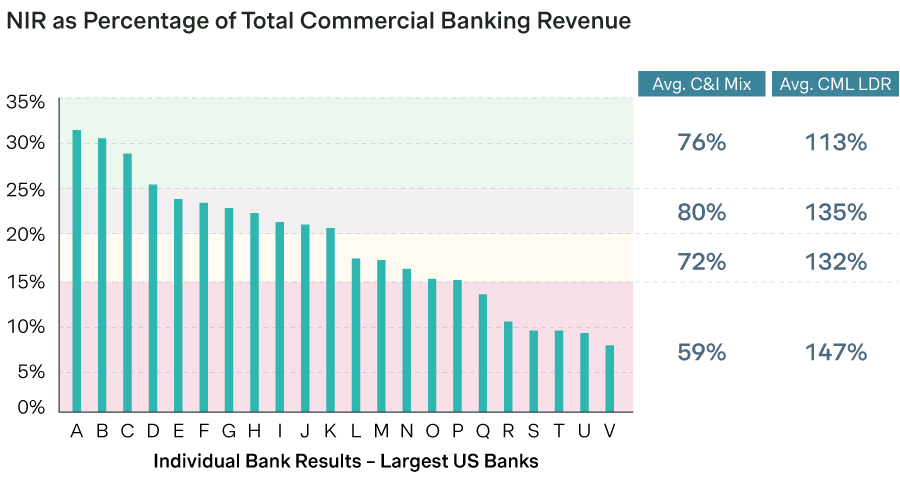
We would like to revisit the analysis we started with, now with the banks grouped into 4 segments based on their non-interest revenue percentage. We have also appended average C&I mix and average commercial loan-to-deposit ratio. With this, we were able to delineate performance variance into the 3 key drivers discussed.
- Green zone – specialty businesses: performance is typically driven by specialty businesses and sustained discipline around relationship deepening and fee realization
- Gray zone – strong C&I-oriented banks: tend to have a strong base of C&I-oriented commercial clients and relatively broad treasury management penetration. This group includes three of the four national banks in the U.S.
- Yellow zone – good mix, but execution gaps: often have a reasonably strong C&I-oriented client mix, but lower level of primacy and fee capture than the gray and green zone banks
- Red zone – structurally constrained fee performers: typically have a more challenging customer mix that is often compounded by weaker operating-account primacy and pricing leakage
Building a tailored strategy
Because NIR underperformance can be driven by different root causes, banks should avoid generic fee revenue initiatives. The right response starts with diagnosing whether the gap is caused by mix, primacy, pricing, or a combination of the three.
| 1. Customer mix Strengthen targeting | 2. Customer primacy Improve sales effectiveness | 3. Fee pricing & realization Strengthen pricing discipline |
|---|---|---|
| Identify high potential industries | Align goals and incentives | Review discounts & waivers |
| Assess readiness from capability and sales force angles | Establish a culture to go after the full relationship | Benchmark current fees & set target prices |
| Adjust or build specialized coverage and solutions | Make TM and deposit discussion a habit in the sales process (involve TMSO early) | Be consistent with annual fee increases and exception reviews |
| Focus acquisition of customers in desired target segments | Refine gearing ratio to ensure RM focus on hunting rather than farming | Establish pricing governance & approval guidelines |
| Equip frontline with tools & value messaging |
Depending on the starting point, the most effective strategy may combine a subset of initiatives from one or more of the above categories. With finite time and resources, the key is to identify and prioritize the highest impact subset.
Turning insight into action
The first step commercial banks should take is to understand their current position and underlying key drivers. This enables banks to develop a strategy that directly addresses the highest impact opportunities.
The impact is material. From pricing alone, we typically observe 15–25% fee revenue leakage, with banks often able to capture a meaningful portion of that opportunity within months through structured repricing of the existing book. Based on project experience, a well-executed repricing initiative can often achieve an over 90% customer acceptance rate.
For many commercial banks, NIR represents roughly one-fifth of total commercial banking revenue. Capturing 15–25% more NIR can represent roughly a 3–5% increase in total commercial banking revenue, before considering the longer-term upside from optimizing customer mix and capturing more primary relationships.
The path forward should not be a generic fee initiative. Instead, it should be a focused effort to understand where the gap comes from, determine whether the key constraint is mix, primacy, pricing, or some combination of the three, and take targeted action. Banks that do this well will be better positioned to maintain their revenue momentum in an uncertain interest rate environment.
Contributing author: Mike Ricciardi
Simon-Kucher works with commercial banks to perform current state diagnostics and design tailored strategies to optimize each of the three key drivers.