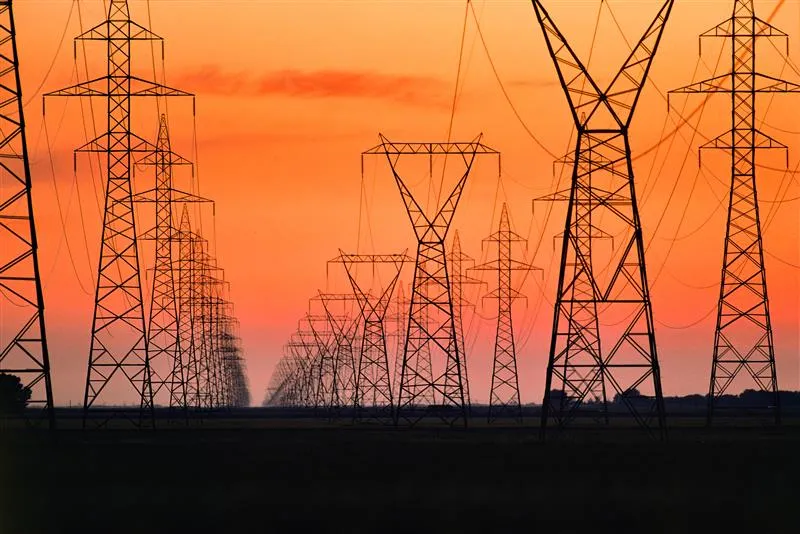
“We haven’t even hit peak demand. Every year brings more sensors, more data, more load” – Utility executive
US power demand is rising at a pace not seen in decades. Electrification, new manufacturing, and especially AI-driven data centers (DCs) are reversing years of flat forecasts and forcing utilities to rethink long-term capacity planning. Hundreds of billions of dollars are flowing into building new generation, transmission, and substation infrastructure.
But engineering and construction capacity, along with critical materials, are in short supply. Skilled labor is scarce. Transformers are sold out for years. Turbine lead times stretch into 2028. Interconnection queues run five to seven years deep. Utilities and developers are not constrained by funding: they are constrained by the ability to build new grid infrastructure.
As a result, grid service providers (e.g., EPCs, specialty contractors, field services and maintenance providers, equipment-specific service providers) are at a strategic inflection point. In the near term, firms that understand how utilities and DCs buy, align their commercial approach accordingly, and commit resources deliberately will expand share. Over time, disciplined decisions in pricing, contracting, customer selection, and operational investment will compound into durable competitive advantage long after demand moderates.
This blog explores how constrained supply is reshaping buyer behavior and how service providers can use this window to separate from competitors and build lasting advantage.
Demand is clear. Supply is not.
Power requirements from US DCs are driving an unprecedented jump in demand. Industry estimates suggest AI-driven DCs alone could drive up to ~200 GW of requested incremental load by 2030, far exceeding historical growth rates. Interconnection queues at regional transmission organizations now total hundreds of gigawatts, with new generation and load requests commonly facing 5–7 year timelines before grid connection. Utilities and regulators are under growing pressure to manage this volume within existing permitting, reliability, and planning frameworks.
“I’ve thought through all the ways I could be wrong about this demand, and right now I don’t see anything that makes me believe the gap will close in the near term.” – Former utility executive
As a result, US transmission investment has already exceeded $50B annually, with many estimates pointing to ~$90–100B spent over the next 2-3 years. However, capital deployment is constrained by labor availability, equipment lead times, regulatory approval, and execution capacity. Developers and utilities are competing for scarce resources, making delivery capability the binding constraint.
“There’s so much money running downhill from data center developers and utilities. The question is, how can we grow fast enough to serve the people holding the money?” EPC leader
Six structural constraints limit supply
Although growth outlook is validated across the market with every major player seeing the demand wave building through 2030, supply is not positioned to keep up due to six key structural and behavioral challenges.
Utilities are conservative by nature: Utilities plan conservatively to manage rate recovery and regulatory exposure, often under-forecasting nonlinear demand growth. This can leave them reacting late as demand materializes. For service providers, this means utilities are periodically forced to expand beyond incumbent vendor lists. Those that can step in with credibility, safety records, and readiness have windows to win new business.
“Utilities always sandbag. They don’t want to forecast exponential growth because they’d have to raise rates. Then they end up flat-footed.” – IOU executive
Hardware supply is limited: In the near term, gas turbines remain the only scalable solution available at speed. Nuclear and coal face long development timelines, while renewables help incrementally but cannot meet step-change demand alone.
“At the end of the day, gas turbines are the only lever you can pull in the next 3–5 years.” – EPC leader
Hardware OEMs are limiting capacity expansion: Shaped by prior boom-bust cycles, OEMs remain disciplined on capacity expansion. Lead times for frame turbines now extend into 2028–2029, with prices rising from ~$900/kW a decade ago to ~$2,500/kW today. Aero-derivatives now price at $1,300–$1,700/kW and, for the first time, are often cheaper per kilowatt than frames.
Skilled labor is scarce: Workforce constraints increasingly limit execution. Large projects require thousands of field workers, yet only a small share have prior grid infrastructure experience, increasing schedule risk and reducing productivity. In Simon-Kucher’s Future of Field Services survey (link), 52% (n=26) of utility and grid infrastructure executives cited workforce shortages as a top operational constraint.
“One of the projects I'm working on is going to have 4,000 site construction field workers. Roughly 10 to 20% of those will have ever worked on a power plant site before.” – EPC construction executive
Interconnection requires serious cash upfront: Interconnection queues now act as a capital filter. This weeds out weaker players but adds years and costs to real projects.
“To move a 500–1,000 MW project through ERCOT, you’re looking at $10 million in deposits just to advance. Cash keeps developers honest.” – Large scale developer.
Projects are more complicated than they used to be: Permitting, interconnection complexity, and supply chain friction all contribute to longer build out times, limiting project throughput from a fixed base of FTEs.
“We are only half as efficient today as 25 years ago. It takes twice as long to build the same asset.” – EPC executive
Two buyers, two sales motions: Utilities and DCs are not the same
While utilities remain the dominant channel for grid infrastructure spending, selling to DCs requires a different approach. Utilities operate within regulated frameworks, where safety, compliance, and long-term reliability drive decisions. Data centers operate in a commercial environment, where speed, certainty, and time-to-power are paramount. As a result, service companies will need different sales pitches, value articulation points, and strategies to successfully win business from each type of buyer.
Utilities prioritize reliability over speed
Concern | Market comment | Takeaway |
| Proven track record |
“It’s typically the same cast of characters we go back to: the firms that have the capability, the capacity, and have demonstrated they can deliver.” – Capital programs executive
| Utilities heavily prefer incumbents who have strong track record of local execution. |
| Compliance & reliability |
“We score bids blind to cost first — on technical, safety, and quality. Only after that do we look at price.” – Utility procurement leader
| Utilities live under the scrutiny of regulators and commissions. They seek vendors who will not expose them to risk. |
| Safety |
“Safety, particularly on the construction side, is the most important factor for my organization. If a vendor doesn’t have it, nothing else matters.” –Utility construction and operations leader
| Safety performance is also a non-negotiable. Contractors with strong records and robust safety programs move to the top of the list. |
As a result, utilities live in a structurally constrained, highly scrutinized system. They prioritize risk reduction over speed. For service providers, this means credibility, compliance, and safety are currency more than cost and innovation. Getting in the door will take real effort, despite the flood of demand. Prioritizing targets, mapping account entry strategies, and executing cleanly will be critical for landing new or growing existing utility clients.
DC's buy for speed and certainty
Concern | Market comment | Takeaway |
| Speed |
“If you can prove you’ve ordered the transformers and locked in the labor, you win. Price won’t matter compared to the fact that you can deliver quickly.” – DC developer
| Above all else, DCs need projects delivered fast. Interconnection delays push them toward partners who can mobilize quickly and compress timelines. |
| Certainty of delivery |
“They don’t want surprises. If you can show you know where the risks are and how you’ll manage them, that matters more than shaving a few percent off the price.” – DC developer
| Data center operators face pressure from tenants and investors. They seek partners who can guarantee outcomes, avoid surprises, and keep projects on track even under uncertainty. |
| Access to labor & equipment |
“If you can show you’ve actually secured the turbines, transformers, and crews instead of just promising them, you’re already ahead of most bidders.” – DC EPC selection lead
| With global supply chains stretched, the ability to pre-secure turbines, transformers, and skilled crews is critical. Vendors who can show “receipts”, or firm orders and labor commitments, rise to the top of the list. |
Within DCs, there are two key subsegments: hyperscalers and newcomers. The buying criteria are fairly consistent across both. However, how they buy can look very different.
DC Hyperscalers are sophisticated, high-scale buyers. Hyperscalers have dedicated energy teams that know exactly what they want and issue extremely structured RFPs. They expect vendors to deliver exactly to spec reliably and on time.
“When I get an RFP from Microsoft, it’s 5,000 rows.” – EPC account executive
Newcomers (e.g., AI startups, co-location DCs) seek support in crafting requirements and are more willing to pay for rapid execution with scope changes along the way. These players lack internal energy expertise and value EPC and developer input in scoping out a new build.
Winning DC business demands a different pitch from utilities, with further adjustments depending on whether the buyer is a hyperscaler or a newcomer.
Majority of grid infrastructure business will still go through utilities despite DC hype
Utilities remain the dominant buyer of infrastructure services despite all the buzz around DCs. Roughly 75% of EPC dollars still flow through them. They decide who builds substations, who delivers transmission upgrades, and who participates in long-term service contracts. As previously noted, their decisions are governed by regulation and public accountability, reinforcing a focus on reliability over speed.
The reason the utilities are in the situation they’re in right now is they all under-forecast this demand. They didn’t see it coming. And I still think they’re under-forecasting it.
– Former utility executive
From the DC point of view, the hype is tempered by two realities: a significant share of announced projects will never be built, and BTM (behind the meter) generation is primarily a fallback when grid connections are delayed rather than a preferred strategy.
Three key reasons for why many DC projects won’t be built:
Grid constraints: Decades of underinvestment have left certain regions with transmission infrastructure incapable of supporting hyperscale projects.
Sticker shock: When developers are told they must pay $20M+ upfront for interconnection, many walk away.
Permitting & politics: State regulators and municipalities can delay approvals for years, leaving even well-capitalized projects stuck in limbo.
Developers themselves estimate that 20–60% of announced projects will never get built. An industry expert described it as a “rule of thirds”, meaning one-third will get built (largely hyperscalers with committed demand), one-third were “pie in the sky” from the start, and one-third could have been viable but fail due to permitting, interconnection, or equipment delays.
BTM generation is seen as a fall-back option exercised only in dire necessity
“None of the data centers want to self-build. They’d just love to be grid-connected… but with six- or seven-year waits, they’re being forced into BTM.” – DC developer
Estimates range from less than 10% and to as high as 30% of DC projects will pursue BTM. BTM will more likely be employed in hot DC markets like Phoenix, Columbus, and ERCOT where competition for reliable and timely grid connections is fierce. OEMs are betting that BTM builds will be temporary stop-gaps until grid connections become available, at which point power generating components will be redeployed to sites requiring stop gap connections.
“Even when they eventually get a grid connection, they’ll just redeploy those turbines to the next site. This is at least a six- to ten-year cycle, and that’s as far as OEMs can see.” - Turbine OEM executive
Even with the growth of BTM generation, DCs are unlikely to displace utilities as the primary channel for EPC work. Smaller developers are largely waiting for the grid to catch up, while hyperscalers tend to pursue regulatory engagement and selective self-builds rather than replacing utilities altogether. The hype is real, but the majority of EPC dollars still flow through utilities.
In a rising market, discipline separates leaders from the rest
This demand wave will lift most service providers, but growing with the market is not enough to secure long-term success. Customer relationships in grid infrastructure are durable and difficult to displace. Entering new territories or expanding wallet share requires deliberate positioning, even in a seller’s market. When demand eventually moderates, only those who have strengthened their competitive position relative to others will sustain momentum.
We see leading firms approaching this period with discipline rather than complacency. The six tactics below highlight where they are focusing to capture share now and build long-term advantage.
Tailor sales motion to the buyer: Utilities, hyperscalers, and emerging DC developers evaluate risk, speed, and value differently. Winning requires aligning proof points, contracting posture, and value articulation to each buyer’s priorities. A uniform sales approach leaves margin on the table.
Be deliberate about where to compete: In a demand surge, it’s easy to chase everything. But not all growth is equal. Customers may limit vendor concentration, and right-to-win varies by geography and service line. Leading firms define priority accounts and territories, align quotas to strategy, and concentrate resources where they have structural advantage. Growth is strongest when pursuit is selective, not opportunistic.
Actively manage wallet share: A 5% share with a utility does not expand on its own. Growth requires mapped stakeholders, deliberate relationship building, and coordinated engagement across decision-makers. Leading firms treat account expansion as a strategic initiative, not a byproduct of strong market demand.
Renegotiate outdated contracts: Many legacy agreements were struck in a different market environment and no longer reflect current risk allocation or pricing realities. Updating these contracts is a direct lever for margin expansion. Value left unaddressed today limits reinvestment capacity tomorrow.
Establish price and contracting governance mechanisms: In this market, firms will inevitably flex on price and terms. The question is whether those concessions are strategic or reactive. Leading firms define pricing guardrails, approval thresholds, and risk frameworks so flexibility is intentional, and value leakage is contained.
Align operational capacity to commercial strategy: In a constrained market, crews and equipment are competitive assets. Providers that can confidently commit resources gain negotiating leverage and customer trust. Whether through hiring, supply partnerships, or M&A, capacity expansion should reinforce target accounts and priority regions, not chase growth indiscriminately.
This market will reward execution and punish complacency. Advantage is being built now in pricing discipline, contract strategy, customer selection, and capacity investment. The firms that approach this window deliberately will widen the gap.
We partner with grid infrastructure leaders to turn moments like this into durable competitive advantage.