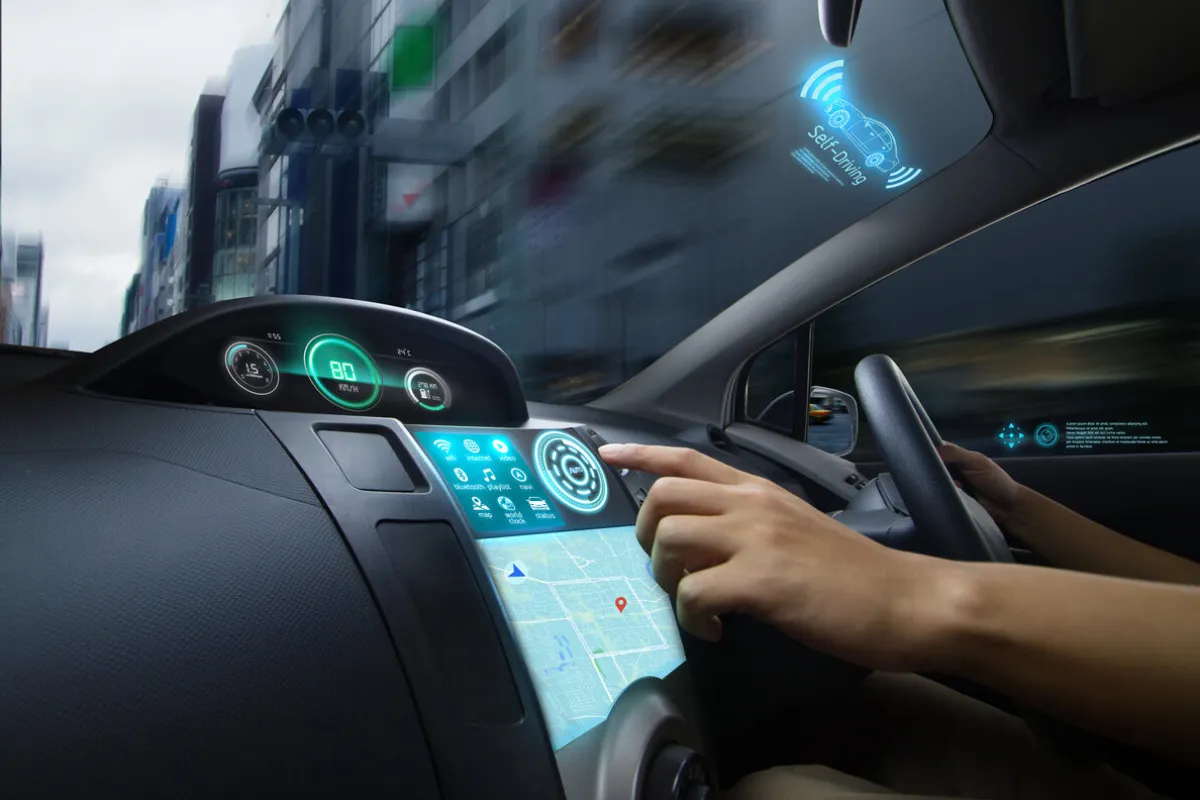
Autonomous mobility is moving from technology proof to commercial scale. What does that mean for use-case selection, business models, fleet economics, and the role of OEMs? Our Automotive & Mobility experts Patrick Valentin and Katharina Berger outline how companies can build commercially sustainable businesses around autonomous driving.
For more than a decade, autonomous mobility has been framed primarily as a technology race: Who can build a vehicle capable of driving itself safely, with progressively less human intervention? In 2026, that framing is no longer sufficient.
Commercial Level 4 autonomous services now operate in selected markets and use cases. Waymo reports tens of millions of fully autonomous commercial trips across 15 major US cities. Aurora deploys Class 8 trucks commercially without a driver behind the wheel in Texas. In China, Baidu's Apollo Go has expanded to 28 cities and completed more than 350 million autonomous kilometers. Abu Dhabi introduced fully driverless commercial Level 4 operations in 2025, while Europe is combining advanced Level 3 systems with increasingly structured pathways toward Level 4 deployment.
This does not mean that the technology challenge has been solved. Today's commercial systems still operate predominantly within defined Operational Design Domains (ODD). But autonomous mobility has started to demonstrate that it can work commercially in defined environments. The next question is whether it can become a scalable and profitable business. This places greater emphasis on use case selection, customer value, monetization, utilization, and ecosystem economics.
Level 4 constraints can become a commercial advantage
The long-term ambition for autonomous driving has often centered on a vehicle that can drive virtually anywhere, in almost any situation. But that is not how today's most advanced commercial services operate. Successful Level 4 deployments deliberately constrain the problem: a robotaxi operates within approved parts of a city, an autonomous truck focuses on defined freight corridors, and a shuttle serves a limited number of repeatable routes.
From an engineering perspective, these boundaries define where the system is capable ofoperating. From a commercial perspective, they create an opportunity to concentrate autonomy precisely where it generates the greatest value. The relevant question therefore changes from where autonomous technology can drive to where it creates enough customer and economic value to build an attractive business.
This distinction matters. Maximum autonomy does not automatically create maximum commercial value. A narrower ODD with sufficient demand, high asset productivity, and attractive customer economics may be considerably more valuable than wider technical coverage with limited commercial potential. Expansion decisions therefore need to be guided by value rather than technology capability alone.
Different markets and players are already producing different commercial models
There is no single model of autonomous mobility emerging globally. The United States currently provides the clearest example of scaled commercial Level 4 fleet operations. Waymo continues to expand its robotaxi services, while autonomous trucking has developed as a separate commercialization pathway.
China combines significant robotaxi deployment with large-scale vehicle manufacturing with expansion into international markets. Baidu, Pony.ai, and WeRide are scaling domestically while extending activities into the Middle East, Europe, and Asia. Europe has taken a different route. It is comparatively advanced in homologated Level 3 systems, such as Mercedes-Benz's DRIVE PILOT, while Level 4 passenger services remain more controlled. MOIA, Volkswagen’s subsidiary for autonomous mobility solutions, began passenger testing in Hamburg in July 2026, with riders booking self-driving rides in ID.Buzz vehicles. Meanwhile, Waymo is preparing for a potential commercial launch in Munich toward the end of 2027, subject to approval.
The Gulf represents another model again. Abu Dhabi and Dubai are combining international autonomous-driving technology with local mobility operators, platforms, and supportive regulatory environments instead of developing every component domestically.
Alongside these regional differences, distinct ownership models are also emerging. Most robotaxi deployments today rely on centrally managed fleets, where the operator or its partners control the vehicles. Tesla has proposed a different architecture for years: customers could eventually make their vehicles available to its network when not in use and earn income from them, while Tesla supplements this capacity with its own fleet where needed. Recent Tesla disclosures continue to point toward autonomous capability on customer-owned vehicles and describe the possibility of owners contributing their vehicles to the Robotaxi network under a revenue-sharing model. This remains an intended future model rather than today's operating reality.
If realized, such a model could blur the boundaries between vehicle ownership, mobility services, and platform economics. A privately owned vehicle could also serve as a commercial fleet asset.
This model is not exclusive to Tesla. Any OEM could pursue a similar model as long as they control the vehicle software and autonomous capability, maintain a direct digital relationship with the customer, and have the necessary app, payment, and service infrastructure. The strategic asset would therefore not just be autonomous-driving technology, but the combination of a large installed vehicle base and a digital ecosystem capable of turning that base into mobility supply.
These differences illustrate why there is unlikely to be one autonomous-mobility business model. A privately owned Level 3 vehicle, a centrally operated Level 4 robotaxi, an owner-supplied autonomous fleet, and an autonomous truck each require different revenue models, cost structures, channels, and risk allocations. The relevant question is which commercial model works for which use case.
Five commercial questions will shape the next phase of autonomous mobility
As autonomous-driving capabilities mature, five commercial questions become increasingly important for OEMs, technology companies, and mobility providers.
1. Where should autonomy be deployed first?
Not every technologically feasible use case is commercially attractive. Potential depends on demand density, customer alternatives, asset utilization, local cost structures, regulatory requirements, and other factors that can vary considerably even within the same city.
For robotaxis, market selection therefore becomes more granular than deciding which country or city to enter. Different neighborhoods, trip occasions, customer segments, and times of day may produce very different economics. The same applies in freight, where routes can vary significantly in utilization, labor economics, operating restrictions, and customer value.
Companies need a commercial prioritization logic that complements the technical ODD. The objective should not simply be to maximize geographic coverage, but to expand into those use cases where autonomy creates the strongest combination of customer value, demand, and attractive economics.
2. What customer proposition creates value, and how should it be priced?
Removing the driver does not automatically mean that an autonomous ride should be cheaper. Equally, providers should not assume that customers will pay more simply because the vehicle is autonomous. The relevant question is what additional value the service creates compared with the alternatives available to the customer.
Depending on the use case, potential value drivers differ, and these have direct implications for offer and pricing design. Autonomous mobility does not necessarily require one standardized proposition. Providers could differentiate between shared and private mobility, standard and premium experiences, frequent-user propositions, or B2B mobility packages. The objective is to understand which features increase customers’ willingness to pay and which mainly add cost.
The competitive context matters just as much. A robotaxi competes with conventional ride-hailing, taxis, public transport, and private cars. Pricing decisions therefore need to translate customer value into the right proposition, price architecture, and competitive positioning.
3. How can utilization and revenue management improve the economics?
For an autonomous fleet, utilization is both an operational KPI and a commercial lever. A high-cost autonomous vehicle that spends too much time idle or traveling empty can quickly undermine the business case, regardless of the sophistication of its technology.
Pricing and promotions can stimulate demand where capacity is available, while dynamic pricing can help manage peaks and excess capacity. Service areas can balance customer coverage with productivity, and reservations can improve demand predictability. These levers make revenue management a tool for optimizing fleet productivity as well as the price of an individual ride.
Tesla's proposed concept makes this question even more interesting. In an owner-supplied network, the platform would have to manage not only passenger demand but also vehicle-owner supply. Commercial design would need to answer what level of compensation induces owners to make their vehicles available, how supply should be incentivized at different times and locations, and how revenues should be shared between vehicle owner and platform.
For owners, the calculation would extend beyond the income generated during otherwise idle time. Additional mileage, depreciation, cleaning, energy, insurance, and reduced vehicle availability would also matter. Understanding that trade-off and designing the right owner proposition could become as important as understanding passenger willingness to pay.
4. Who owns the asset, the customer, and the economics?
Autonomous mobility is becoming increasingly modular. One company may manufacture the vehicle, another may provide the autonomous-driving system, and a third may finance and own the fleet. Other partners may handle maintenance, while a mobility platform connects demand and customer access.
Emerging partnerships already illustrate these models. Stellantis, Wayve, and Uber, for example, bring together their vehicle platforms, autonomous-driving technology, and mobility distribution. MOIA is taking a more integrated approach by combining an autonomous vehicle with mobility-service and fleet capabilities.
Customer-owned autonomous fleet capacity adds another dimension. Instead of financing every vehicle itself, a mobility platform could orchestrate assets financed partly by end customers. In return, vehicle owners would receive a share of the revenue generated through the platform.
That can change the economics materially, but it also creates new commercial design questions. How should revenue be split between the OEM or platform and vehicle owner? Who bears depreciation and insurance? Who decides when and where the vehicle operates, and can owners prioritize their own use? Who pays for additional maintenance and cleaning? And what guarantees, if any, are necessary to convince owners to participate?
More broadly, autonomous-driving providers can monetize through vehicle margins, software fees, subscriptions, per-kilometer charges, revenue sharing, or managed services. Choosing the charging metric is only one part of the challenge. Companies also need to decide who owns the customer relationship, who controls pricing, who carries utilization risk, and which participant ultimately captures the profit pool.
For OEMs in particular, control of the app ecosystem could become strategically significant. The party that owns the interface through which customers buy the vehicle, activate autonomous functionality, offer their vehicle into a fleet and receive revenue, could occupy a very different position in the value chain from an OEM that supplies only the physical asset.
5. Can the commercial model scale with the technology?
A successful autonomous service in one city is not automatically a scalable business. Each new market can require regulatory approval, local validation, fleet infrastructure, operating partnerships, and adaptations to a new demand environment.
Commercial scalability therefore needs to be considered alongside technical scalability. Providers need to assess how quickly they can understand local demand, adapt their propositions and pricing, establish operating and distribution partnerships and achieve attractive utilization before excessive additional investment.
The ownership model also affects this scaling equation. A centrally owned fleet requires capital to put additional vehicles on the road. An owner-supplied model could provide a more asset-light source of capacity, but only if there is a sufficiently large installed base of technically capable vehicles and enough owners are willing to participate at economically sustainable incentive levels.
The ability to replicate attractive economics across new markets without rebuilding the commercial model each time will be critical to long-term expansion.
What this means for OEMs and mobility providers
Automotive and mobility leaders should address the commercial model well before the technology is fully mature. Decisions about product architecture, customer interfaces, vehicle ownership, and partnerships being made today determine which monetization options remain available later.
The first priority is to identify use cases based on customer and economic value rather than technical feasibility alone. Companies need a fact-based understanding of which segments, markets, and occasions offer the most potential and the conditions needed for commercial viability.
Second, proposition and monetization need to be designed early enough to influence the product. Customer needs, willingness to pay and competitive alternatives should determine which services and features are created rather than pricing being added after engineering decisions have already been made.
Third, utilization needs to be treated as a commercial discipline. Pricing, revenue management, and fleet planning must work together, regardless of whether the vehicles are owned by the operator, fleet partners, or end customers.
Finally, OEMs need to make deliberate choices about their role in the ecosystem. Supplying the vehicle, monetizing autonomous software, providing the fleet platform, owning the mobility interface, and operating the service involve different capabilities and business models. An OEM with a direct digital customer relationship and a capable app ecosystem may have options that are unavailable to a traditional manufacturer without that interface. Deciding which of those positions to build and which to leave to partners will shape both investment requirements and future profit pools.
From proof of technology to proof of profitable growth
Autonomous mobility will continue to be shaped by advances in AI, sensors, and vehicle technology, together with evolving regulation. The technology race is far from over, but another race is now taking place alongside it.
The first generation of autonomous-mobility strategies focused heavily on milestones such as autonomous miles, disengagements, sensor performance, and regulatory approvals.
The next generation increasingly needs commercial milestones that demonstrate:
- Which use cases generate attractive customer value and economics?
- Which proposition and price architecture drive adoption without giving away value?
- How can revenue management maximize utilization?
- Which ownership and monetization models align incentives between OEMs, technology providers, operators, and potential vehicle owners?
- How efficiently can the model be replicated across the next city, corridor, or market?
Commercial Level 4 autonomy has started to show the potential of self-driving vehicles within defined environments. The next proof point is whether companies can turn that capability into repeatable, profitable growth.
How Simon-Kucher supports the commercialization of autonomous mobility
As autonomous mobility advances toward commercial scale, companies need to connect engineering and operating decisions with customer value and business economics.
For OEMs and mobility providers, this can mean prioritizing markets and use cases, testing customer and vehicle-owner propositions, quantifying willingness to pay and willingness to supply, designing pricing and revenue-management approaches, evaluating different ownership models, and determining how business costs and risks should be shared across partners.
These choices are becoming increasingly interconnected. A decision about who owns the vehicle affects capital requirements and risk. A decision about who owns the app affects customer access and monetization. Pricing influences not only passenger demand but, in distributed fleet models, potentially vehicle supply as well. Getting these decisions right early can help companies move from proving that autonomous mobility works toward determining where and how it creates sustainable value.
Connect with our mobility experts to discuss how customer value, pricing, and business model design can support the successful commercialization of autonomous driving technology.