This article marks the first in a three-part series exploring some of the most pressing sustainability topics in healthcare today. Here, we examine how sustainability principles are reshaping procurement, market access, and pricing across the healthcare sector.
Introduction to sustainability in healthcare procurement & pricing
The healthcare sector alone accounts for roughly 4–5% of global greenhouse gas emissions. If it were a country, it would rank as the fifth-largest emitter. This environmental footprint makes procurement choices in healthcare, from pharmaceuticals to medical devices, pivotal in driving change. As such, there is a growing momentum to integrate sustainability into how providers / healthcare systems evaluate new products as part of the onboarding / reimbursement decision-making and how the healthcare industry is marketing and pricing their products and services.
This push is driven by multiple forces, including national regulations, investor and financial pressure, stakeholder expectations (e.g., patients, healthcare providers), and proactive industry leadership. As an independent Senior Healthcare and Sustainability expert noted, “In public healthcare markets, sustainability is becoming an increasingly important requirement in tenders for pharmaceuticals or medical devices. In some cases, these criteria are already shaping participation and risk excluding smaller companies that lack the resources to meet formal ESG requirements.”
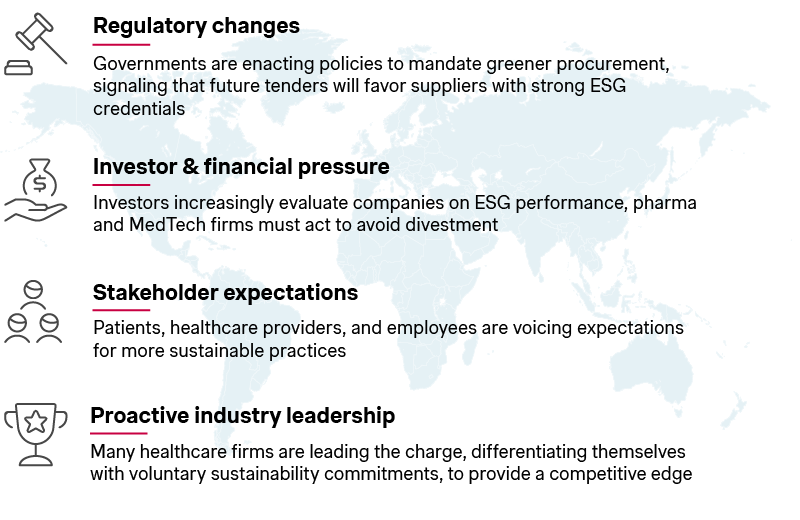
With these forces at play, the case for change is imminent. Healthcare and life sciences companies that integrate sustainability today will be best poised to capture new opportunities; late movers risk reputational damage and lost business opportunities.
Global ESG landscape in healthcare procurement policies
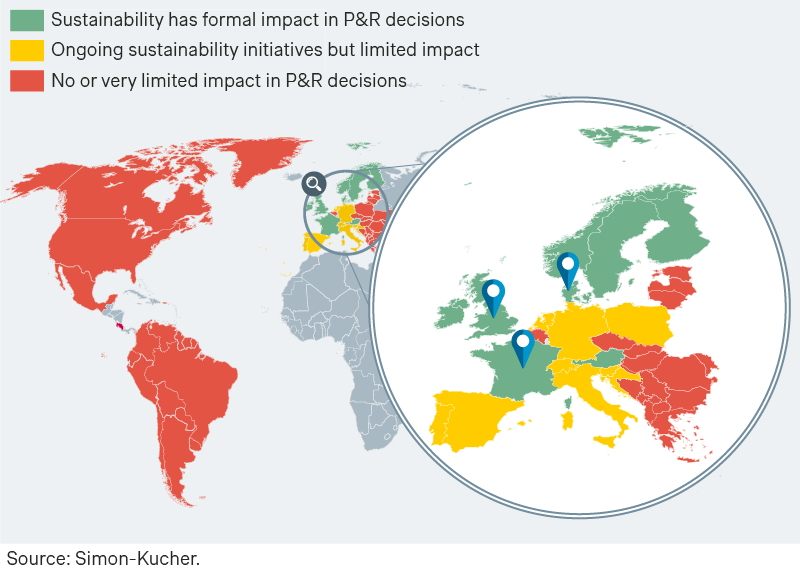
Around the globe, healthcare systems are at different stages of embedding sustainability into their pricing and market access processes.
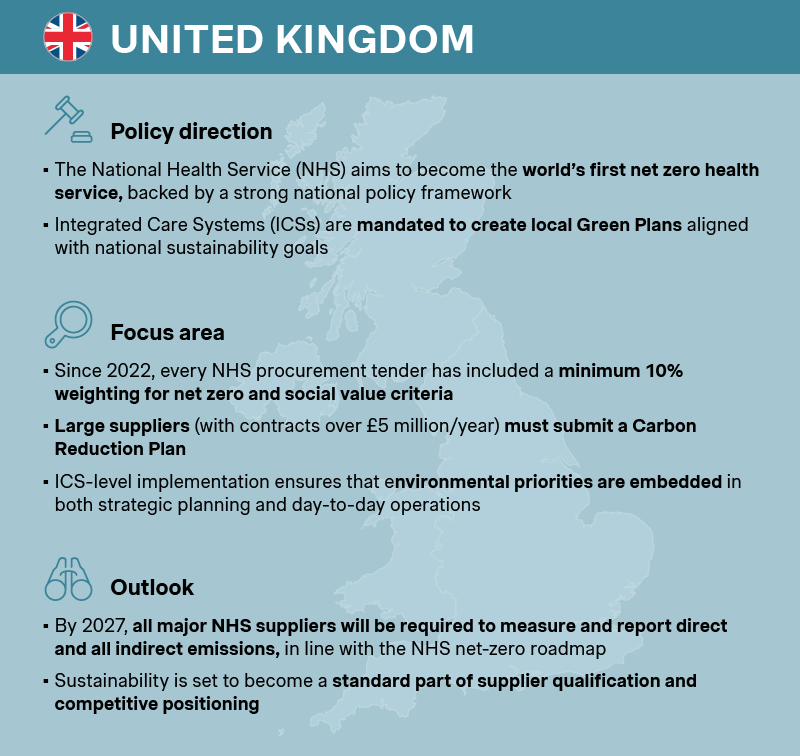
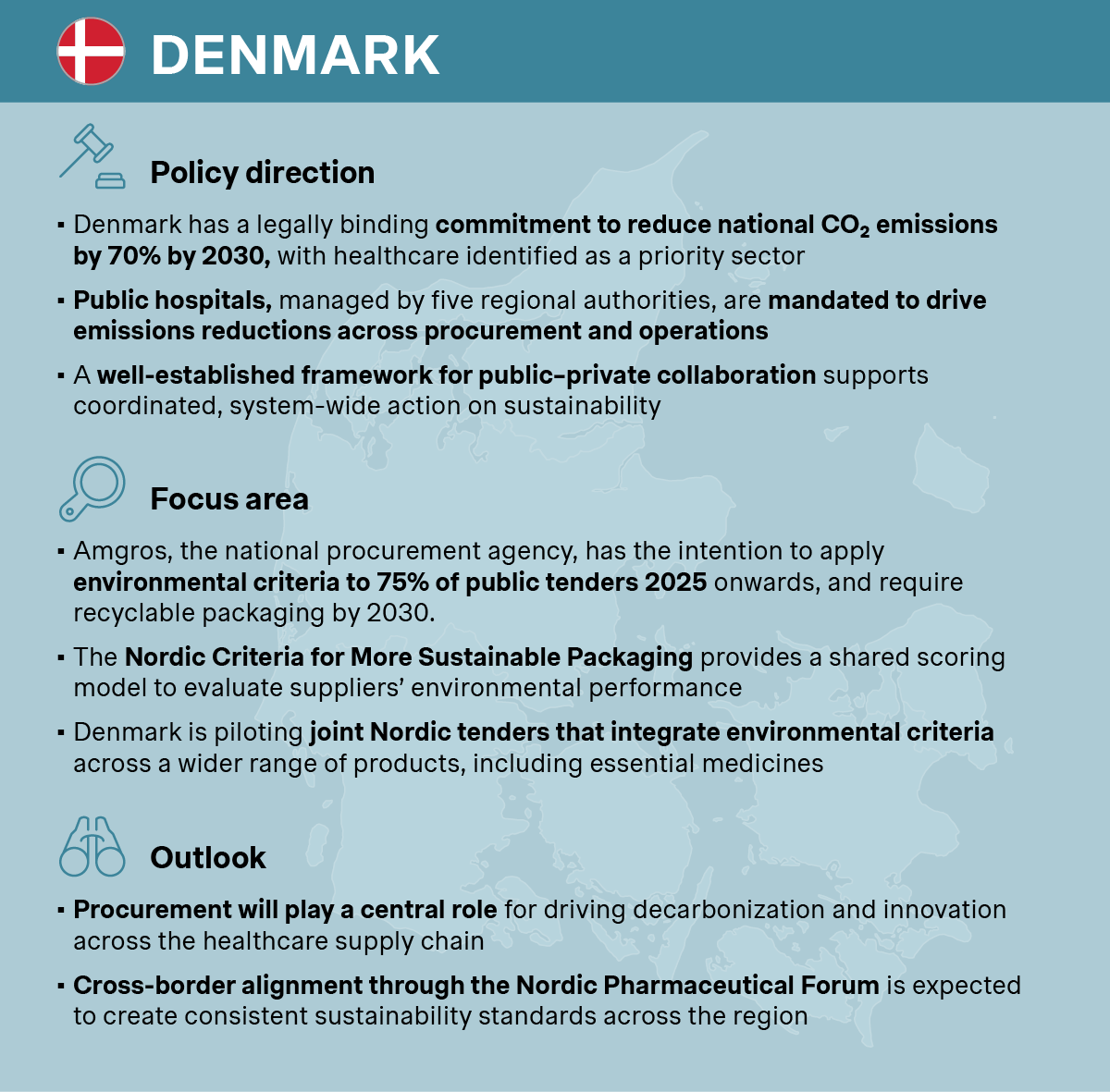
Europe is leading the charge, particularly with initiatives like Denmark's ambitious sustainability targets in public procurement and the UK's NHS Supply Chain enforcing Net Zero Supplier standards. European market access frameworks are also increasingly emphasizing ESG in health technology assessments of innovative drugs and devices. Although integration into pricing and reimbursement decisions is currently selective and mainly evident in tender markets, it is expected to grow over the next few years.
“Within the NHS, sustainability has moved from an aspiration to an operational requirement, with dedicated roles, defined metrics, and formal processes in place to monitor and enforce compliance with sustainability objectives.” – National Market Access Manager, leading pharmaceutical company.
In the US, progress is more fragmented. US federal-level ESG mandates remain limited, and political trends have deprioritized climate action. However, sustainability considerations are emerging in leading hospital networks and group purchasing organizations (i.e., University of Pittsburgh Medical Center with a dedicated “Centre of Sustainability”, Vizient with its “Environmentally Preferred Sourcing Program”, etc.), often driven by voluntary corporate initiatives rather than regulation.
In emerging markets, particularly Latin America, integration of sustainability criteria into pricing and reimbursement is still nascent and often overshadowed by cost containment pressures. Yet momentum is building, and over 90 countries (including many in Africa, Asia, and Latin America) have committed to developing climate-resilient, low-carbon health systems under a COP26 health program (COP26, also known as the 2021 United Nations Climate Change Conference, was the 26th UN Climate Change Conference, where countries met in 2021 to negotiate actions to limit global warming and tackle climate change), signalling that sustainable pricing and market access is fast becoming a worldwide norm.
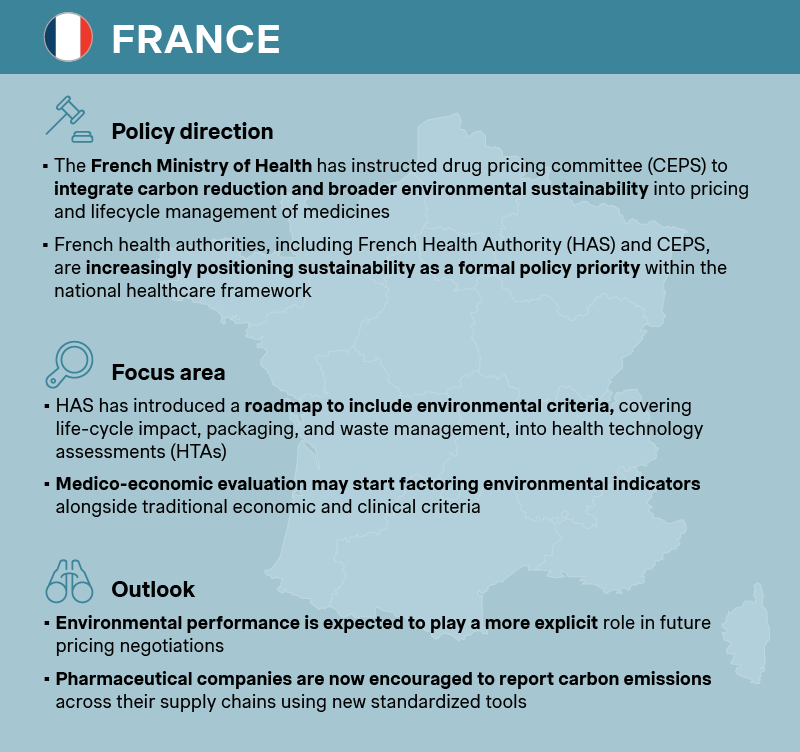
While there is a general global trend towards considering and incorporating sustainability principles in pricing and market access, there are some countries that are particularly moving faster, and are setting an example.
The industry’s response: How healthcare & life sciences companies are adapting
For the healthcare industry, sustainability is no longer a corporate social responsibility topic. It is a commercial and regulatory imperative directly shaping how they compete and win in markets. As ESG expectations become embedded in product and procurement evaluations, the healthcare industry is rethinking how they innovate, deliver, as well as position and price their products & services.
“The industry’s approach to sustainability is evolving. What started with quick wins like reducing travel-related emissions is now expanding to much deeper expectations around product life cycles, procurement, and how sustainability is embedded into manufacturing and product design.” – Market Access Lead, leading pharmaceutical company
Across the healthcare and life sciences landscape, leading companies are prioritizing several key areas to stay ahead:
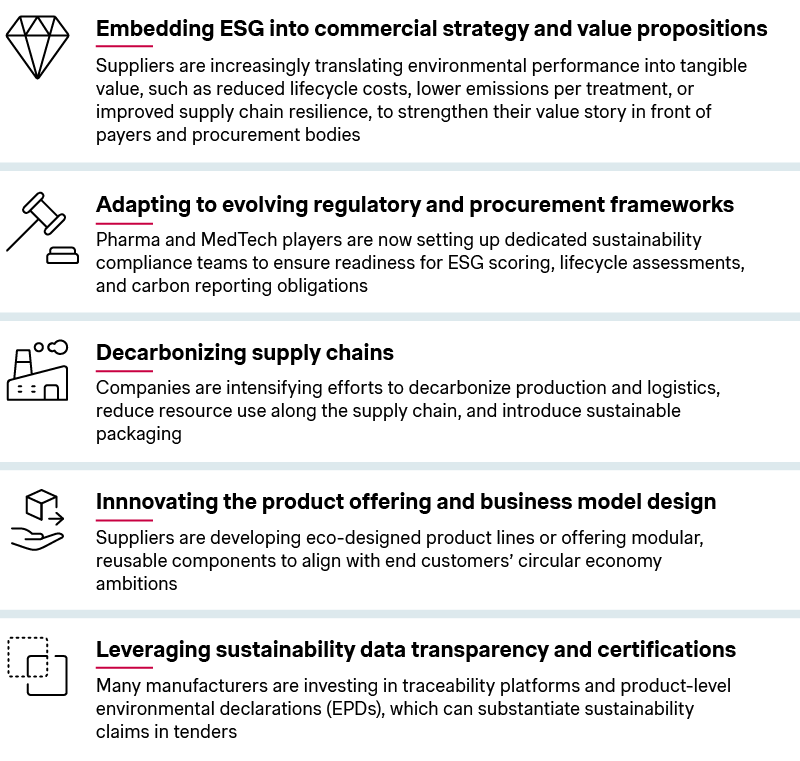
Collectively, these actions point to an industry in transition. However, progress remains uneven, largely due to complexity, cost, and a lack of clarity on commercial returns. Companies that can prioritise the most value-creating levers and build a clear, phased roadmap stand to gain a competitive edge. Those slower to act risk exclusion from high-value contracts.
How Simon-Kucher can help
The coming years are critical in the sustainability transformation of healthcare. Adapting is complex, but it offers a unique opportunity to innovate business & operating model, product design, and build competitive advantage.
At Simon-Kucher, we combine deep expertise in healthcare and life sciences related to pricing, reimbursement, and commercialization strategies, with proven sustainability experience across industries. We help clients navigate emerging ESG expectations, design sustainable pricing and procurement strategies, and translate regulatory and stakeholder pressures into commercial opportunity.
The second article in the series will explore how sustainability can serve as a commercial differentiator through product and portfolio innovation, while the third will take a closer look at green operations and the role of the circular economy in driving long-term impact. Stay tuned.
Meanwhile, let’s connect to explore how we can help your organisation capture advantage through sustainability.
A special thanks to Giacomo Villa, Juliette Levisalles, and Sebastian Winkel Hansen for their valuable contributions to the article.