The way companies grow has changed more in the past five years than in the previous twenty. COVID, inflation, monetary policy shifts, tariffs, geopolitical fractures, and the rapid integration of AI have rewired the commercial environment.
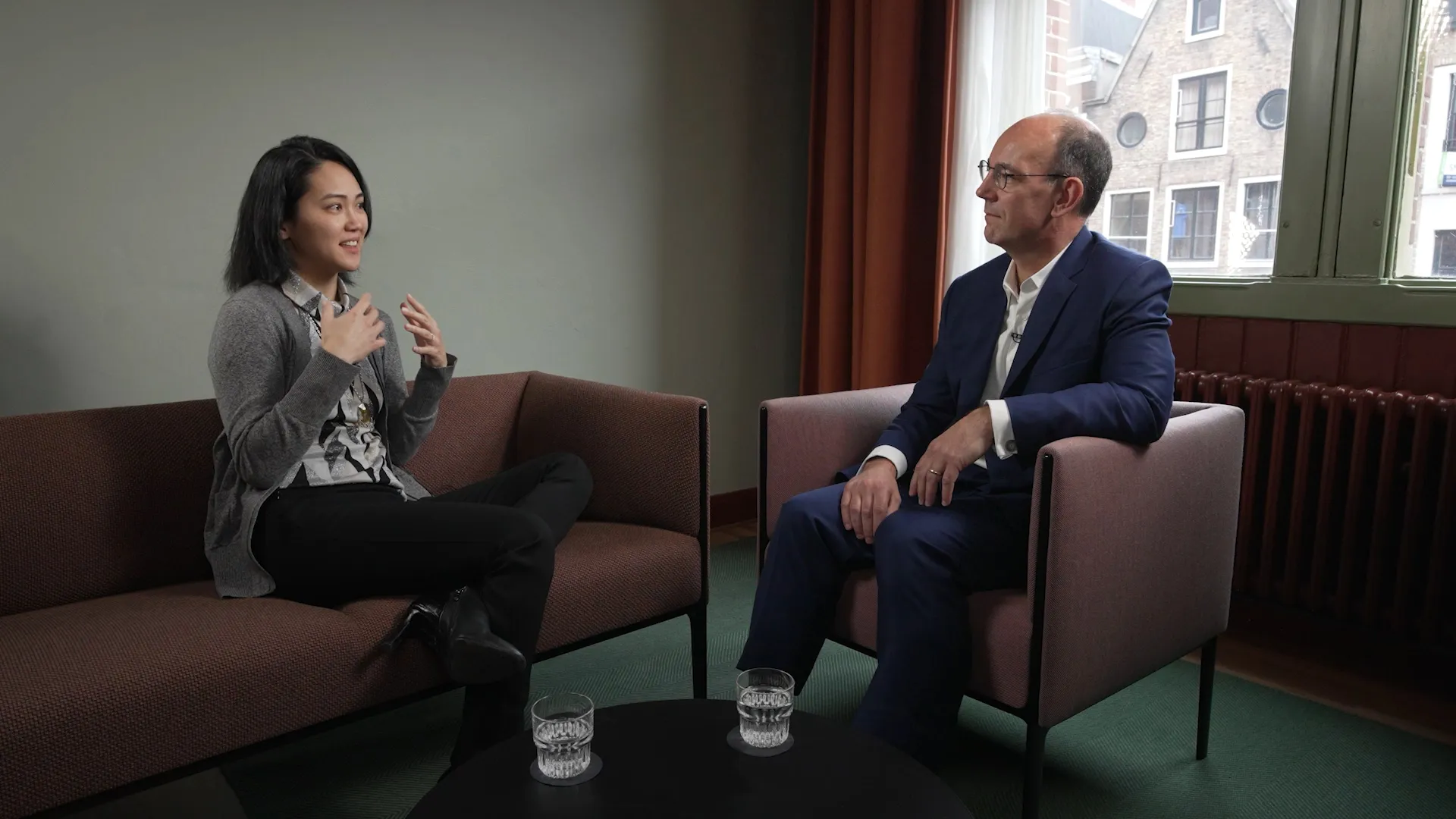
In a recent conversation, two of our Simon-Kucher experts sat down to discuss what this means for commercial leaders – Brad Soper, Senior Partner and Managing Partner Americas, with deep experience in B2B industrials, and Sara Yamase, Partner and Global Head of Technology, Media & Telecom at Simon-Kucher. Their day-to-day client realities sit at opposite ends of the commercial spectrum. What is striking is how similar the structural shifts are that they observe – and what separates the companies that adapt from those that simply react.
A new context for commercial growth
Two structural shifts define the current environment, and they cut across industries:
From globalization to regionalization: For decades, commercial strategy was optimized around global supply chains. Tariffs, political risk, and shifting trade patterns are now forcing companies to rebuild their commercial models around regional resilience and local autonomy. The supply chain that worked three years ago may no longer be the right one.
From volume at any cost to profitable, sustainable growth: The early 2020s rewarded volume above all – win the customer first, figure out profitability later. That logic is broken. Higher interest rates, tighter capital, and more discerning buyers have made sustainable growth the new benchmark. Companies that cannot articulate the value they deliver are losing business to those that can.
What is notable is that these shifts show up almost identically in industrials and in technology – two sectors that historically operated under very different growth logics. The pace differs, the vocabulary differs, but the underlying pressure is the same.
The leadership challenge: speed without reactivity
The harder problem for commercial leaders is balancing speed and substance. Markets now move at a pace that demands rapid decision-making, but the most consequential decisions of the past few years – on inflation, on supply chain restructuring, on AI investment – have no clear historical precedent. Intuition built on twenty years of stable conditions is no longer a reliable guide.
This puts pressure on leadership teams to move faster while making better decisions, not just quicker ones. The instinct to be reactive – to chase every market signal, to over-correct on every quarterly result – is a real risk.
"Fast and wrong is still wrong. So take your time." Brad Soper
The discipline to slow down when the noise gets loudest, to anchor decisions in fundamentals rather than headlines, is becoming a core leadership capability. That discipline shows up in three places: in how companies set goals, in how they align their organizations around those goals, and in how consistently they execute against them when the environment shifts.
AI as augmentation, not replacement
AI is reshaping commercial decision-making, but the leaders who get the most out of it are not the ones who treat it as an oracle. The pattern that works is different: AI as a starting point for a conversation, not the final word. The best applications combine machine-driven analysis with human expertise – people who can read context, recognize when a logical answer falls apart in practice, and bring pattern recognition that no model can replicate yet.
"Deep expertise that allows a person to process context across their whole lives really makes a difference compared to a machine that has no context on what's happening in a business." Sara Yamase
There is a related shift worth flagging. Companies no longer fit into neat industry boxes. A logistics business is also a software business. A retailer is also a media business. A manufacturer increasingly competes on data and services. The commercial leaders who succeed in this environment are the ones who can think across industry verticals and apply lessons from one domain to another – because their own businesses already span multiple domains.
What this means for commercial leaders
Three takeaways stand out:
Build for execution, not just strategy: A clear strategy is necessary but no longer sufficient. The companies pulling ahead are the ones that have invested in the operating model, tracking systems, and feedback loops that turn strategic intent into consistent action.
Distribute decision rights, but align incentives: Centralized command structures cannot move at the speed the market now requires. Decentralization works only when the incentive systems support it – otherwise empowered teams optimize for the wrong outcomes.
Stay disciplined when the market gets noisy: Volatility is the new baseline, not an exception to plan around. The leaders who succeed will be those who distinguish signal from noise, who hold their long-term thesis steady, and who adapt their execution without abandoning their direction.
Or in the words of our Simon-Kucher experts:
"It's only when a company moves too far and starts to break things that they're willing to say, hey, let's be thoughtful about it. It's important that companies are thoughtful to begin with – and don't cause things to break." Sara Yamase
The role of a trusted commercial advisor
What stays true through all of this? The companies that navigate complexity well rarely do it alone. They work with advisors who bring deep functional expertise across industries, who have seen the same challenges play out across many organizations, and who partner on the journey rather than handing over recommendations from the sidelines. That is the role Simon-Kucher has built over four decades as the trusted commercial growth advisor. We combine specialized expertise across pricing, sales, marketing, and digital transformation – with the cross-industry perspective that today's converging markets require.
For commercial leaders facing decisions they have never had to make before, the value lies in working with a partner who has – with many companies, across many industries, through many cycles. Unlocking better growth.
Watch the full conversation
The discussion between Brad Soper and Sara Yamase explores how leadership teams across the Americas are adapting to this environment, what they are getting right, and where the biggest gaps remain. Watch the full conversation here.